Alien Invasions Causing Extinctions

Alien Invasions such as the Brown Tree Snake on Guam cause extinctions

New research published in the journal Frontiers in Ecology and the Environment on March 4, 2019, indicates that alien invasions are causing extinctions of native animals. Humans are mostly to blame.

When humans throw the world of plants and animals out of balance, the result is extinctions. We can destroy God’s designed balance when we introduce a non-native species into an environment. The introduced species without natural predators uses up local resources leaving native species without food. There are many examples.

One example is the brown tree snake (Boiga irregularis) which was accidentally introduced to Guam aboard a military cargo ship after World War II. Those snakes are native to Australia and Indonesia where natural predators control them. On Guam, they have decimated 50 percent of the native bird and lizard species and two of the three bat species on the island. The brown tree snakes considered those native species to be tasty treats, and the snakes had no predators to control them. The result was the extinction of many species, some of which existed nowhere else on Earth. Alien invasions of brown tree snakes forever changed the ecosystem of Guam.

In other cases, humans throw nature out of balance by their direct actions. An example of that is the over-hunting of sea otters. Sea otters kept the purple sea urchins in check. Steller’s sea cows (Hydrodamalis gigas)were giant relatives of manatees, and they lived on kelp. Without control by sea otters, the purple sea urchins ate so much of the kelp that Steller’s sea cows had no food, and they became extinct. However, the research project indicated that direct interference by humans in cases like this has less impact on extinctions than the alien invasions have.

Sometimes humans make the mistake of bringing in another non-native species to control the first one. That technique often makes the problems worse. Usually, by the time people discover the problem of alien invasions, it’s too late to fix it.

The research concludes that 25 percent of plant extinctions and 33 percent of animal extinctions were caused by alien invasions – the introduction of non-native species. The bottom line is that humans have not been good stewards of the planet God has given us to enjoy and protect. God gave humans the responsibility to have dominion over creation and “rule over the fish of the sea and the birds of the air and over every living creature that moves on the ground” (Genesis 1:28). Romans 13:1-4 indicates that those who rule over people have the responsibility to protect. We might say the same of us who rule over the creatures.

— Roland Earnst © 2019

Reality of Space Travel

Reality of Space Travel and Little Green Men

Although space-travel movies are exciting and fun, they are not very realistic. Einstein’s theory of special relativity says that it’s impossible to travel at the speed of light. There is overwhelming proof that he was right. That fact has an impact on the reality of space travel.

Astronomer Dr. Hugh Ross wrote an excellent book entitled Why the Universe is the Way It Is. In this book, he states that due to the laws of physics the top speed of a spaceship would be limited to about one percent of the speed of light, or 6.7 million miles (10.8 million km) per hour. Based on that, he says that for aliens to travel from any other planetary system where intelligent beings could possibly exist would take at least 25,000 years! (Remember that it will take nine months just to travel to Mars, our neighboring planet.)

So when you watch a two-hour movie in which people travel from one planetary system to another at hyper-light-speed, remember that it’s only Hollywood. The reality of space travel is not what we see in the movies. We live in a universe designed by a Creator who gave us a special place with everything we need to live. Is there any kind of life, not just intelligent life, anywhere else in this vast universe? We don’t know, but the chances of meeting intelligent beings from another planet are very, very slim. That’s the reality of space travel.

By the way, my picture is poking a little fun at a statement made by the well-known atheist biologist Richard Dawkins in his book The Selfish Gene. He begins chapter 1 by stating, “Intelligent life on a planet comes of age when it first works out the reason for its own existence. If superior creatures from space ever visit earth, the first question they will ask, in order to assess the level of our civilization, is: ‘Have they discovered evolution yet?’”

So does discovering evolution indicate advanced civilization and the level of our intelligence? More importantly, does evolution explain the reason for our existence? Personally, I think the reason for our existence is not found in evolution, but begins in Genesis chapter 1 and is developed in the rest of the Bible.

— Roland Earnst © 2019

Why Is The Equinox Important?

 Why Is The Equinox Important?

Today, March 20, 2019, is a special day as the spring equinox arrives for the Northern Hemisphere. Today the Sun will set exactly in the west and tomorrow it will rise exactly in the east when observed from the Equator. The day will be exactly 12 hours long and night will be exactly 12 hours long. After today in the Northern Hemisphere, the days will be longer than the nights. Officially spring arrives today at 9:58 PM Greenwich Mean Time (5:58 PM Eastern Daylight Time where we live).

In reality, all of this is an exaggeration of the real situation. Don’t expect a balmy spring day if you live in Michigan (as we do) or other northern areas. Ice and snow have to melt, and the land has to warm up. Nevertheless, the equinox does remind us of Earth’s design and how many variables control our existence on this planet. What does happen on this day is that the Sun will be directly overhead at noon at the equator.

During the northern winter, Earth’s tilt has caused the Sun to be overhead south of the Equator. As the Earth moves around the Sun, the Sun’s location relative our planet will drift north until June. When the summer solstice occurs on June 21, the Sun will be overhead at 23 degrees north latitude. The more direct sunlight not only warms the Northern Hemisphere, but it avoids overheating the Southern Hemisphere.

If Earth did not have a 23-degree axis tilt, the Sun would beat down on the equator from directly overhead all year long. The Equator would become so hot that nothing could live there. The northern and southern latitudes would both freeze. Wind belts created by air rising violently at the equator would be hurricane force 24/7. We see that happening on planets in the solar system that do not have an axis tilt.

Ancient people knew that the position of the Sun changes throughout the year. They used elaborate but primitive observatories to determine the time to plant and harvest based on the Sun’s position. Unfortunately, this led many cultures to worship the Sun. Nowhere does the Bible encourage or condone the worship of any celestial bodies. The Bible recognizes the seasons and the role of the Sun as designed by God for human existence. (See Genesis 1:14-15).

The ancient psalmist David said it (Psalms 8:4) and the writer of Hebrews quoted it (Hebrews 2:6), “What is man that you keep him in mind or the son of man that you look after him?” The equinox is a good time to be reminded of God’s provisions for us and thankfully worship the Creator, not the creation.

–John N. Clayton © 2019

There Was a Beginning

There Was a Beginning

One of the strong arguments for the existence of God is the data that shows there was a beginning to time, space and matter/energy. If you admit that there was a beginning, then you have to deal with what was the cause of that beginning. There must be a causer of some kind.

Atheists have avoided this discussion in the past by saying that there was no beginning and that the cosmos is “self-existing.” One version of this self-existing concept is that the cosmos may be oscillating. The hypothesis is that the cosmos will eventually slow down, stop, and collapse on itself leading to another “big bang” to start the process over again. This oscillating model could be eternal thus avoiding the whole question of cause and causer.

There are several difficulties with the oscillating model. The most telling one is the evidence about the movement of galaxies and the cosmos as a whole. The newest data collected by NASA shows clearly that the universe is accelerating in its expansion. Data from doppler measurements at various wavelengths and further analyses of inter stellar-reddening continue to support the fact that the acceleration is not slowing down.

There are several possible causes of this acceleration. One is the shape of space. The fact that light bends when it goes around a massive object suggests that the curvature of space is causing the acceleration. Another view is that there is a “great attractor” beyond the cosmos that is producing the acceleration. A third view is that dark matter is producing the acceleration. Scientists are devising various ways to test these hypotheses. It is an exciting time to be a student of astronomy and astronomical evidence. Whatever the cause of the acceleration, it adds to the data that leads us to reject the oscillating universe theory.

Most discussions about this subject end up with the conclusion that there are dimensions outside of the X, Y, Z system which we experience. Theories like string theory suggest eleven spatial dimensions. Because there are so many possible equations to describe such a proposal, it falls more in the realm of fantasy than of testable, falsifiable science.

The evidence that there was a beginning is overwhelming. The biblical descriptions of God indicate that He is outside of space/time. Thus God is a logical answer to the question of what caused the beginning. “In the beginning, God” turns out to be a highly complex statement, but one that is strongly supported by the evidence.

–John N. Clayton © 2019

Sinus Iridium on the Moon

Sinus Iridium on the Moon

Yesterday we mentioned that the Sun was at the exact angle to illuminate the Moon’s Jura Mountain Range. The effect is sometimes called the Golden Handle of the Moon because it resembles a small handle on the side. Since the sky was clear here in southwest Michigan last night, I took a picture of it. The tiny “handle” that you see is a semi-circular ridge surrounding a flat plain called the Sinus Iridium (Latin for the Bay of Rainbows). Sinus Iridium is actually an impact crater which has filled with lava, and the “mountains” that the Sun is illuminating is the edge of the crater.

Sinus Iridium on the Moon

In the NASA photo, you can see wave ripples on the surface as the lava flowed into the basin of the crater and hardened.

On our Does God Exist? educational tours of the Canyonlands we always visit Meteor Crater in Arizona. It is perhaps the best-preserved impact crater on Earth. At three-quarters of a mile (1.2 km) across, it is awe-inspiring to see. By comparison, the Sinus Iridium crater is 150 miles (240 km) across. You can also see several smaller impact craters that were formed after the lava flow.

As you examine the surface of the Moon, you will see that it is covered with impact craters caused by meteor and asteroid collisions. Earth has been bombarded with asteroids in the past. There is evidence of a large (93 mile, 150 km) impact crater called the Chicxulub Crater near what is today the Yucatan Peninsula.

Since Earth is a bigger target for impacts, why is Earth’s surface not pockmarked with craters like the Moon’ surface? Scientists have found evidence of about 190 impact craters on Earth. Most of them were early in Earth’s history, and erosion, plate tectonics, and other forces have hidden them from view. More importantly, we are protected from many of the impacts by our atmosphere. The heat from friction as a meteor enters the atmosphere at high speeds usually, but not always, causes them to burn up before they touch the ground. The more we see of God’s creation, the more we see His wisdom and power.

You can read more about impact craters and their effect on life on planet Earth in our previous posts by using these links. METEOR CRATER (also called the Barringer Crater) and the CHICXULUB CRATER. You can read about a Martian Meteorite HERE.

–Roland Earnst © 2019

Moon’s Golden Handle

Observing the  Moon's Golden Handle

If the sky is clear tonight (March 16, 2019), you will have an opportunity to observe an interesting phenomenon known as the Moon’s Golden Handle.

The Sun’s light will strike a mountainous area of the Moon at a shallow angle. The Moon will be in what is known as the waxing gibbous phase. Waxing means that more of it is becoming visible as sunlight increasingly illuminates the surface. Gibbous means that it is not yet a full moon, but it is more than a half moon. At this exact angle, the sunlight will illuminate the Jura Mountain Range, and the mountains will appear as an arc on the upper left side of the Moon’s visible surface. The arc resembles a tiny handle on the side of the Moon, so it has been called the Moon’s Golden Handle.

Galileo (1564-1642) observed this phenomenon as he looked through an early telescope. You can see it with a pair of binoculars. If you have a small telescope, you can get an even better view. The angle of the light gives a unique opportunity to get an idea of what the surface of the Moon is like. Not only does the Moon have mountains, but it has lava flows and numerous craters from bombardment by meteors.

The fact that we can predict when lunar eclipses will take place and when phases of the Moon will occur shows how much precision God has built into His creation of the cosmos. We know when the Moon’s Golden Handle will be visible because we can depend on that precision as we depend on God. “The heavens declare the glory of God and the firmament shows His handiwork” (Psalms 19:1).

–John N. Clayton and Roland Earnst © 2019

Sea Level Rise and Global Warming

Sea Level Rise and Global Warming

Many leaders in the United States, as well as other countries of the world, seem to have a view of global warming that contradicts the evidence and good scientific data. More amazing is that many scientists also take positions on global warming that don’t fit the evidence. Science News (March 2, 2019) published an article (page 6) about various theories of how melting ice could affect eustatic sea level rise.

One estimate is that sea levels could rise by 2.1 meters (over six feet) by 2100. Another research report says that sea levels could rise by four meters by 2200. Both of these estimates are based on the melting of ice cliffs in Antarctica. Imagine the result of an eight-foot rise of sea level on Miami or New Orleans or Venice?

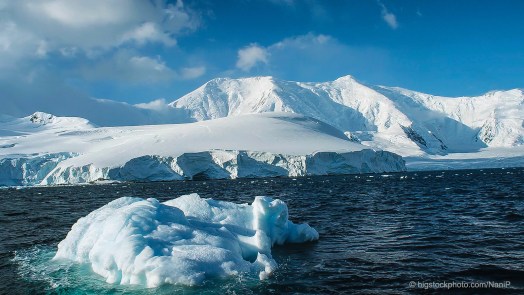
The problem with the scientific data, as spelled out in the Science News article, is that the physics of ice cliff collapse is very poorly studied. Another problem is that much of the ice that has been proposed as being likely to melt is floating. If the ice is floating, it has displaced as much water as it weighs or it wouldn’t be floating. This is an old physics law that says “any object that is placed in a fluid is buoyed up by a force equal to the weight of the fluid displaced.” If the iceberg somehow evaporated instead of melting, the sea level would go down. If it just melted, the mass is still there, and there would be no sea level rise.

Scientists are hotly debating the predictions of eustatic sea level rise. The question is not whether we are experiencing climate change with an increase in worldwide average temperatures. We are. The question is what that temperature rise will do. The design of the amazing physics of ice and water may seem simple, but it is highly complex on a global scale. We see evidence of God’s design of Earth to support human civilization. Stay tuned for more data as research continues.

–John N. Clayton © 2019

Sirius Shining Brightly

Sirius Shining Brightly

On a clear night look around to find the brightest star. (Don’t get confused with planets which sometimes are more brilliant than stars.) The brightest star in the sky is Sirius.

The name comes from an ancient Greek word which means “glowing.” It’s in the constellation Canis Major which means “big dog.” Sirius is at the base of the dog’s neck. It looks bright because it’s 25 times more luminous than the Sun and is “only” 8.6 light-years away. Other stars are more luminous, but they don’t appear as bright because they are farther away from the Earth.

We see Sirius as a single star, but it’s more than that. It is actually a binary star consisting of Sirius A and Sirius B. A binary star is two stars orbiting around a central point. There are star systems composed of 2, 3, 4, or more stars orbiting each other which look like a single star to us. Astronomers estimate that half or more of the stars we see in the night sky are actually multiple star systems.

If our Sun had been part of a multiple star system, we wouldn’t be here. Imagine being on a planet orbiting a star which is orbiting one or more other stars. Gravitational forces would pull the planetary orbit apart. Days and seasons and years would be completely chaotic. Life would not be possible.

Genesis 1:14 tells us that God established the Sun and Moon to “serve as signs to mark seasons and days and years.” It’s no coincidence that we are orbiting a single star to light the day, and we are orbited by a moon to light the night. Together it is an unusual and extraordinary system. It is a gift from God.

–Roland Earnst © 2019

Benefits of Trees

Benefits of Trees

We take for granted many things that God has built into the Earth so that we can survive. Among those are trees. World Ark magazine for the spring of 2019 published some interesting data that demonstrate the benefits of trees:

One acre of forest absorbs six tons of carbon dioxide in a year. That is enough to meet the annual needs of 18 people.

One acre of forest produces six tons of oxygen a year. That is also enough to meet the annual needs of 18 people.

A single average-sized tree produces 260 pounds of oxygen a year, which is enough for two people.

Large areas of asphalt or cement attract and retain the Sun’s heat artificially boosting local temperatures. Trees are the only cure for this overheating.

Trees are the most efficient way to reduce urban noise.

Planting a tree on the west side of your house can block enough of the Sun’s heat to save $25 on your air conditioning bill every year. Trees also serve as natural windbreakers to reduce your heating bill in winter.

Some trees, such as apple trees, attract birds which eat invasive caterpillars.

Property values are increased up to 15% by having trees in yards and throughout neighborhoods.


Joyce Kilmer wrote, “I think I shall never see, a poem as lovely as a tree.” That is even more true when we realize the multiple hidden benefits of trees.

“And the earth brought forth grass, and herb yielding seed after his kind, and the tree yielding fruit whose seed was in itself after its kind: and God saw that it was good” (Genesis 1:12).

The last verse of Kilmer’s poem says:

“Poems are made by fools like me, But only God can make a tree.”

–John N. Clayton © 2019

Vastness of Space

Vastness of Space and the Big Dipper

One of the struggles we all have in dealing with the creation of the cosmos is understanding the vastness of space. When someone tries to give a naturalistic explanation for Earth and its abundance of life, they assume that the variables necessary for the creation of life and the conditions required for life to exist have just happened naturally. Because of the number of stars and planets, they assume that the creation can be a product of blind opportunistic chance.

In 1961 Frank Drake (a founder of SETI) presented what is known as the Drake equation. It involves multiplying seven variables that are necessary for creating a planet with intelligent life by the odds of each of those variables happening by chance alone. Let’s say the odds of having one of Drake’s seven variables are 1 in a million. Those promoting chance explanations of the creation would say that since there are 100 billion stars in the galaxy in which we live, the odds are reasonable for the creation to happen by chance.

There are many problems with this equation and the chosen variables. One statistical problem is that you can’t just have one variable which is isolated from all the other variables. If there are seven variables, then they all have to be accomplished at the same time in the same place. You can’t have variable one at one place at one time, and variable two at a different place and at a different time.

We don’t seem to comprehend the vastness of space, and how isolated stars are from one another. An excellent example of this is the asterism we call the Big Dipper. Seven stars make up the Big Dipper. When seen from Earth, they seem to be close together. The fact is that the stars are nowhere near each other. Mizar, the second star from the end of the handle is 78 light years away from Earth. (A light year is how far light goes in a year – roughly 588 quadrillion miles.) Dubhe, the star at the top edge of the bowl of the Big Dipper is 124 light years away. Merak which with Dubhe makes up the pointer stars of the Big Dipper is 79 light years away from Earth and 45 million light-years from Dubhe.

The size of the cosmos is incredible, but that size does not make chance explanations of the creation accurate. Having the right size planet going around a star that is a red giant would not support life. If you had the right size planet going around a spectral G-2 star (like our Sun), it would not support life if it were located at the core or in the equatorial plane of the galaxy. All variables have to work together at the same time and place, and that is unlikely considering the vastness of space.

When wisdom speaks in Proverbs 8:22-23 she says, “The Lord possessed me in the beginning of His way, before His works of old. I was set up from everlasting, from the beginning, before the Earth was.” The vastness of space isolates us from the destructive forces that exist throughout the cosmos. It also reinforces the statement of Romans 1:20 which says “we can know there is a God through the things He has made.”

–John N. Clayton © 2019