Placing Blame for Gun Violence

Placing Blame for Gun ViolenceThe National Center for Health Statistics reports that 39,773 Americans lost their lives to firearms in 2017. Since 1968, 1,625,000 Americans have died from gunfire. That is more than all American deaths in all wars since the founding of America more than 200 years ago. From 2008 to 2017 there were 342,439 deaths by firearms and 374,340 deaths caused by motor vehicles. It is hard to believe that guns are nearly equal to cars in their careless use. These numbers are facts, not opinions. The opinions come when people are placing blame for gun violence.

Everyone from the NRA to the WTA wants to explain why this is happening, and we would add another voice to the discussion. The trend in firearm deaths is evident. In 1968 the number of deaths due to firearms in the United States was roughly 24,000. In 2017 the number of fatalities was roughly 40,000. In almost 50 years, there has been a dramatic increase that no one can deny. That leads to people placing blame for gun violence.

What else has changed in those 50 years? We have only cited the years for which we have numbers. Before 1968, deaths due to firearms would have been much lower. As a teenager in the 50s, I can remember that when someone died due to a firearm in our half of the state, it made the front page of every newspaper.

Some say that mental illness is the cause of the increase. I would suggest that we have always had the mentally ill with us. Until the mid 20th century, there were virtually no medications that relieved the symptoms of the mentally ill. I can recall classmates in high school who were mentally ill, and none of them resorted to violence with a firearm.

Some say that gun availability is the cause of this, but I bought my first gun when I was 12 years old. I had a hard time deciding between a 12 gauge shotgun and a 22 rifle. In southern Indiana, it seemed that every pickup truck had a gun rack behind the driver’s seat. There was usually more than one loaded gun in the rack. The trucks were never locked so any five-year-old could have climbed in, grabbed a loaded gun, and started shooting.

So when placing blame for gun violence, we cannot completely point to those factors. The one thing that has changed in the same time period is our country’s fundamental faith in God. When you read all of our historical documents, even those written by those who may have had doubts about God, you see a basic declaration of the importance of living by God’s principles. Even though my father was an atheist, he grew up with a father who was a minister, and he believed and lived by the basic teachings of the Bible.

In the last 50 years, we have been saturated with the doctrine propagated by the media and the educational establishment that humans are just animals. Along with that, goes the belief in survival of the fittest as the basic rule by which we should live. In the animal world, you generally don’t see the notion that the less fit should be cared for and looked after by those who are fit.

The idea of caring for the less fit has been denigrated among human beings by people like Peter Singer and Richard Dawkins. They vocalize what much of our culture wants to believe. Everything from abortion to euthanasia is radically affected by what we believe about the worth of a human being. If educated leaders in the secular world want to eliminate those they see as unfit, how can we expect a mentally ill person not to embrace the same idea? The problem is how they identify the unfit.

“We then that are are strong ought to bear the infirmities of the weak, and not to please ourselves” (Romans 15:1). That is a principle of Christianity and should be applied to both spiritual and physical weakness. In Matthew 25, when Jesus describes the basis of judgment by God, He said, “I was hungry, and you gave me food. I was thirsty, and you gave me drink, I was naked, and you clothed me, I was sick and in prison, and you visited me…”

Perhaps society is placing blame for gun violence on the wrong things. It is only when a person accepts the biblical concept that ALL human beings are created in the image of God, and therefore, ALL human life is sacred, that we can hope to see a change. It is only then that we can have a psychological foundation that allows even the mentally ill to understand that they have value and that people care about them and want to help them. There is no-one “unfit” in the sight of God. Violence will only increase as our children play video games and watch movies that glorify those who are strong destroying the weak.
— John N. Clayton © 2019

World’s Fastest Jaws

Worlds Fastest Jaws - Mystrium camillae Insects are the most prolific of all animal groups on the planet. History records instances in which scourges of insects have caused massive destruction when they are not held in check. One of the most effective controllers of insect populations is other insects. An example of that is a species of ants with the world’s fastest jaws.

Recent studies by entomologists using high-speed cameras have shown that the ant Mystrium camillae can snap its mandibles at speeds that are 5,000 times faster than the blink of an eye. Their jaws close with so much force that even if they don’t touch their prey, they can stun them. This high-speed, spring-action  jaw closing is part of a designed system that helps maintain balance between predator and prey in the natural world. Sometimes humans cause nature to become out of balance. In the natural world without human mismanagement, there are animals and plants that keep nature in balance.

Designing life systems that can exist over the long haul is incredibly difficult. One of the problems in space travel is developing systems that will provide food for astronauts over a period of many years. Several experiments have been tried, but none have been successful. God’s design of life systems on Earth is amazing. We frequently see species with special equipment like the world’s fastest jaws of the Mystrium camillae. They were designed to maintain a balanced world where humans can thrive.
— John N. Clayton © 2019

Reference: National Wildlife, June/July 2019, page 8.

Natural Selection as Creative Agent

Natural Selection as Creative Agent - Polar BearsYesterday we pointed out that both evolutionary naturalists and many creationists believe that, given enough time, anything can happen. They assume that once the first life-form came into being (which cannot be explained by natural selection) that time and natural selection would create all the vastly different forms of life. There are many reasons why natural selection as creative agent will not work no matter how much time you give it. We presented three reasons yesterday. Here are three more:

1-Natural selection tends to produce over-specialization. One of the fundamental laws of biology and evolution is Dollo’s Law. The French biologist Louis Dollo proposed that law in 1890. It says that once evolutionary characteristics have evolved, they cannot revert to the form from which they came. We now know why that is true by our advances in genetics. What it tells us is that as natural selection lets an animal become more and more specialized, it can not revert back to what it was before. Polar bears that have evolved by natural selection to their present state cannot return back to the black bear genetics of their ancestors. That may mean that they will become extinct if global climate change continues. Natural selection as creative agent won’t work because it is pretty much a one-way process.

2-Natural selection deals only with survival. The development of beauty does not always involve survival. Some coloration in birds, for example, does not aid their survival but results in incredible beauty. Jesus talked about the lilies of the field and birds of the air as blessed with beauty and function. While this has significant meaning for us aesthetically, sometimes the beauty of plants and animals may actually threaten their physical survival. We have discussed this point many times in our “Dandy Designs” column and elsewhere.

3-Natural selection stands at odds with the concept of entropy. The second law of thermodynamics tells us that in any closed system, things tend to move from a condition of order to a state of disorder. One can argue that the Earth is not a closed system because the Sun is adding energy. When living things eat, they add energy in the form of the chemicals in the food they consume.

The fact is, however, that in all biological systems, there is a tendency for life to become disordered. We call it aging. My body continues to produce a higher and higher level of entropy (disorder) as the years go by. All biological systems do this. To suggest that biological systems become more and more specialized by natural processes violates the very basic laws of physics and chemistry. The cosmos itself is moving towards disorder. Unless intelligence can add organizing energy and reverse the natural tendency to age, everything is doomed from our bodies to our planet.

God built the cosmos with laws that function to allow life to exist. He created life itself and built into it certain characteristics that caused Paul to write: “We can know there is a God through the things He has made” (Romans 1:20). Natural selection is one of the things God has made, and it allows nature to function. Natural selection as creative agent cannot explain the beautiful, complex world around us. It only applies to those changes which improve the chances for life to survive. Time is not a friend to aging or complexity. The older my car gets, the more likely it is to break down. That is true of my body and the natural world around me as well.
— John N. Clayton © 2019

Time as Creative Agent

Time as Creative Agent - PlatypusOne of the major misunderstandings of many creationists and naturalists alike is the belief that, given enough time, anything can happen. Those who believe in naturalism deny that God had anything to do with creation. They promote the idea that evolution by natural selection can explain everything as long as there is adequate time for it to act. Time as creative agent does not work for many reasons.

We can all agree on what will happen if you have two animals in identical environments and one of them can run very fast and the other one cannot. When a predator comes to eat them, the one who cannot run fast is more likely to get eaten. This process cannot explain how a platypus could be produced from animals that have existed in Australia now or in the past. Atheists would maintain that given enough time such a change would have happened naturally, excluding God’s role in the production of every form of life on the planet. Time as creative agent cannot replace the role of God the creator.

Some creationists seem to agree. They assume that the only rebuttal to the atheist belief is to maintain that the Earth is only a few thousand years old. They argue that such a change couldn’t happen in that short of a time. The reality is that natural selection cannot explain the creation, no matter how much time has been available for life to evolve.

There are a large number of reasons why natural selection and time as creative agent do not explain what we see in the creation. Here are just three simple ones:

1-Natural selection only deals with what has already been created.
Any theoretical explanation of how a living thing has come into existence starts by assuming the existence of an ancestral form of life. Not only is it assumed that the life-form existed, but its properties are also assumed. To explain why the male platypus has a poisonous spur on its back leg, one has to assume that it evolved from an animal that had a spur which served some other purpose. One must also assume that the ancestor used venom in some way. To explain the “radar” unit in the platypus’s nose, one has to assume that there was some kind of appendage that housed the nerve cells. Then one must assume that nerve endings with a frequency equivalent to the electromagnetic signals of the platypus’ prey were present in some primitive form.

Those oversimplified proposals are just the start. The baby platypus has to lick the milk off the mother’s stomach because she has no nipples. One can say that the nipples never evolved from the ancient ancestor, but the skin has to be porous enough for the milk to come through. The mammary glands also have to be in the right place, and the system has to be selective enough that milk can get out, but toxins cannot get in. With a good imagination, you can propose ways each of these things could happen. However, they would all have to happen simultaneously or they would be of no use and could, in fact, be life-threatening for the animal.

2-Natural selection does not propose the formation of organs with unique chemical properties, nor does it explain the chemicals themselves.
We have discussed the bombardier beetle, where a lethal combination of chemicals produces a spray that protects the beetle from predation. This is one of many specialized organs in the natural world that demands an organ that has no other function than the one the beetle uses. For natural selection to work, a previous organism would have to exist with a different a chemical having a different purpose from which this animal could evolve.

3-Natural selection ignores catastrophic extinctions. The more we study the geological record of the Earth, the more we see that massive changes have happened in the past that put an end to biological processes. Asteroid collisions, massive volcanic eruptions, massive flooding, global cooling which resulted in the freezing of all bodies of water, and solar eruptions are all well documented. These changes have been so violent that they terminated most life-forms and their development. Natural selection demands a uniformitarian past for traits to continue unabated and ultimately be incorporated into the genome of a new species.

Those are just three fundamental reasons why time as creative agent would not work. Those are only three hurdles that evolution by natural selection would have to cross to create all of the living things on Earth. Tomorrow we will look at three more.
— John N. Clayton © 2019

Being Able to Breathe

Being Able to BreatheI have just gone through one of the most unpleasant physical experiences of life – not being able to breathe. Most of us have had the breath knocked out of us when we got hit in the diaphragm and temporarily were left gasping for air. Imagine that feeling going on for hours, or even days. I am writing this while I am battling pneumonia, and fluid in my lungs has left me struggling to maintain my normal activities.

From a scientific perspective, being able to breathe is one of the most complex things we see in the natural world. Our lungs take in air that is 78% nitrogen and 21% oxygen. The oxygen makes its journey into our vascular system and sustains our lives. Fish take the oxygen dissolved in water and bring the oxygen into their vascular system through gills. The complexity of these systems chemically and physically points to the design the Creator has built into His living things.

While the Bible speaks of God creating breath in all living things, the most commonly quoted statements about the breath of life in humans don’t refer to air at all. Genesis 1:26-27 says that God created male and female in His image. Genesis 2:7 tells us that God formed the man and breathed into his nostrils the breath of life, and the man became a living soul.

Beginning in verse 16, we see God’s communication to man centering not around his physical well-being, but his spiritual well-being. The forbidden fruit and the relationship of good and evil, man’s dominance over the animal kingdom, and his relationship to woman all indicate a unique spiritual being with the soul breathed into him by God.

I have been in a great deal of physical distress because of pneumonia. Not being able to breathe fully is painful and frustrating. It has given me a whole new sympathy for those I know who are struggling with COPD or other breathing issues. Most people today are not struggling with the physical breath they take for granted, but the spiritual death that comes from rejecting God and His creation. Look at the evidence and build a dynamic living, breathing faith based on the fact that you are uniquely created in the image of God. That is a pain-relieving act we all can do.
— John N. Clayton © 2019

Facts About Plant Design

Facts About Plant Design including WatermelonOne of our gardener friends sent us these interesting facts about plant design:

Seeds may be dropped into the ground upside down or sideways, yet the plants always come up to the surface.

One grain of corn will produce a stalk on which there may be two ears, with perhaps 742 grains on each ear.

A light crop of wheat will produce approximately 30 grains on each stalk. A good crop of wheat will produce approximately 60 grains on each stalk. There will always be an even number of grains.

Beans grow up a pole from left to right. Morning glories grow up a pole from right to left. If turned upside down, “twining” plants will uncoil and recircle their support. Guide a twiner in the “wrong” direction, and the plant will rewind itself. The higher the twiner grows, the more tightly it clasps its support.

Dandelions will grow above their surroundings whether the grass is two, ten, or twenty inches, for it must grow up into the sunlight.

An average watermelon will have ten stripes on it. Larger ones may have 12 to 16 stripes, but they always an even number.

Those are just a few facts about plant design. Every form of life in the vegetable and animal kingdom has a predetermined set of characteristics – a master plan perfect in every detail – God’s plan. God has a perfect plan for my life and yours, which supplies all our needs – His Word (2 Peter 1:3). By His grace, we receive strength to rise above all our circumstances (Romans 8:31).
— Bob Schweikard © 2019

How Much Does Rain Weigh?

How Much Does Rain Weigh?A friend of mine likes to play with numbers. Calculations which speak of the wonder of the creation are of particular interest. My friend pointed out something that I had never really thought about. As I write this, it is raining, and we are supposed to get an inch (2.54 cm) of rain. How much does rain weigh?
For the sake of simplicity, let us assume we want to know the weight of an inch of rain on a square mile (2.58999 square km) of farmland. There are 5280 feet in a mile, so if an inch of rain, which is 1/12th of a foot, fell on a square mile of farmland the volume of water would be 5280 x 5280 divided by 12. That would be 2,323,200 cubic feet (65,785.698 cubic m). The density of water is 62.4 pounds per cubic foot (1000 kg per cubic m). The question is, how much does rain weigh? To calculate the weight of the water, multiply the cubic units by the weight for each cubic unit. That would come out to be 144,967,680 pounds or 72,483.84 tons (or 65,756,233.54 kg). That is for just one inch of rain. A foot of rain would weigh 12 times that much!

Rain is critical for our existence. We tend to take it for granted since we see it regularly in our day-to-day life. Perhaps we should pause and consider the wisdom build into a system that picks up many tons of water, lifts it high into the sky, and then pours it onto the land. Job said about God: “He does great and unsearchable things, wonders without number. He gives rain to the earth and sends water to the fields (Job 5:9-10).

The psalmist seems to have comprehended some of this design of God when he wrote: “Sing unto the Lord with thanksgiving; sing praise unto our God who covered the heaven with clouds, who prepares rain for the earth, who makes grass to grow upon the mountains. He gives to the beast his food …” (Psalms 147:7-9).
— John N. Clayton © 2019

50th Anniversary of Apollo 11

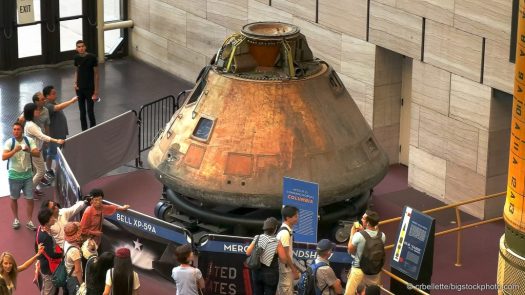
50th Anniversary of Apollo 11Every once in awhile, I get to sit back and think about what I have witnessed in my life’s journey. A reminder of one of the highlights of that journey is the 50th anniversary of Apollo 11.

My time of being involved in scientific events of significance began when I was fortunate enough to win the Westinghouse National Science Fair competition for Bloomington, Indiana, in 1954. That program allowed me to spend a few days with some of the top scientists in the country. I got to hear about what they were doing and what lay ahead in their particular disciplines. I was a high school junior at the time and totally entrenched in atheism. I believed that I had two choices. I could reject all of science and immerse myself in the senseless traditions (as I saw them) of religion. The choice I preferred was to be an atheist and participate in the wonderful possibilities of the future molded and made possible by science.

The most distressing part of the National Science Fair was that several of the best-known scientists of that day both publicly and privately expressed belief in God. My science teacher named Wayne Gross at University High School in Bloomington was a man of deep conviction that God was the creator of all things. He believed that science was just a way of understanding what God had done and using that knowledge to improve the lot of all humanity. The seeds of doubt in the religion of my parents (atheism) had been sown.

Many years later, as a science teacher at Riley High School in South Bend, Indiana, I sat glued to the television on July 20, 1969. I was watching Michael Collins, Neil Armstrong and Buzz Aldrin as they traveled to the Moon, landed on it, and returned with massive amounts of data and samples. I had left atheism and started my ministry just a year before the Moon landing, and I had been encouraged and tutored by many people in the space program.

As a teacher, I was able to attend numerous meetings with all of the scientists who contributed to that incredible accomplishment. I was even allowed to give a lectureship at the Space Center in Houston, which was attended by a large number of the people involved in the Apollo success. The man who introduced me at that lectureship was the man in charge of the LEM (Lunar Excursion Module) from the time it left the mother ship until it returned. He began the program by suggesting that there would be those who would think that I would be talking to a group of atheists since nearly everyone there was involved in a scientific way with the Apollo program. He then asked everyone who worked in the program to stand, and virtually everyone in the room stood. He then asked everyone standing who believed in God to sit down, and only four people remained standing. I know there are all kinds of objections to that action, but it underlined the fact that as Dr. Frank Baxter has said: “The more we know of the creation, the closer we get to the creator.” We don’t have to put our brain in park to be a Christian.

July 20, 2019, is the 50th anniversary of Apollo 11 moon landing, and we are talking about returning to the Moon. Morgan Stanley estimates that the net worth of the United States space economy by 2040 will be 1.1 trillion dollars (Astronomy magazine, July 2019, page 19). There are good reasons, both politically and economically, to go to the Moon and on to outer space. As we do so, one lesson we must in mind is that every discovery we have made in space has supported the biblical record. Science and faith have a symbiotic relationship in space as well as on Earth. All of this goes beyond astronauts reading Genesis 1 as they orbited the Moon.
— John N. Clayton © 2019

Black Holes and God

Black Holes and God
We get a significant number of emails and letters from people who have doubts. The doubts are not just about the existence of God and our claim that the Bible is the Word of God. People also have doubts about the scientific material in our presentations and literature. We have often referred to black holes and their implications for creation and the ultimate end of time. Just as some people reject the idea that there is a God, some also don’t believe in black holes. Black holes and God have many things in common.

Both black holes and God are unseen, mysterious, and frighteningly powerful to the degree that makes some people very uncomfortable. The result is that people attempt to deny the reality of black holes just as atheists try to deny the existence of God. We are seeing literature which claims that scientists are faking black holes and they don’t really exist. The “Does God Exist? Program deals with evidence. There are several lines of evidence that God exists. The evidence for God includes:

1) The creation of space/time and matter/energy from non-physical origins.
2) The cosmological fine-tuning that allows stable matter to exist.
3) Design features in life-forms that preclude chance as a causal agent.
4) The existence of human consciousness and spirituality.
5) Human morality
6) The resurrection of Jesus Christ

In the same way, black holes have several lines of evidence to support their existence:

1) Mathematical arguments such as the solutions to Einstein’s general relativity field equations.
2) The observed behavior of stars and gases around invisible points in space.
3) Explosive multi-band emission from quasars.
4) X-ray and radio emission from galaxy centers.
5) X-ray binaries.
6) Gravitational lensing.

In an excellent article on the American Scientific Affiliation website, Sarah Salviander makes this comment concerning the skepticism about black holes and God:

“The forces at work in the rejection of black holes are also at work when people declare themselves to be skeptical of God’s existence…God is even more of a disruption to the materialistic worldview than black holes. A belief in God demands thoughts, feelings, and behaviors that some non-believers find distressing, perhaps because this group tends to be composed of people who seem to want to set themselves up as minor gods of their own universes.”

You can read the entire article HERE.
— John N. Clayton © 2019

Bible Age of Earth

Bible Age of Earth - Misleading ClaimsOne of the most destructive teachings of denominational creationists is teaching that the Bible says the Earth is a very young planet. That is a human denominational tradition that has no biblical basis. The Bible gives no age of the Earth.

Let me repeat that nowhere in the Bible is there any statement about the age of the Earth. Those who twist the Bible to force an age on the Earth ignore references that suggest the Earth is old. In James 4:14, for example, we read, “For what is your life? It is even a vapor that appears for an instant and then vanishes away.” If the Earth is 6,000 years old and Methuselah lived 969 years, that is hardly a vapor. The Bible is not a clock, and twisting scripture to support a human belief system always results in misleading teaching.

Young people who are well-educated about the scientific evidence, have a massive problem with “scientific” claims made to support Young Earth denominationalism. Recently a publication carried five “global evidences” that the Earth is very young. All of them have glaring scientific weaknesses. Very briefly, they are:

Continental erosion. It is claimed that the rate of the erosion of the continents is so great that if the Earth were more than 6,000 years old, all of the land would have been eroded away. Dirt erodes quickly, but rock does not, and new land can be formed quickly, as recent volcanic activity in Hawaii demonstrates.

Ocean salinity. Salt is continually added to the oceans, so it is claimed that if the oceans were old, their salt content would be huge. The salinity of the world’s oceans is remarkably constant at 35 parts per thousand. This is accomplished because marine life removes sodium and calcium at a rate that maintains the constant ratio. The fact that the beaches in Florida are all made of seashell material demonstrates how efficient this system is.

Earth’s magnetic field. The magnetic field of the Earth is decreasing and would be zero in an old Earth. There is copious evidence that, like that of the Sun, Earth’s magnetic field reverses periodically. There are over 20 magnetic reversals preserved in the rocks of the mid-Atlantic ridge.

Radiocarbon. Carbon 14 exists in fossils, and it has a short half-life. There is no carbon 14 in any of the fossils that I have personally studied. I have read that contamination has been an issue in some fossils. Scientists never use carbon 14 to date ancient specimens, and they never use radiometric dating for mineral specimens.

Helium in zircon crystals. Creationist Russell Humphreys published a study on this topic indicating that the Earth could not be millions of years old, but no peer review has verified the work.

Since the Bible gives no age of the Earth, the issue is not whether the Earth is old or young. God doesn’t need time to do what He has done. The real issue comes when someone makes a human denominational claim about the Bible and tries to support that claim with invalid evidence. That wounds the faith of intelligent, seeking, well-educated young people. Unfortunately, that is what is happening in the world today.
— John N. Clayton © 2019

Reference: Acts and Facts, July 2019, pages 10-13.