Darwin’s Mistake According to Psychologists

Darwin’s Mistake According to Psychologists

In 1871, Charles Darwin proposed that the difference between human and nonhuman minds was a matter of degree, not kind. A 2008 publication by Cambridge University Press calls that “Darwin’s mistake.”

Animals with very different brains, and sometimes no brain at all, can perform the essential functions needed to live and survive. God has created various animal orders with what they need to fulfill their roles in the system of life. This explains the different sizes and capabilities of brains among animals. However, the mind is something more than just the brain.

According to the team of psychologists who authored the report, only humans possess a mind capable of “the higher-order, systematic, relational capabilities of a physical symbol system.” In this peer-reviewed journal, they wrote, “We show that this symbolic-relational discontinuity pervades nearly every domain of cognition and runs much deeper than even the spectacular scaffolding provided by language or culture alone can explain.” In other words, a vast gulf exists between the human mind and the brain power of any animal.

Darwin’s mistake, according to this Cambridge University article, was suggesting that all differences between humans and nonhumans are a matter of degree, not of kind. This theory is disproved by the fact that only humans can develop abstract thinking and writing because humans alone can invent and use symbols in communication.

When God created humans in His image, He gave us a mind capable of great achievements. Unfortunately, that ability can also be used for great evil. He gave us a spiritual nature with a desire to know Him. Yet, our pride can lead us to reject God and serve only ourselves. We humans are the only creatures who can choose to fulfill God’s purpose for us or to rebel against His will. Darwin’s mistake was to think the difference between humans and nonhumans was merely a matter of degree. It is truly a difference of kind.

— Roland Earnst © 2025

Reference: “Darwin’s Mistake: Explaining the discontinuity between human and nonhuman minds” at Cambridge.org

The Evolution of the Bobtail Squid

The Evolution of the Bobtail Squid
Bobtail Squid (Euprymna scolopes)

Since the Scopes trial took place 100 years ago, numerous books and articles have been written in scientific journals, popular media, and other outlets regarding evolution and the biblical concept of God’s creation. We have attempted to clarify that the word “evolution” refers to an unfolding change and that it is a design feature of life on Earth. We have also pointed out that many features of living things are so complex that evolution cannot provide a reasonable explanation for their emergence through unguided gradualism. Today, we consider the evolution of the bobtail squid.

We are familiar with large animals, but often remain unaware of the intricate designs of smaller creatures that are essential for the natural world to exist. An example of this is the bobtail squid, a small creature in the coastal waters of most of the world’s oceans. They rarely reach three inches long but have eight sucker arms and two tentacles. They swim by using fins or by jet propulsion.

Bobtail Squid have a symbiotic relationship with bioluminescent bacteria. The squid supplies a sugar and amino acid solution to the bacteria, which emit light that hides the squid from predators below. Are the bobtail squid a special creation of God, or are they a product of evolution? The answer is that they are a product of unfolding change from cuttlefish.

Bobtail squid are classified in the class of cephalopods, sharing a subclass with squid and cuttlefish. Unlike modern taxonomic rankings, the groupings of animals in the Bible are very broad. Birds, for example, are just identified as fowl that fly, not robins, crows, sparrows, hawks, etc. Flightless birds such as penguins and ostriches have evolved through unfolding change over time. The waters bringing forth “every living thing with which the water teems” is another broad example from the Bible.

Humans benefit by learning about the interactions of living things on Earth. The evolution of the bobtail squid is an excellent example of what we can learn from God’s creatures and their history. God saw that His creation was “good” (Genesis 1:10, 12, 18, 21, and 25), but after He created the first humans, He declared it “very good” (Genesis 1:31). We can rejoice that we are the product of that goodness. 

— John N. Clayton © 2025

Reference: Wikipedia

Taxonomic Ranking of Living Things

Taxonomic Ranking of Living Things

Suppose that billions of years ago, a once-in-an-eon event took place. In a primordial soup of chemical elements, some of them came together to form amino acids. Over time, some of these amino acids assembled themselves into complex organic molecules such as RNA or DNA. Eventually, a living cell formed, complete with a nucleus and cell walls. It became the first living cell capable of metabolizing and reproducing through cell division. This was the first species in the taxonomic ranking of living things.

Next, imagine that mutations and natural selection acted on this initial species, causing it to evolve into different species. Over eons, more species appeared until one developed sexual reproduction. Then, things started to accelerate. Billions of years of reproduction and speciation resulted in a completely different animal. This was no longer a new SPECIES but the beginning of a new GENUS. More billions of years later, a new FAMILY of living creatures emerged. As life diversified, new ORDERS of animals appeared, followed by new CLASSES. Eventually, new PHYLA emerged within the animal KINGDOM. The tree of life finally grew into the amazing diversity we have today.

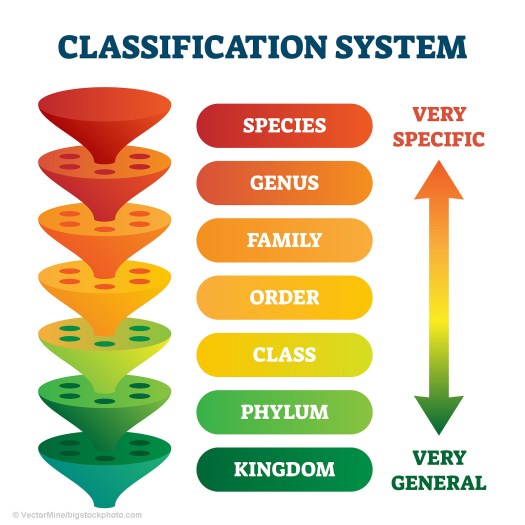
The problem is that the narrative we described seems to be in reverse order. Scientific classification, or the taxonomic ranking of living things, aims to illustrate the progression of genetic change, or evolution. The taxonomic ranking follows: species, genus, family, order, class, phylum, kingdom. This bottom-up progression described in our narrative does not align with the fossil record.

The stages of life development seem reversed in the fossil record. Dr. Hugh Ross noted, “…in many instances, such as the Avalon and Cambrian explosions, enormous macroevolutionary changes occurred rapidly; later, over long time spans, mere microevolutionary changes occurred. Diversification of phyla occurred first, and in no time, while diversification of species and genera occurred over eons.”

In summary, the fossil record appears to show the opposite of what naturalistic evolution predicts. However, the pattern in the fossil record aligns with the biblical view that God created various kinds of animals, each capable of change and adaptation. Their genetic design allows for microevolutionary adaptations over time to address changing circumstances and environments.

Today, we observe microevolution happening naturally and through guided human breeding and hybridization. We see this clearly in dogs and cattle. Even though humans have bred dogs to be very diverse, they remain within the canine (Canidae) family and do not evolve into a new order. Many varieties of cattle exist, but they are still cattle. Likewise, fossil evidence of animals transforming into a different class or phylum is lacking.

The best explanation for the incredible diversity of life on this planet, whether in the animal or plant kingdom, is that it was designed by a wise Creator who endowed living things with the ability to adapt and change on a microevolutionary level. The taxonomic ranking of living things seems to occur from the general to the specific rather than from the specific to the general.

— Roland Earnst © 2025

Reference: “Unconfirmed” by Hugh Ross in Salvo magazine, summer 2025, pages 38-41

A Salamander’s Toes

A Salamander’s Toes
Wandering Salamander (Aneides vagrans)

A fascinating mystery in the natural world is how various forms of life can adhere to vertical or inverted surfaces. A recent report by researchers at Washington State University explains how a salamander’s toes allow it to climb, jump, and glide from limb to limb in the forests from California to British Columbia. The wandering salamander (Aneides vagrans) in this study can control the blood flow to its square-shaped toes.

The toes of these salamanders have blood vessels all the way to the tips. They can control the blood flow in the vessels to expand or contract the surface area of the toes. In this way, these salamanders can attach or detach from tree surfaces. They can release from one limb, glide to another, and instantly attach as they wander through the coastal redwood forests.

Everywhere we look in the natural world, we see that a wonder-working hand has gone before. Many special adaptations in living things enable them to live in challenging environments. God has endowed each living creature with the features necessary to survive and adapt to changing environments. This mechanism in a salamander’s toes could inspire human innovators in the areas of prosthetics and robotics.

— John N. Clayton © 2025

References: Discover magazine for July 2025, page 10, and the Journal of Morphology for January 2025

Ptarmigan Camouflage Design

Ptarmigan Camouflage Design
Male Rock Ptarmigan in Winter
Ptarmigan Camouflage Design
Male Rock Ptarmigan in Summer

One of the most remarkable birds on the planet is the ptarmigan. Along with the snowshoe hare and the Arctic fox, the ptarmigan is a master of disguise. What these animals do is change from dark colors in the summer to totally white in the winter. When I was in Alaska, I saw these animals in the snow. Their coloration was as white as the snow itself, and the only thing you could see was a pair of eyes.

What is unique about the ptarmigan is that they seem to be aware of the importance of their coloration. The changeover from winter plumage to summer is a difficult time for a bird because of the danger of predation if they lose their camouflage. However, if they dropped all of their feathers, they would be unable to fly. What the ptarmigan does is seek out patches of mud and dirt and bathe itself so that its camouflage remains effective.

The question is how the ptarmigan knows to do this. With a brain the size of a pea, this bird could not reason and plan this camouflage behavior. The three species of ptarmigan (rock, willow, and white-tailed) were designed to be aware of their environment and themselves. Joe Jackson wrote in Alaska magazine, “This is a bird that’s hyperaware of what’s around it, and, we now know, hyperaware of itself.”

Trying to explain this astonishing behavior by chance is creative but not logical.  It appears that an intelligence has designed a system that enables this bird to survive in a complex environment. We truly can “know there is a God through the things He has made” (Romans 1:20). 

— John N. Clayton © 2025

Reference: Joe Jackson writing in the July/August 2025 issue of Alaska magazine, page 44

 A Partial Solution for Invasive Species

 A Partial Solution for Invasive Species - Nutria
Nutria Pair

The California Department of Fish and Wildlife (CDFW) has suggested a partial solution for invasive species: eat ‘em. Erin Huggins of the CDFW wrote, “Eating invasive species can help protect native wildlife by reducing their numbers and limiting the damage they cause to ecosystems.”

The nutria is an invasive species causing problems in 18 states, particularly in California. These rodents are native to South America but were initially introduced into the United States for the fur trade. Officials thought they had eradicated them from California in the 1970s, but they began to reappear in 2017. Nutrias cause significant problems for farmers and livestock owners, as they eat vegetation right down to the root. Nutrias are even more omnivorous than goats, so they are more destructive.

This is not the first time an invasive species has become an issue. In the 1970s, Asian Carp were introduced into ponds to control the growth of aquatic plants. Four East Asian species were introduced: silver carp, bighead carp, grass carp, and black carp. Some of these species would jump high out of the water when disturbed, creating a hazard for recreational boaters, and elaborate measures have been taken to keep them out of the Great Lakes.

Fish and wildlife officials are now advancing a partial solution for invasive species — making them a food source for humans. Even high-end restaurants now offer nutria and carp meat on their menu. Selling the public on this will take time. Consider that there was a time when Europeans shunned tomatoes, considering them to be poisonous.

The Bible has a good record of banning meat that would be hazardous for human consumption. A familiar prohibition of the Old Testament was against the eating of pork (Deuteronomy 14:8). The Israelites were also told not to eat anything that had already died or any bird or fish that could have eaten contaminated meat, such as vultures, owls, and falcons.

Strong evidence for the inspiration of the Bible is its accuracy in giving the ancient Israelites health guidelines that were far ahead of their time. We rely on science today to provide us with guidelines for healthy eating. A partial solution for invasive species might be to eat them, but a better solution is for humans to avoid upsetting the natural balance in God’s well-designed world.

— John N. Clayton © 2025

Reference: “Rodent for Dinner” in The Guardian, March 6, 2025

Bogong Moths and Stellar Migration

Bogong Moths and Stellar Migration
Bogong Moth (Agrotis infusa)
Bogong Moths
Bogong Moths aestivating on cave wall

Since ancient times, humans have used the stars for navigation. So have various animals and migratory birds. Even some insects use the stars to guide their flights at night. For the first time, researchers have discovered that insects use the stars to guide their long-distance migrations. The insects are Bogong moths, native to Australia.

Researchers spent years studying the migration of Bogong moths. They wanted to know how a moth flying at night could journey 620 miles (1000 km) to a place it had never been before. After spending their summer in the cool, dark caves of the Australian Alps, every autumn, they travel to their breeding grounds in the Australian bush.

Since Bogong moths travel at night, they can’t navigate by the Sun. Past research has shown that birds, as well as some insects such as dung beetles, use Earth’s magnetic field to guide their flight. However, dung beetles travel only a few meters, not 1000 kilometers. Researchers sought to understand how Bogong moths navigate their way.

Researchers captured some Bogong moths and placed them in a planetarium-like flight simulator that blocked Earth’s magnetic field, allowing the moths to navigate by eyesight alone. The research concludes that the moths use the stars to guide them.

These moths aestivate (remain dormant) during the hot summer, huddling tightly together on cave walls or dark crevices, and migrate in the cooler weather to eat and reproduce.  What is the purpose of these moths and their stellar migration? They nourish various predators in Australia. Many birds rely on them for food. Additionally, mammals, particularly pygmy possums, depend on them. Even Australian aborigines have feasted on Bogong moths.

We have described long migrations by butterflies, including monarchs and painted ladies. However, butterflies are active during the day, but moths fly at night. Bogong moths are the first insects known to migrate long distances at night using the stars for guidance. Is the remarkable migration of the Bogong moths merely an accident, or is it another essential part of an incredibly complex, designed system of life?

— Roland Earnst © 2025

References: space.com, the journal Nature, and Wikipedia

— Roland Earnst © 2025

Animal Pathogen Transmission to Humans

Animal Pathogen Transmission to Humans - Bird Flu

The World Organization for Animal Health and the World Health Organization released data on the number of illnesses and deaths caused by pathogens transmitted to humans from animals worldwide each year. They gathered data from 183 member states, showing that a billion illnesses and millions of deaths occur worldwide due to animal pathogen transmission to humans.

The recent data was triggered by the outbreak of bird flu known as H5N1. That virus has sickened millions of birds, dozens of mammalian species, and people worldwide. This strain of avian influenza has threatened food supplies and pressured governments to take a serious look at food security and public health.

When God created life on Earth, He planned it to meet the needs of humans. Long before modern science, God gave dietary instructions to the ancient Israelites. Skeptics today may consider those instructions archaic; however, they were far ahead of their time, and many of them remain applicable today. We see the consequences of not following wise dietary and health instructions.

Animal pathogen transmission to humans is not the only problem we face today. Every time humans have discarded the Bible as a guide for life, the consequences have been dire. We are seeing that again in the tragedies of humans suffering because of the rejection of God’s design for healthful and moral living.

— John N. Clayton © 2025

Reference: WHO and WOAH public health assessment, April 2025

Dealing With Disasters

Dealing With Disasters

One of the challenges that we all face is dealing with disasters such as tornadoes, hurricanes, and floods. Skeptics claim that if a God exists, He wouldn’t allow these terrible natural disasters to take place. That claim displays a combination of scientific and theological ignorance.

Tornadoes result when hot air is trapped under a layer of cold air. Warm air rises, but if the cold air above it is dense enough, the warm surface air will become even warmer. Eventually, the hot air will rise through the cold layer. Hang glider pilots and soaring birds look for these vertical updrafts. When the ground is covered with vegetation, there is never enough heat to trigger a strong upward air movement. However, when thousands of acres of land are plowed up or paved over, the surface air becomes hotter and creates stronger vertical movement. Earth’s rotation spins these upward air movements, creating a tornado.

Areas around 30 degrees north and south latitude are usually deserts. The states of Florida, Georgia, Mississippi, and Alabama are at or near 30 degrees north latitude. Hurricanes pick up massive amounts of water from the ocean and dump it on the land. Without hurricanes, there would be a water shortage in many places. In the past, storm surges were not a problem because the coastal areas were lined with mangroves and other plants on the barrier islands and along the mainland coast. Today, that protection has been stripped away and replaced with hotels, roads, parking lots, and beach-front homes. The result is that we are dealing with disasters.

God told humans to take care of the Earth, but greed, selfishness, and ignorance have often caused disasters. The more we learn about the creation, the more we understand that God designed it to work well, but humans have brought much pain and suffering on ourselves by misusing God’s gift. We must work together and avoid repeating past mistakes, or we will continually be dealing with disasters.

— John N. Clayton © 2025

Fruit Flies and Humans

Fruit Flies and Humans

The genetic data contained in DNA is rich in information. The DNA in living cells contains molecular genes that direct the synthesis of proteins necessary for the development of an organism’s body during embryonic development . As we mentioned in a previous post, the DNA of a fruit fly is 60% similar to that of a human. How can we explain the significant difference between fruit flies and humans?

How can similarities exist in the DNA of organisms that look and function very differently? According to Stephen C. Meyer, “scientists have found that the larger informational context in which genes are expressed often determines the specific function of the proteins they produce.” For example, Meyer notes that a corresponding gene in insects and vertebrates regulates the production of appendages. However, in fruit flies, it regulates the development of compound limbs with exoskeletons and multiple joints. In sea urchins, it regulates the development of spines. In vertebrates, it regulates the development of limbs with internal bony skeletons and multiple joints.

Orthodox evolutionary theory suggests that since genes control the development of anatomical structures, the corresponding genes should produce corresponding structures in various organisms. That would eliminate the differences between fruit flies and humans. Clearly, genes perform different functions based on the larger context of information in the organism. The context contains specified information that is key to the differences.

You could compare this context variability to words in an English text. The same words used in a different context can convey a very different meaning. Words can convey their intended meaning when they are used in a systematic, organized structure composed by an intelligent mind. A hodgepodge of random words can result from non-intelligent actions, but only intelligence can create a meaningful paragraph. What does that tell us when we apply that principle to genetics? Only intelligence can create a meaningful paragraph, and only intelligence can create fruit flies and humans.

— Roland Earnst © 2025

Reference: Signature in the Cell by Stephen C. Meyer, pages 471-472