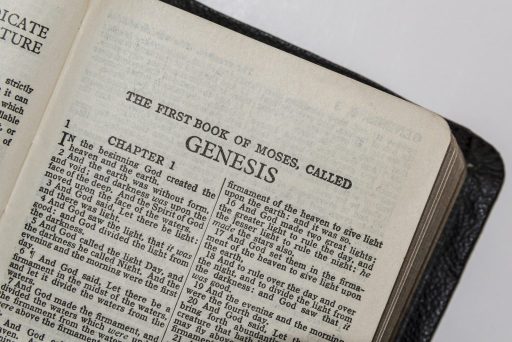
Difficult Genesis Issues – Where Did Cain Get His Wife? 

Difficult Genesis Issues - Where Did Cain Get His Wife? 

Several Genesis verses contain some issues that have bothered many people. For example, are we supposed to understand the ages of the people chronologically? If so, how did they live so long? Who was Cain afraid of, and where did those people come from? Where did Cain get his wife? Those are some of the difficult Genesis issues people have tried to resolve. 

The Journal of the American Scientific Affiliation is the product of scientists who believe in God and accept the Bible as His Word. They have advanced academic degrees, and their articles are very scholarly. Recent issues have carried some interesting discussions of difficult Genesis issues, including the account of Adam and Eve. The September issue contains an article by Dr. Roy Clouser. He contends that we have ignored the Jewish understanding of Genesis, causing credibility issues with the biblical account. Clouser maintains that the ages of biblical characters were not intended to be understood as chronological but symbolic of their character or accomplishments. For example, Methuselah living 969 years would indicate higher qualities than Adam’s 600 years. 

That is an interesting explanation. I am now 83 years old chronologically, and I cannot fathom living for 600 years. The physical weakness that comes from age seems to be built into humans as it is in the rest of the world. When Adam and Eve were in the Garden, they had access to the Tree of Life that would allow them to live forever. The traditional explanation that the human fall into sin brought physical death into the world for the first time has credibility issues with most people. 

Clouser makes an interesting comparison between Genesis 2:7, where God breathed into Adam the breath of life, and John 20:22, where Jesus breathed on His disciples. Genesis tells us that “God formed man of the dust of the ground,” clearly referring to man’s body. Then the verse says, “and man became a living soul.” Genesis 1:26-27 describes the man and woman as created in the image of God. That, of course, refers to the spiritual image because God is a Spirit and not a limited physical being. When humans sinned, God’s spirit departed from them. However, John 20:22 tells us that Jesus “breathed on them (His disciples) and said, ‘Receive the Holy Spirit.’” 

Other difficult Genesis issues include when Cain says, “Everyone who finds me will try to kill me” (Genesis 4:14). Who are those who would try to kill Cain, and where did they come from? Where did Cain get his wife? Cain also builds a city, and that requires large numbers of humans. My response has always been that Adam and Eve had many children in the Garden of Eden. Therefore, all of humanity rebelled against God and were forced out of the Garden and lost a relationship with God. Clouser presents a different interpretation that warrants more study. 

The fact is that the biblical account is accurate and deals with salvation through Jesus Christ. However, understanding how we got to where we are is very complex and will always leave some questions for further study. It is our understanding of the difficult Genesis issues that is in question–not the accuracy of the biblical record

— John N. Clayton © 2021

Cassowary – A Strange Bird

Cassowary – A Strange Bird

When we think of birds, we usually picture songbirds, chickens, pigeons, eagles, and others. However, we are also aware of less familiar birds such as penguins, ostriches, and kiwis. Imagine a bird that stands up to six feet (1.8 m) tall, weighs 130 pounds (59 kg), has spine-like quills in place of feathers, and has a four to five-inch (12.5 cm) claw on its inner toe that it can use to stab and even kill a dog or a human. This creature can run 30 miles (50 km) per hour and jump more than five feet (1.5 m) in the air. The name of this bird is the cassowary.

These birds, native to New Guinea, Indonesia, and Australia, can kick, stab, head butt, and peck. Cassowaries are a factor in the discussion of whether the dinosaurs were birds or reptiles. The wings of most modern birds are for flying, or in some cases, for swimming underwater. Instead of feathers, cassowary wings are tipped with large quills resembling porcupine quills without the barbs. Some dinosaur fossils give evidence of feathers, but we don’t know their function. However, cassowaries demonstrate that wing-like and feather-like structures can have other functions.

The cassowary can teach us many lessons. One is that taxonomy gives us only a limited view of various animals. Another is that birds have more than one role in ecological applications. Cassowaries play an essential role in the ecosystem where they live. They are omnivores, eating fruits as well as small animals. They lay eggs in a nest on the ground and incubate the eggs. The males are the primary caregivers during incubation, and they care for the young after the eggs hatch. We tend to view flightless birds as vulnerable creatures that live only where there are no predators to threaten them. Cassowaries show us that is not always true. They can defend themselves and live for 40 to 50 years.

The biblical view of birds includes only birds that could fly. The Hebrew word commonly used for “bird” in the Old Testament is “tsippor,” meaning a small bird, such as a sparrow. (For example, see Genesis 7:14 and 15:10, and Ezekiel 39:4.) The Hebrew word “oph” refers to a flying bird. (For example, see Genesis 40:17-19, 2 Samuel 21:10, Ecclesiastes 10:20, and Hosea 9:11). “Ayit” refers to a hawk or bird of prey. (See Isaiah 46:11 and Jeremiah 12:9.) In the New Testament, the Greek word “peteinon,” meaning flying or winged bird, is used in Matthew 8:20 and 13:32, Luke 9:58, Romans 1:23, and James 3:7.

The Cassowary does not fit any of those passages, considering that people in the world of both Moses and Jesus did not have contact with flightless birds. Instead, we can view the cassowary as a part of God’s creation to fill a very different kind of ecological niche. However, its role in creation’s design and the world today remains a subject of future study.

— John N. Clayton © 2021

Reference: World Wildlife magazine for the summer of 2021 page 6, Encyclopedia Britannica online 9/2/21/, and Wikipedia.

Racist Attitudes and the Facts

Racist Attitudes and the Facts

The history of modern civilization has been marred by human power struggles using racist attitudes to promote their agenda. European Enlightenment scholars decided that humans should be divided into discrete groups as some animal species are. They attached meaning to skin color using cultural stereotypes that included temperament, intelligence, and behavior. Slave owners used this concept to justify enslaving African people. Nazis in Germany sought to define a Germanic people based on racial exceptionalism.

Racist attitudes have even shown up in medicine. In 1793, a yellow fever epidemic struck Philadelphia. White physicians claimed that black people were immune to yellow fever even as it killed many blacks. In 2016, a study of 200 medical students at the University of Virginia found that half of them believed there were biological differences between blacks and whites. Those differences included the belief that black people have thicker skin and higher pain tolerance than whites. At the beginning of the COVID-19 pandemic, some reports said that black people couldn’t catch the virus, and a few months later, more articles came out saying that blacks were more susceptible to it.

The biblical discussion about race is entirely different from the power struggle that has gone on for a very long time. Genesis 3:20 tells us that Adam called his wife Eve “because she was the mother of all living.” That means that all races go back to Eve, and we are thus all related. In Acts 17:26, Paul told the intellectuals in Athens that God “has made of one blood all nations of men to dwell on the face of the earth…” These passages emphasize the oneness of all humans. 

In a National Geographic article, Angela Saini wrote that science has shown “that we are genetically more alike than any other primate species and that individual difference far outweighs any group difference.” Saini warns against the narrative that “searches the margins of our genomes for the tiny statistical differences between populations, consciously or unconsciously playing to those who seek to divide us in other ways.”

Racist attitudes are not justified by biology or the Bible. Racism is a cultural activity, and it opposes the Bible in loud and clear terms. Those who claim to be Christians and yet practice racial discrimination need to read their Bibles and not listen to Satan’s agents sowing hatred and division among the human family. 

— John N. Clayton © 2021

References: “The Story of Human Difference” by Angela Saini in National Geographic , September 2021, pages 15-17 and American Journal of Public Health

Mental Health and Faith

Mental Health and Faith

One of the challenges we face in 21st century America is the growing rate of mental illness cases. Every day the media informs us of a tragedy caused by someone who is mentally ill. Closer to home, many of us have had a loved one afflicted with some form of mental illness. Is there a connection between mental health and faith?

Mental illness has many causes. A small percentage of mental illnesses result from a medical condition. For example, my son’s schizophrenia resulted from a congenital condition. Because he was adopted, we don’t know all of the factors leading to his multiple illnesses, but his birth mother had German measles during pregnancy. Brain injuries and drug abuse can also result in mental illness.

A far more common cause of mental problems involves life experiences. Some of us were forced to witness the horror of war, and many others have suffered abuse. Those things have caused a variety of mental issues. We frequently hear atheists claim that religion causes mental illness by heaping guilt on people over something they have done in their lives. Indeed, some preachers have used guilt to motivate people to change behavior or convert to a doctrinal view.

The reality is that there is a connection between mental health and faith. Christianity is a guilt-removing belief system. The Christian message is designed to free people from guilt and promote a healthy and mentally stable lifestyle. The Sermon on the Mount in Matthew 5–7 gives guidelines to a healthy mental attitude. There you will find these keys to mental health: loving others, not exacting revenge or retaliating, caring for others (even your enemies), not being religious for show, and not being obsessed with material things.

We all fail in life, but the Christian system brings forgiveness. When Peter asked Christ how often he had to forgive, Christ’s answer indicated forgiveness should be infinite (Matthew 18:21). Carrying a grudge can cause enormous mental pain, which John compares to walking in darkness, but loving others brings us into the light (1 John 1:7-11). James gives insight into how we can endure hardships and help one another gain a positive perspective on life (James 5:10-16).

As Americans turn away from the teachings of Christ and rely on pop psychology and drugs to achieve sound mental health, the result has been the opposite. Pill popping and drug use have skyrocketed, and so has the number of people in desperate mental stress. Living the Christian life brings stability and fulfillment and the knowledge that there is a place of peace and love when this life is over. Mental health and faith in Christ go together.

— John N. Clayton ©2021

Interdependent Factors in Statistics

Interdependent Factors in Statistics and BMWs
BMW Z4 Cars

Yesterday, we considered the wise saying, “Figures don’t lie, but liars figure.” We said that one problem with statistical arguments is that they often don’t include all the variables. A second problem with statistical arguments is that they don’t ensure that all of their variables are independent. Therefore, we must consider the interdependent factors.

For a trivial example, let’s suppose I ask, “What are the odds that I will buy my grandson a BMW for his birthday?” The first question we should ask is, “Is he old enough to drive?” A second question might be, “Can he get insurance?” A third variable would be, “Do I have enough money to buy the car?” Finally, a fourth variable might be, “Would he be happy with a used BMW?”

Since I love my grandson, I might say that the odds of me buying a car for him are 100%. However, as we consider each of those variables (plus many more), the probability becomes less. Are these variables independent, or are they interdependent factors? If he is not old enough to drive, he is also not old enough to get insurance. The probability of him being able to drive and being able to get insurance are not independent because both depend on his age. His being happy with a used BMW is not independent of my having enough money to buy a new one.

If we look at the question of life on Mars, we might be inclined to say that the odds are very high that life does exist on that planet. It has a mass similar to Earth. Mars has an atmosphere, volcanic eruptions, and water. Mars is tilted on its axis, it has a magnetic field, and the length of a day is roughly 24 hours. Are all of these variables independent? The answer is no because if the planet has volcanic eruptions, it will have an atmosphere, and volcanic eruptions always involve some amount of water. Both the water and the atmosphere are interdependent factors that depend upon volcanic eruptions.

The tricky part of this subject for both believers and atheists is knowing what is dependent and what is independent. As our knowledge of a topic improves, we are likely to find more dependent factors. For example, we recently discussed the importance of hydroxyl radicals in cleaning Earth’s atmosphere of pollutants. What are the odds of hydroxyl radicals being in a planet’s atmosphere? What may appear to be a separate and independent variable is the presence of lightning. Science has known for a long time that lightning helps produce nitrates which are essential for plant growth. In June of 2021, scientists announced a recent discovery that lightning produces hydroxyl radicals. Any planet that has lightning will have hydroxyl radicals, so the presence of hydroxyl radicals is not independent but is dependent on lightning.

This discussion has practical value in today’s world. Yesterday we said that we would examine some other statistical issues involving God’s existence. Think about this. Considering the millions of interdependent factors that must be in place to allow us to exist, could they all have come together by chance? Consider it on various levels—the creation of a universe from nothing—the creation of a life-supporting planet—the creation of the first life from inert matter—the creation of advanced life. We could go on. But considering all of the interdependent factors at each level, is it more logical to assume they came together by mere chance or guided by an intelligent Designer?

— John N Clayton © 2021

Making the Right Assumptions

Making the Right Assumptions about Life in Space

In my first college course in statistics, the professor made the following statement: “You can prove anything by statistics as long as you make the right assumptions.” I didn’t understand what he meant at the time, but I have seen the truth of that statement over the years. People decide what they believe, and then they manipulate statistics to prove that they are correct. Another way of saying it is, “Figures don’t lie, but liars figure.” This is true of religious people and atheists alike, and it’s a difficult mistake to avoid. Making the right assumptions to prove your point is usually possible.

There are some things we need to know about any statistical claim. The first is whether there are unconsidered variables in the calculations. For example, recent COVID death statistics failed to include other conditions that affected the mortality of people with the disease. Mortality rates for terminally ill people in nursing homes are not the same as those for college students.

People who claim that statistics indicate there must be inhabited planets with people like us base their claim on limited variables. In 1961, Astronomer Frank Drake formulated what is known as the Drake Equation to compute the probability of life on other planets. Drake used seven variables, with each assigned a probability factor. They are:

R∗ = the average rate of star formation in our galaxy
fp = the fraction of those stars that have planets
ne = the average number of planets that can potentially support life per star that has planets
fl = the fraction of planets that could support life that actually develop life at some point
fi = the fraction of planets with life that actually go on to develop intelligent life (civilizations)
fc = the fraction of civilizations that develop a technology that releases detectable signs of their existence into space
L = the length of time for which such civilizations release detectable signals into space


It should be evident that none of these variables are based on observations but on making the right assumptions. In addition, since 1961, science has added a vast number of new variables. For example, we need to consider black holes, star distribution, planetary chemical makeup, and asteroid bombardment. Added to that list are a host of physical constants and geologic processes we have learned through space exploration.

Astronomer Dr. Hugh Ross has refined and expanded the list to include 322 variables. Even assigning modest values for each of those parameters would mean that the probability of all 322 occurring together (as they have on Earth) would be 10-388. That number is beyond impossible. Making the right assumptions involves considering all of the variables.

Whether life exists on any other planet
is not a biblical question and has nothing to do with the existence of God. However, tomorrow we will examine some other statistical issues involving God’s existence.

— John N. Clayton © 2021

The Story of Joseph in Egypt

The Story of Joseph in Egypt

Skeptics who challenge the Bible’s accuracy often point to the story of Joseph in Egypt recorded in Genesis 37–50. First, the Bible tells of Joseph being sold by his brothers to a passing caravan and then sold as a household slave to an Egyptian officer named Potiphar. Next, after being falsely accused by Potiphar’s wife, Joseph lands in prison, becoming a model prisoner. Finally, by interpreting Pharoah’s dream, he becomes second in command in Egypt. Then the famine Joseph predicted forces Joseph’s brothers to go to Egypt for food. Eventually, the whole family settles in Egypt in an area the Bible refers to as Goshen (Genesis 47). 

Living in Egypt continues for 400 years (Exodus 12:40). Eventually, a new pharaoh becomes unhappy about this foreign group residing in his land, perceives them as a threat, and enslaves them (Exodus 1:8-14). Then a leader named Moses helps the enslaved people escape, pursued as far as the Red Sea by the Egyptian army. Finally, after 40 years of wandering, they end up back in Canaan. 

Atheists and skeptics claim that the story of Joseph in Egypt can’t be accurate because there is no record of any of this outside of the biblical account. Therefore, they say, it must not be true. However, Biblical Archaeology Review magazine (Fall 2021, pages 40-47) carried an article by Rachel Hallote titled “Does Archaeology Confirm Joseph’s Time in Egypt?” It said, “Egyptian material is nearly identical with the short summary of the biblical account.” 

The problem seems to be that the Egyptian sources referred to the Canaanites as “Hyksos.” Secular writers often fail to recognize that the Hyksos were the descendants of Jacob and his son Joseph. The article concludes that “the stories of Joseph and his brothers are clearly rooted in the rise of the Hyksos in Egypt.” Thus the biblical story of Joseph in Egypt does not conflict with archaeological evidence.

— John N. Clayton © 2021

For more information: https://www.baslibrary.org/biblical-archaeology-review/47/3/5

You can learn more about our video series on archaeology and the Bible HERE

You Should Not Exist

You Should Not Exist

Do you realize that from virtually every standpoint, you should not exist? Philosophers debate the question of, “Why is there something instead of nothing?” However, the physics of your existence is much more of an issue than a philosophical debate.

Modern scientific discoveries have added to the evidence that you should not exist.
We know that matter and energy are directly related. We can turn matter into energy, as evidenced by the atomic bomb. Scientists have now shown that energy can be turned into matter. Einstein’s equation E = mc2 can work forward and backward.

The complicating factor is that two kinds of matter are always produced when energy is turned into matter. In addition to the ordinary matter we are made of, there is also a mirror image of it called “antimatter.” Antimatter consists of positively charged electrons (positrons) and negatively charged protons (antiprotons). When matter and antimatter are combined, they destroy each other, reverting to the energy from which they came. The cosmic creation event should have created equal amounts of matter and antimatter. How did they not destroy each other?

Another physics principle that says you should not exist is the Second Law of Thermodynamics. It says that in a closed system, things tend to move to disorder. This law allows diffusion to happen. It is why we, and everything else, fall apart with age. The cosmos, by definition, is a closed system. Carl Sagan used to say, “The cosmos is everything that is or ever was or ever will be.” The physical world is slowly dissolving, and disorder (called entropy) is increasing. The stringent conditions needed for you to exist are becoming less and less likely.

The Bible writers recognized this fact.
Isaiah wrote, “Lift up your eyes to the heavens, look at the Earth beneath. The heavens will vanish like smoke, the Earth will wear out like a garment, and its inhabitants will die like flies, but my salvation will last forever…” (Isaiah 51:6). The spiritual realm is not affected by entropy, but the physical realm is. We exist because God created us. How He separated matter and antimatter is a mystery to science. How life came into being with the massive increase of order can only be explained because God designed our existence for a purpose.

When you take the position of the atheist, you should not exist. Existence is a vast mystery that philosophers and scientists can’t answer. From a biblical perspective, we are major players in the struggle between good and evil. (Read the book of Job.) We have a purpose, and we exist to fulfill that purpose. Being created in the image of God answers many of our questions. COVID, climate change, and the struggles between good and evil in our world remind us that our existence is temporary. There is a new existence coming that will verify why we exist in the present.

— John N. Clayton © 2021

Animals Growing Crops

Animals Growing Crops

We generally think of farming as a human enterprise, but there are cases in the natural world of animals growing crops. In most cases, the crop they are raising could not survive without the animal tending it. Some good examples are living things that eat fungi or algae. 

Researchers at Kyoto University in Japan studied red algae called Polysiphonia. These algae have a symbiotic relationship with a species of damselfish (Stegastes nigricans). Red algae look like a brown carpet, and the damselfish make sure that the carpet is not disturbed. If any other species of algae shows up among the red algae, the damselfish will nip it off and take it out of the fish’s territory. If the damselfish is removed from the area, the red algae can’t survive. So it appears that the damselfish are critical to the survival of the red algae and vice versa. 

There have been other studies of certain species of ants, termites, and ambrosia beetles that grow fungi for food. Some of these “farmers” even use bacteria to produce pesticides to protect their fungus crops. How do such symbiotic relationships happen? Evolutionists suggest that initially, the animal had a varied diet but becoming dependent on one thing offered such an advantage that the animal gave up any other foods. 

The difficulties with the evolutionary explanation are many and quite complex. The nutritional issues are a problem because a single source of nutrition must have a balanced collection of minerals. Going from a varied diet to a single food does not seem to be an evolutionary advantage. Defending the food source is also an issue. For example, when the researchers removed the damselfish, other fish and sea urchins had eaten all of the red algae within days. 

Another explanation is that symbiotic relationships are part of the design of every animal’s genome. The earliest fossil remains of many animals show that a symbiotic relationship was already in place. We suggest that animals growing crops is part of God’s design. He gave them the genetic messaging and instinctive drive necessary for them to survive. 

— John N. Clayton © 2021

Reference: Original article in Science News August 12, 2006, page 102. You can find many other references on the web. 

Consequences of New Anti-discrimination Rules

Consequences of New Anti-discrimination Rules

Discrimination is a buzzword that has all kinds of implications. Of course, we don’t want to be accused of discriminating against someone based on race or gender. However, the federal government has gone far beyond those categories and has gotten into areas involving morality. So what are the consequences of new anti-discrimination rules?

In February of 2021, the United States Department of Housing and Urban Development issued a directive barring discrimination in housing based on sexual orientation or gender identity. For schools and colleges, this means that dorm rooms, locker rooms, shower spaces, and restrooms must be open to anyone, no matter their gender or sexual orientation. Schools not following the directive face fines and criminal penalties. 

We are already seeing the consequences of new anti-discrimination rules in high schools where boys are demanding to use girls’ locker rooms and participate in girls’ sports. A more complex situation is confronting Christian colleges because of moral concerns. They can be threatened with government action if they have a girls’ dorm or a boys’ dorm. 

The College of the Ozarks near Branson, Missouri, is involved in a court battle. This school, affiliated with the Presbyterian Church USA, was established in 1906. It has 1426 students and 30 academic majors. The college’s five-fold mission is to encourage academic, Christian, cultural, vocational, and patriotic growth in its students. With the help of Alliance Defending Freedom, the school is challenging the new government rules. 

The federal government has taken the Civil Rights Act of 1968 as the basis of its directive. That law was written to stop discrimination against African Americans, but they are reinterpreting it to accommodate LGBTQ activists. The consequences of new anti-discrimination rules for Christian colleges will be to open all dorms to everyone. An alternative would be to close the dorms and force students to find off-campus housing, which would be a financial hardship for the schools. Christian colleges across the nation are watching what happens in this court battle. 

— John N. Clayton © 2021

Reference: Faith and Justice magazine for August 2021, pages 10-17, and College of the Ozarks website. You can also read more about the case of College of the Ozarks v. Biden HERE.

DOES GOD EXIST? TODAY

Evidence for God In the Things He Has Made

Skip to content ↓