What is the Cause of the Universe?

What is the Cause of the Universe?

In the past few days, we have examined this syllogism:
Premise 1- Everything that begins to exist must have a cause.
Premise 2- The universe began to exist.
Conclusion- The universe has a cause.

We concluded that premise 1 and premise 2 are both correct. That means the conclusion must be true. So what is the cause of the universe?

The scientific consensus is that the big bang was the beginning of time and space as well as matter and energy. So, what does that tell us about the Cause? It tells us that the Cause has to be non-material and outside of time and space. That fits the biblical description of God! Check it out!

Jeremiah 23:23-24- God is everywhere and sees everything.
Acts 17:28- In God, we live and move and have our being.
Psalms 90:4 and 102:27, 2 Peter 3:8- God is outside of time.
Proverbs 8:22-23, John 1:1-3, Revelation 1:8- God existed before the universe and time began.
John 4:24- God is a spirit.
1 John 4:8 and 16- God is love.


As we said before, the common name for the cosmic creation event is the big bang. However, that derisive term coined by astronomer Fred Hoyle does not accurately describe what happened at the beginning. A big bang indicates some kind of explosion. Explosions are haphazard and chaotic, so I prefer to call it the cosmic creation event. Scientists have determined that the beginning could not have been chaotic but precisely tuned to create a life-supporting universe. The more we learn about the processes of creation, the more we see that if things had been even slightly different, we would not be here.

What is the cause of the universe, and what process was used to create it? Scientists have studied that process and learned many things about it. Next time, we will think about what science has discovered.

— Roland Earnst © 2022

Did the Universe BEGIN to Exist?

Did the Universe BEGIN to Exist?

Look at the syllogism in the picture above. Is it logical? Does it make sense? Yesterday, we examined premise 1 and concluded that it is true. However, looking at the second premise could be more challenging. Did the universe BEGIN to exist?

You could assume that the universe has always existed. If it didn’t BEGIN to exist, it doesn’t need a cause! That was the approach of many “thinkers” from Aristotle to Einstein. When Einstein formulated the theory of special relativity in 1905, he was concerned that his formulas indicated that the universe was not in a steady state. It was either expanding or contracting, meaning it could not have always existed. To correct that “problem,” Einstein added a “cosmological constant” that made it appear that the universe is unchanging. He just made up a number so that his equations would show that the universe was eternal. Other scientists realized that Einstein was cheating, and he later admitted it was the biggest mistake of his life.

Scientific experiments from the 1920s to the 21st century have confirmed the universe is expanding and even accelerating in its expansion. Since the universe is expanding, we can trace that expansion back to a point where the universe began as a “singularity.” So, did the universe begin to exist? The answer is yes, it had a beginning! That was something that many scientists did not want to accept because of its religious implications.

British astronomer and atheist Fred Hoyle coined the derisive term “big bang” because his faith would not allow the concept of an ultimate Causer, or God. He used that term to make fun of the idea of a beginning. However, it has now become the popular term for the beginning.

So, if premise 1 and premise 2 are both true, the conclusion must be true. The universe has a cause, and science can’t determine what it is. The scientific consensus is that the big bang was the beginning of time and space as well as matter and energy. So, what does that tell us about the Cause? It tells us that the Cause has to be non-material and outside of time and space. What fits that description? We will examine that next time.

— Roland Earnst © 2022

Why Does the Universe Exist?

Why Does Anything Exist?

Yesterday we questioned, “Why does the universe exist?” So, why is there anything now if nothing existed before the cosmic creation event or big bang?

We can say that everything exists because God exists. God chose to create this fine-tuned universe of space, time, matter, and energy. We can summarize this with a simple logical statement known as a syllogism. If the first and second premises are correct, then the conclusion must be true.

Premise 1- Everything that begins to exist must have a cause.
Premise 2- The universe began to exist.
Conclusion- The universe has a cause.


Premise 1 seems to be obvious. If something did not exist and then came into existence, it must have a cause for its existence. For example, suppose you are driving down the street and notice an empty lot. Each time you drive by, there is nothing but grass growing there. You take a different route for a few months, but one day you drive down that same street, and there is a house on the lot. You would not conclude that the house appeared there without a cause.

You would logically conclude that some builders constructed that house for a reason–probably because someone wanted to live there. You could investigate to learn the identity of the occupants. You could even explore building methods to see how the house was constructed. However, you would surely not conclude that the house appeared out of nothing with no cause.

Why does the universe exist? Did it BEGIN to exist? I think that a reasonable person would be willing to accept premise 1. Tomorrow, we will examine premise 2.

— Roland Earnst © 2022

Something from Nothing Does Not Make Sense

Contemplating Something from Nothing Does Not Make Sense

How can you get something from nothing? Most scientists today agree that the universe had a beginning. They disagree on how it began, but they largely accept the idea that it began to exist. However, another question many ask is, “Why does anything exist?” If there was nothing before the universe began, why are we here? If nothing existed before the universe began, it is difficult to explain why there is anything at all.

Some have tried redefining “nothing” to make it “something.” Sometimes they suggest that something is gravity. So, if gravity existed before there was anything, where did the gravity come from? What they are doing is to substitute gravity for God, but how can there be gravity without mass?

Isaac Newton described gravity as the attraction between objects that have mass. The more mass, the more gravity pulls them together. That was the accepted theory until Einstein devised a new idea. His theory defined gravity as a curvature in space-time, which is the accepted concept today. But, according to scientists, the cosmic creation event (usually referred to as the big bang) was also the beginning of space and time. So, where does gravity come from if there is no space-time or matter-energy? That still does not answer the question, “Why does anything exist?” You can’t get something from nothing.

Of course, if science says that gravity existed before anything else, atheists argue that it is no different from saying that God existed before anything else. Who or what made God? Everything that begins to exist must indeed have a cause. However, God is eternal. He did not begin to exist. God is the first cause, the unmade Maker, the necessarily existing uncaused Being. If God created time and space, He is outside of time and space.

God existed before time, but even using the term “before” shows that we are limited to thinking in time terms. There is no before or after with God. He knows the future because He can see the entire timeline of the cosmos, viewing it from the outside.

So back to our original question, “Why does anything exist?” We will look at that tomorrow.

— Roland Earnst © 2022

Apologetics Is Not Apologizing For Faith

Apologetics Is Not Apologizing For Faith

In his book “On Guard,” William Lane Craig tells about a remark a woman made to him when she learned he teaches Christian apologetics. She remarked indignantly, “I’ll never apologize for my faith.” I have had similar experiences several times. In a society where we see a significant denial of God’s existence and the credibility of the Bible, apologetics is not apologizing for our faith.

The word” apologetics” may sound like “to apologize,” but it is not telling someone you are sorry that you are a Christian. “Apologetics” comes from the Greek word apologia, which means defense, as in a court of law. Craig says that Christian apologetics involves making a case for the truth of the Christian faith.

Many Christian preachers and Church members feel that there is no reason to be involved in apologetics. In their view, giving evidence in apologetics weakens faith. “If you have faith, you don’t need evidence” is a statement I frequently hear. The fact is that the Bible account shows that Christ and the apostles used apologetics. Examples of Jesus using evidence are when He appealed to miracles and fulfilled prophecy to prove that what He said was true. Read Luke 24:25-27 and John 14:11 to see this. When Jesus dealt with “Doubting Thomas,” His method was to show him the evidence.

When Peter gave his sermon in Acts 2, he appealed to the miracles of Christ in verse 22. In verses 25-31, he appealed to fulfilled prophecy, followed in verse 32 by using the resurrection of Christ. The apostles showed that apologetics is not apologizing when they used the handiwork of God to prove His existence (Acts 14:17). Romans 1:20 finds Paul referring to the evidence seen in the natural world. Paul also used eyewitness testimony of the resurrection of Christ in 1 Corinthians 15:3-8.

The world has entered what scholars are calling “the post-Christian era.” As a result, Christianity is becoming a minority belief system worldwide. In Europe, the number of Christians compared to the general population is very small – estimated to be under 25% and going down. In the United States, statistics show it is under 40%.

Apologetics is not apologizing, and the need for it is massive. This apologetics ministry believes that science is a tool to show the nature and actions of God and is not an enemy of faith. That message is biblical and logical. It is the purpose of this website. We hope you will see the need for apologetics in today’s society.

— John N. Clayton © 2022

Flies Provide Useful Functions

 Flies Provide Useful Functions
Green Bottle Fly

We are all familiar with houseflies except those readers in Iceland, where they don’t have any. We may not realize that, like all living things, flies provide useful functions and demonstrate incredible design.

Most of us know that flies can spread diseases such as salmonella, E.coli, chlamydia, typhoid fever, dysentery, cholera, polio, anthrax, leprosy, and tuberculosis. That’s because by using chemical receptors in their foot pads, flies can smell rotting organic waste. They land on garbage or dead animals, vomit digestive enzymes onto them, and lap up the liquified remains with a sponge-like tongue. In this way, they help to decompose and remove organic waste. However, they can pick up bacteria and carry them to humans.

Flies have glandular pads on the soles of their feet that secret a fluid that adheres to any solid surface. That adhesion is greater than the force of gravity, allowing the fly to walk up a wall or upside down on a ceiling. Flies can only fly about 4 miles per hour, so they become food for other life forms.

Flies in their larval stage are called maggots. Because they are sterile, green bottle fly maggots (Lucilia sericata) are used to treat wounds that don’t respond to antibiotics. The fly larvae also promote the healing of diabetic ulcers, gangrene, and burns by stimulating blood flow to the injured areas. In addition, they have been used to treat MRSA (a bacterial infection resistant to antibiotics) because they eat the dead and decaying flesh caused by the bacteria.

There is no question that humans need to restrict fly numbers and avoid contact with them. At the same time, flies provide useful functions and demonstrate incredible design. They are an important food for frogs and other animals and helpful in treating the medical problems of humans. Nothing in nature is evil or malicious because God created all of life with a purpose and function. That is even true of the housefly.

— John N. Clayton © 2022

Reference: Sheryl Myers, founding director of Heart of the River Coalition in Anderson, Indiana.

What is the Aphelion?

Summer Heat and the Aphelion

Across the United States, on July 4, 2022, people celebrated the anniversary of our country in various ways. There were family picnics, parades, fireworks, and other events. However, most people did not realize that in addition to being the U.S. Independence Day, July 4 was also the day for aphelion this year. What is the aphelion?

Earth’s rotation around the Sun is not a perfect circle but slightly elliptical. When Earth is farthest away, that is called aphelion, and it occurred at 3 a.m. EDT (0700 GMT) on the fourth of July this year. At that time, Earth was separated from the Sun by 94.51 million miles (152.1 million km). We see this as another evidence of design in our planet. Aphelion always occurs in mid-summer. When Earth makes its closest approach to the Sun, astronomers call that perihelion. That happens in mid-winter, and the next time will be January 4, 2023, when Earth will be 5 million km closer to the Sun.

Why do we consider it a design feature that Earth and Sun are closest during the winter and farthest apart in the Summer? Look at a map or globe of Earth and notice that most of the land mass is in the Northern Hemisphere. The Southern Hemisphere is mostly water. Water absorbs and dissipates heat from the Sun much more efficiently than land does. In mid-summer, the temperature can, and does, become unbearably hot when the sunshine beats down on the land. It would be even hotter if the aphelion occurred at that time.

Of course, the summer and winter seasons are determined by the tilt of Earth’s axis, not distance from the Sun. However, distance plays a minor role in the concentration of the Sun’s rays on our planet. Our orbit around the Sun maintains Earth in the “Goldilocks Zone” within the temperature range where water can exist as a liquid. Summer and winter are tempered by the aphelion and perihelion to further stabilize our climate. That is an additional indication that our planet is well-designed for life. We don’t think it’s a coincidence, but evidence of a loving God.

— Roland Earnst © 2022

Historic Yellowstone Flood

Historic Yellowstone Flood
Flooding in Yellowstone National Park

You have probably heard about the historic Yellowstone flood that closed Yellowstone National Park earlier in June of 2022. On top of heavy rains, warm temperatures caused massive snow melt. The result was that Yellowstone River and its tributaries overflowed their banks, washed out roads in the park, and washed away buildings in the area. Thousands of people had to be evacuated from the park, and it was closed. The northern part of the park suffered the worst damage and is still closed at this time.

The Yellowstone River is the longest free-flowing river in the lower 48 United States. It flows for almost 700 miles without any dams to hold it back. Humans see this flooding as a disaster that will take years and millions of dollars to correct. However, from the standpoint of trees and animals, the flooding is a blessing. Cottonwood and willow trees along the river were declining. They serve to provide shade and shelter for bison, gray wolves, and grizzly bears. The flooding provided new moist soil and carried seeds, allowing new trees to sprout and grow.

When rivers don’t have an opportunity to overflow their banks, erosion deepens the channels, invasive plant species grow along the banks, and the floodplain wetlands dry up. When rivers run wild and overflow their banks, the surrounding wetlands store water and provide habitats for many birds and mammals. In addition, a raging river spreads new soil across the floodplain, reshaping and renewing the land. Scott Bosse, the director of American River’s Northern Rockies office, said, “As humans, we often think that floods are disastrous, and fires are disastrous, but they’re really only disastrous because we put human lives and property in harm’s way. They’re not disastrous from an ecological standpoint. Quite the contrary, they’re healthy for rivers, and especially for a river like the Yellowstone.”

This historic Yellowstone flood is not all bad. As far as the animals are concerned, they are probably relieved to have fewer humans around. The native cutthroat trout in the Yellowstone river can find new access to tributaries to spawn. At the same time, the introduced rainbow trout have had their eggs and fry washed away by the raging waters. The scouring of the river washed up a supply of invertebrates to provide meals for fish and birds. Ospreys, eagles, American dippers, and river otters benefit from a new food supply.

Meanwhile, the historic Yellowstone flood allows cottonwood and willow trees to release their seeds into the wet sandy soil to germinate. Cottonwoods are the dominant trees along the Yellowstone River, and the new trees will benefit breeding birds in the future. Because of the added soil moisture, the flood waters also benefit the grazing animals by giving them more plants to graze on.

Floods can benefit the ecosystem, but humans often build roads, homes, and other structures in floodplains. Or they build homes downstream from dams that have the potential to break and cause a worse flood. God gave us the responsibility to care for the Earth. To do that, we must first respect it and understand how natural systems work. In the long term, the Yellowstone River ecosystem and its tributaries benefit from the historic Yellowstone flood.

— Roland Earnst © 2022

Reference: National Geographic “Historic Yellowstone Flooding Brings Renewal Despite Destruction” by S.J. Keller

Activities and Science Experiments for Children

Activities and Science Experiments for Children

Several years ago, we produced some materials called “God Made It All Perfect,” suggesting various activities and science experiments for children at home or in a children’s class or worship hour. Jean Wiebe and Patty Parker wrote the material which focuses on seeing God’s wisdom and design in the natural world. We have it available free if you will pay the postage to mail it to you. If you are interested, email us at jncdge@aol.com or call 574-514-1400.

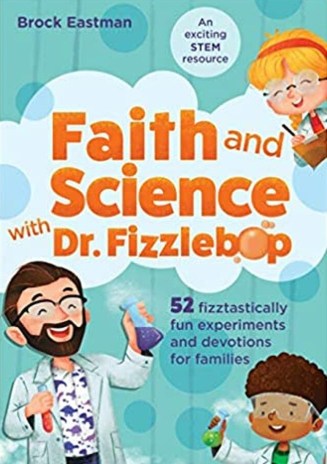
The Focus on the Family organization has produced some children’s activity materials with good scientific lessons that can be done at home. The series features “Dr. Fizzlebop” and is a part of the Focus on the Family Clubhouse program. In addition, the June/July issue of Focus on the Family (pages 38-45) has a series of experiments and explanations that just about any parent or grandparent can use with children. You can also use them in a VBS or children’s class.

Focus on the Family has released a book titled “Faith and Science With Dr. Fizzlebop.” You can find activities and science experiments for children in FAITH AND SCIENCE WITH DR. FIZZLEBOP. You can find more projects to do with your children in the Focus on the Family magazines CLUBHOUSE and CLUBHOUSE JR.

— John N. Clayton © 2022

Virus-Carrying Animals and Pandemics

Virus-Carrying Animals - Whitetail Deer Fawn
Whitetail Deer Fawn

When you read the hygienic rules for the nation of Israel in the Bible, you might think they are restrictive and unnecessary. However, we now understand that some 60% of known infectious diseases in humans came from animals, and over 250 known diseases have come directly to humans from virus-carrying animals.

We also know that 850,000 viruses exist within the bodies of mammals and birds, and 10% of rodent species host pathogens that can infect people. Seventy-seven known viruses can come from primates to humans, and bats are well-equipped to carry viruses to humans. For example, the SARS-CoV-2 virus in bats probably initiated the COVID virus in humans.

We are seeing significant increases in diseases carried by animals
and spread by mosquitos, ticks, and a variety of parasites. The Lyme disease incidence rate has doubled in the past ten years, and scientists have identified two new tick-carried diseases. Dengue fever has increased 30-fold in recent years. In addition, researchers have identified white-tailed deer as carriers of the Omicron variant of the COVID virus.

God gave ancient Israel restrictions and rules of contact with animals that reduced the probability of transmitting diseases to humans from virus-carrying animals. Likewise, we need to reduce the use of animals as pets and educate hunters and farmers about how to care for animals we use for food. In addition, avoiding extensive contact with animals by leaving them in their natural habitat and not raising animals that may carry harmful viruses can help protect us from diseases.

Massive vaccination is never going to eradicate the agents of pandemics. However, careful understanding of the creation’s design and maintaining separation between humans and virus-carrying animals can make a huge difference.

— John N. Clayton © 2022

Reference: The Week for July 1, 2022 page 11.