The Concept of Infinity and God

The Concept of Infinity and God

When you read the biblical description of God, you find that it involves qualities that atheists reject. An omnipresent, omnipotent, and eternal God are biblical descriptions that skeptics refuse to accept as possible. The foundation of the atheist worldview rejects an infinite eternity in heaven. Likewise, mathematicians rejected the concept of infinity for many years until the end of the nineteenth century. However, infinity exists, and mathematics doesn’t make sense without it.

Euclid’s geometry deliberately excluded the idea of anything infinitely small or infinitely large. The Greeks believed they could describe the entire universe with positive rational numbers. However, there are cases where a calculation cannot be made with a whole number or one having non-repeating decimal places. For example, the value of pi requires an irrational number with infinite decimal representation. A circle with a radius of one turns out to be 22/7, which is 3.1415926535 8979323846 2643383279 5028841971 6939937510 5820974944 5923078164 0628620899 8628034825 3421170679 if carried out to 100 places. The value of pi is called an irrational number because even at 100 places, it does not end. The digits after the decimal point are infinite.

Legend says that Hippasus, the first to prove that irrational numbers exist, was executed when his proof was published. The scholarly group known as the Pythagorean brotherhood was vocal about naturalism which had to deny the existence of the infinite. Eventually, it became evident that their view of the cosmos was impossible. And yet here in the twenty-first century, we find that denial of the concept of infinity is still the thinking of those who reject the biblical concept of God.

You can’t understand your life as having an infinite purpose if you reject the concept of infinity. The concept of the infinite is contained in the statement of Jesus in Matthew 20:16, “So the last will be first, and the first last,” and Matthew 16:25, “For whoever desires to save his life will lose it, but whoever loses his life for My sake will find it.” Ecclesiastes 3:11 tells us that God has set eternity in the hearts of humanity. On a fundamental level, that biblical concept of reality makes sense, and the history of mathematics is a strong support for the credibility of the biblical concept of eternity.

— John N. Clayton © 2022

Reference: “Mathematical Theology” by Doug Phillippy in the Fall 2022 issue of God and Nature

Plant Survival and How It Works

Plant Survival and How It Works

Have you ever thought about the fact that everything in the natural world directly or indirectly eats plants? Not just animal life but bacteria, viruses, and pathogens also attack plants. So how do plants keep from being wiped out? Recent Duke University research headed by Xinnian Dong shows that similar to animals, plant survival depends on an immune system.

The difference is that animals are protected by specialized immune cells that travel through the bloodstream to a place of infection. A plant doesn’t have that means of resisting an attack. Instead of traveling immune cells, each plant cell has a built-in resistance to infection. Each cell synthesizes new proteins to attack an infection while suppressing the normal functions of photosynthesis and growth.

A plant must perform a complex balancing act. The infection will destroy the plant if it doesn’t produce enough defense proteins. If the plant produces too much defense protein, its growth will be stunted. Plant biologists are still trying to understand how plants can resist infection while still growing and carrying on their normal functions. That ability seems to be built into the design of the plant’s DNA.

Understanding the plant survival defense system and how it works will address one of humanity’s significant problems. Fifteen percent of all crops are lost to bacterial and fungal diseases, translating into some 220 billion dollars. With the growing need for food, we must find new ways to increase the productivity of plants by reducing the losses to disease.

When you look at a plant, you might think it’s a simple thing whose functions we understand. However, every plant is a showcase for the wisdom and design of God.

— John N. Clayton © 2022

Reference: The National Science Foundation in its Research News for September 20, 2022, and the journal Cell

Blood Moon and Shooting Stars

Blood Moon and Shooting Stars

On the morning of November 8, you will have a chance to see a total lunar eclipse, also known as a “blood moon.” At the same, you may also see a display of “shooting stars.”

A full moon occurs every 29.5 days as our planet comes between the Moon and the Sun. A couple of times per year, the alignment is precise enough that some part of Earth’s shadow falls on the Moon. If the outer area of the shadow crosses the Moon, we see a slight darkening of the Moon’s light. If the full shadow covers only a portion of the Moon, we see a partial eclipse looking as if someone has taken a bite out of the Moon. However, we will see the more dramatic total lunar eclipse this time.

When the eclipse reaches totality, the Moon will take on an orange or reddish glow. That is why people call it a “blood moon.” That color is because the small amount of sunlight reaching the Moon’s surface is the glow of sunrise and sunset all around the world. Our atmosphere bends and filters the light, blocking the blue light and focusing the lower-frequency reds and yellows on the Moon. We see that reflected back to us, this time for about 85 minutes.

You can enjoy a double treat if the sky is clear and the weather is not too cold. This is also the time for the annual Taurid meteor shower. The annual Taurid “shooting stars” are actually fragments of the comet Encke which burn up from the friction of Earth’s atmosphere. They are primarily tiny sand-grain-size pieces of rock that appear as streaks of light. However, some may be a little larger, looking like fireballs. The Taurids generally move more slowly and are often larger than the meteorites of other annual meteor showers. But, they may be fewer and farther between, with perhaps five to fifteen per hour visible in very dark skies.

The problem this year is that the peak of the Taurids is during the full Moon. The bright Moon always makes it difficult to see the much dimmer meteor showers. However, the 85 minutes of the total lunar eclipse creates an ideal window to look for the meteorites. So you can enjoy the “blood moon” and the “shooting stars” at the same time.

So, how and when can you see them? The total eclipse phase will begin on the morning of November 8 at 5:17 a.m. and end at 6:42 a.m. Eastern Standard Time. The partial eclipse will start and end about half an hour before and after those times. The faint penumbral phase will begin and end about an hour before and after the partial eclipse times. To see the Taurids, plan on being where you can see a clear view of the whole sky during the total eclipse phase. If you miss this total lunar eclipse, the next one will not occur until March 14, 2025.

Romans 1:20 tells us that we can know there is a God by observing the things He has made. What do the lunar eclipse and the Taurid meteor shower tell us about God? They are not omens of world events. They tell us that the creation is not chaotic but predictable. We live in a solar “system” in which we can accurately predict the movement of planets and moons and calculate what is going to happen and when–even to the exact minute. God has given us an orderly universe that we can study to learn about His power and wisdom. He has also given us His written word, which we can study to learn about His love and find the instructions for how to enjoy the gifts He wants to give us.

— Roland Earnst © 2022

References: TimeandDate.com on their website or YouTube channel and NASA HERE, HERE, and HERE

Diving Bell Spiders Breathing Underwater

Diving Bell Spider Breathing Underwater

In freshwater lakes, ponds, and rivers in Europe and Asia, a spider spends virtually its entire life below water, catching prey, mating, laying eggs, resting, and overwintering. Called diving bell spiders or simply water spiders (Argyroneta aquatica), they are the only spiders that breathe air underwater.

Diving bell spiders have a very dense layer of hydrophobic (water-repelling) hairs on their abdomen and legs that they use to hold a bubble of air. They create a “diving bell” by spinning an underwater web to hold the air bubble. The web is made of silk and a specially-designed and unknown protein-based hydrogel. They spin these sheets between submerged water plants and inflate them with the air held by the spider’s hydrophobic hairs. The silk is waterproof but porous enough to allow gas exchange with the surrounding water. There is a net diffusion of oxygen into the bell and a net diffusion of carbon dioxide out.

Nitrogen escapes from the bell as this process continues, so the bubble size decreases, and the spider has to bring new air in periodically to retain the bubble’s size. However, this system is so efficient that they may not have to add air for more than a day. By being underwater their whole life, diving bell spiders have only frogs and fish as their predators. They play an ecological role in the water body by eating aquatic crustaceans and insects such as mosquito larvae.

God has designed many different systems to allow balance in nature. When humans upset the balance, we create problems. The more we study the less visited areas of planet Earth, the more examples we find of unique life forms. We also find ways of copying God’s designs to create new materials and new ways to improve our living conditions.

— John N. Clayton © 2022

References: Science News, July 2, 2011, page 14, and wikipedia.

Marvels of Engineering in Nature

Marvels of Engineering in Nature - Honeycomb

In the creation, we see many patterns that are marvels of engineering. You might not think that shape of a structure is vital to the survival of living things, but it is. As we look more and more carefully at the design of natural things, the evidence shows us that they are not products of blind chance but designed for a purpose.

Considering materials science, the honeycomb design is an excellent place to start. The magnificent honeycomb design uses hexagons stacked into a lattice. Does that make a difference? The answer is a very strong “yes.” The honeycomb must hold a very heavy and dense liquid requiring careful weight distribution. If you designed a honeycomb in a rectangle or triangle pattern, the weight would be on the bottom of the holder, causing it to collapse. In the hexagon design, the weight is distributed in three directions, reducing stress on the bottom.

We see this hexagonal pattern in many areas in the natural world, such as columnar basalt in the structure called Devil’s Tower in Wyoming. As the original molten mass cooled, it contracted, and the structure’s shape relieved the gravity forces.

Using a scanning electron microscope, scientists studied common sea urchins (Paracentrotus lividus). They found that the point where their spines attach, called tubercules, have a mathematical pattern of polygons called a Voronoi pattern. The tubercules must withstand strong forces, and the Voronoi pattern provides strength in a lightweight skeletal structure. This pattern gives maximum strength to organic structures that must withstand significant stresses.

Researchers say this design allows sea urchins to withstand predator attacks and environmental stresses. Besides bees and sea urchins, dragonflies also benefit from Voronoi patterns. The scientists studying these marvels of engineering hope that they will “inspire new developments in materials science, aerospace, architecture, and construction.” We can learn much by studying the designs God has used in creation.

— John N. Clayton © 2022

References: Science News for September 10, 2022, page 32, and Journal of the Royal Society Interface

Ants Are Essential for Life on Earth

Ants Are Essential for Life on Earth

“Go to the ant, you sluggard; consider her ways and be wise.” That biblical injunction from Proverbs 6:6 was written to motivate the lazy and idle person to get busy. The fact is that ants are among the most important life forms God created, and scientists are finding more evidence that ants are essential for life on Earth. 

Over 20 quadrillion ants are living on this planet. That’s 20, followed by 15 zeroes. When you add up the total weight of the carbon in those 20 quadrillion ants, you get about 12 million tons. That is more than the combined mass of wild birds and mammals, or about 20% of the total weight of all humans. 

Scientists have studied and named more than 15,700 species and subspecies of ants, and their research is adding more to that number each year. Ant chemistry is vital to the existence of all kinds of life. For example, in my army survival training, they taught us to eat ants. 

Many people think of ants as pests that serve no purpose but to irritate us and bring problems into our homes. By contrast, research has shown that ants provide a massive service to humans, and we could not survive on planet Earth without them. For example, consider these roles that ants play:

  1. Ants aerate the soil, disperse the seeds of many plants, and break down organic material, enriching the soil and enhancing plant growth.
  2. Ants create a habitat for other animals and provide an essential part of the food chain for mammals and birds. Also, many birds rely on ants to flush out their prey.
  3. Ants are predators that keep populations of other insects in check. They are more effective than pesticides in helping farmers produce food. Ants eat many worms, caterpillars, and insects that eat our crops and leave no destructive chemicals as pesticides do.

Like much of what God created for our benefit, ants help us in many ways we overlook. Managing God’s gifts requires protecting life forms, including ants. Ants are essential for life on Earth. Remembering the verse from Proverbs, we need to “consider the ant” in more ways than one.

— John N. Clayton © 2022

Our thanks to David Harrington who brought us this research report from “The Conversation”

Cannibalism in Animals and Human Cannibalism

Cannibalism in Animals and Human Cannibalism

Many things separate humans from all other animal life on Earth. One difference involves cannibalism. Scientific research has shown the extent of cannibalism in animals. In the wild, there are countless examples of animals eating their own offspring, the offspring of others, or even a mate. Cannibalism is an easy way to get food, and among predators, nearly all animals who are carnivores sometimes practice cannibalism.

Population density is a significant factor leading to cannibalism in animals. Also, a sick animal unable to get food in the usual way will frequently resort to cannibalism. Some animals will eat other animals’ young to avoid their offspring having to compete for food. Animals such as bears and lions will kill and eat their offspring to stimulate the females into early estrus. Many reproductive issues are involved in animal cannibalism.

Why do some tribal groups practice human cannibalism? The answer is almost never because of food shortages which often lead to cannibalism in animals. However, there is one biblical case where hunger led to cannibalism. Second Kings 6:24-29 tells about a war that caused famine in Samaria, leading two women to agree that they would boil their two sons and eat them. The first woman’s son was cooked and eaten, but the second woman hid her son. The response of the King when he hears of this shows that it was not an accepted practice.

There are cases where people in extreme duress have eaten human flesh. However, human cannibalism practiced in jungle civilizations involves religious reasons, not the desire for humans as food. Instead, they would eat an enemy’s brain to gain their knowledge or their body to gain their strength.

It isn’t just our culture that finds human cannibalism repulsive. Christianity teaches that the human body is the temple of the Holy Spirit (1 Corinthians 3:16). Our Christian heritage has taught us that human life and the temple in which it resides are special and sacred.

Jesus told His followers to love their enemies. The Greek word “love” here is “agape,” which means “to consider of enormous value.” Our enemies are still unique with eternal souls, making them of incredible worth. This is far from the atheist philosophy of “survival of the fittest.” Killing a human is contrary to all that Jesus uniquely taught. As society drifts away from Christ and His teachings, spiritual cannibalism takes over, leading to war, suffering, and perhaps even physical cannibalism.

— John N. Clayton © 2022

Reference: Scientific American November 2022, page 19

Should We Treat an Aborted Fetus as a Deceased Person?

Should We Treat an Aborted Fetus as a Deceased Person?

In 2016, when Mike Pence was governor, the state of Indiana passed a law requiring “the burial or cremation of any fetus.” The question at hand is should we treat an aborted fetus as a deceased person? Planned Parenthood filed a lawsuit against the state, which went all the way to the U.S. Supreme Court. Finally, in 2019, the court ruled that Indiana law had a legitimate interest in disposing of fetal remains.

In 2020, a group of women who had abortions in Indiana, along with abortion providers and an abortion clinic, filed a lawsuit in the U.S. District Court for the Southern District of Indiana. They said that the requirements caused abortion and miscarriage patients “shame, stigma, anguish, and anger” because they “send the unmistakable message that someone who has had an abortion or miscarriage is responsible for the death of a person.”

In September of 2022, U.S. District Judge Richard L. Young ruled that the law violated the U.S. Constitution because it infringes upon the religious and free speech rights of people who don’t believe that aborted fetuses have any rights.

Whether we should treat an aborted fetus as a deceased person highlights the real issue in the abortion question. That is, whether or not a baby is a human before birth. Those who argue for abortion do not have scientific support for their position. The unborn child is not “an extension of the mother’s body.” Every medical attempt to define when a baby is a human fails because of the criteria used. Using brain waves, the ability to live outside the womb, the heartbeat, or when the fetus responds to outside stimuli are all arbitrary and change as technology advances.

In today’s world, having an abortion is safer than natural childbirth. The number of women who die in childbirth worldwide is vast, and even in the United States, there is a risk in giving birth. When you look at the arguments for abortion, consider how they can be applied to euthanasia for a person with age or mental issues. Some people want to use similar arguments to eliminate the cost and personal inconvenience of people at the other end of life’s journey. Ethics proponents like Dr. Peter Singer use them to justify euthanizing the mentally ill and the severely physically disabled.

Should we treat an aborted fetus as a deceased person? As our civilization embraces atheism, naturalism, and humanism, will it embrace a 100% materialistic view of human value? The recent ruling in Indiana seems to indicate that is the case.

— John N. Clayton © 2022

Reference: Indianapolis Star and USA Today Network for September 30, 2022.

Numbers, Chance, and Design

Numbers Chance and Design

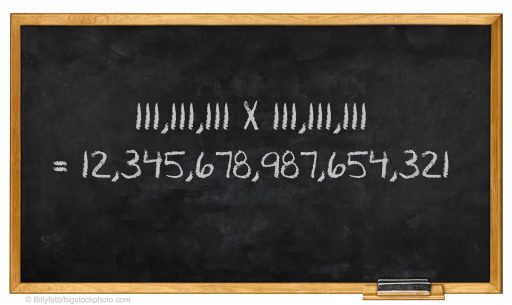
It’s an interesting case of numbers, chance, and design. We often get letters and emails from atheists who want to argue about the things we post. Interestingly, they usually do the opposite of what the writer expects. For example, we recently received a challenge to our argument for God based on the design we see throughout the cosmos. Our atheist friend claimed that numbers are a matter of chance, and therefore they refute any suggestion of design.

In reality, the opposite is true. I was familiar with the example my atheist friend gave. It involves the fact that multiplying 111,111,111 by itself gives a sequence that my atheist friend says “might look like design but clearly isn’t.” You can do this yourself. Multiply 111,111,111 by 111,111,111 and see what you get. If you do it correctly, the answer 12,345,678,987,654,321. Try it and see. Is this a product of chance or a product of design?

This works in a numerical system based on 10, which we use in the western world. However, we are in the midst of switching to a binary system because our computers work on 1 and 0 (or + and -), and much of our world today runs on computers. When mathematicians developed these systems, they had to choose a numerical sequence that worked well for the time and the culture in which they functioned. Since we have ten fingers, base ten was a good choice. I had a math professor who told us that if the early scholars had been barefooted, we would have been using a base twenty system.

What does that tell us about numbers, chance, and design?
The point is that the reason 111,111,111 times 111,111,111 gives the pattern that it does is because intelligence designed the system. Intelligent minds made the choices that produced the number pattern. This is an argument for the validity of design in the creation, and design demands a Designer.

— John N. Clayton © 2022

The Grand Canyon of Pennsylvania

The Grand Canyon of Pennsylvania

When you hear the name “Grand Canyon,” you usually think of Arizona. I have been to the bottom of the Arizona canyon and taken several boat trips down the Colorado River. As a result, I have nothing but good memories of that majestic canyon. Recently I had a chance to visit Pine Creek Gorge, also known as the Grand Canyon of Pennsylvania.

As a person trained in geology and an admirer of Earth’s beauty and history, I was amazed at how much I could see in this canyon. It’s 1000 feet deep and stretches for 47 miles through northern Pennsylvania. Because it is an erosional formation, it mainly consists of sedimentary rocks. Glaciers went through that flat area and created a lake. Eventually, the natural dam holding back the lake eroded, and the water escaped, gradually forming the canyon. As a result, glacial erratics made of all kinds of rocks, some as big as a house, are scattered all around the area.

The rocks that make up the Allegheny Plateau tell a history of change. Limestone layers form when water is still, and minerals can come together to produce the rock. A flood never produces limestone, and many of the limestone rocks contain marine fossils. Rapidly moving water produces gravel which becomes a rock known as conglomerate. Shale is mud turned into rock, and sandstone can be a beach deposit left by moving water or blown by the wind. None of the sandstone in the Grand Canyon of Pennsylvania is wind-blown.

The 1000-foot canyon has all of these rock types in various layers. It is evident that at times an ocean covered this area, and other times glaciers deposited boulders, cobbles, and gravel. In addition, the existence of a lake laid down some layers, and occasional coal seams tell us of ancient swamp conditions. Therefore, it is not surprising that the first oil well was produced near this area.

What do places like the Grand Canyon of Pennsylvania tell us about God? God is not a magician and does not try to deceive us. Understanding how God made the land on which we live is a testimony to His wisdom and power and the fact that time is not an issue for God. The flood of Noah cannot explain the Grand Canyon of Arizona or the Grand Canyon of Pennsylvania. We can see clear evidence of a gradual process and claiming that God miraculously zapped all of this into existence without a process over time puts God in the role of being a deliberate deceiver. Because most of these rocks are not flood deposits, neither a flood nor intentional deception is an acceptable explanation for these beautiful canyons. Science and faith are friends, and the scientific evidence of how canyons like this were formed gives evidence of the patience, design, and purposes of God.

— John N. Clayton © 2022