The Bearded Vulture – A Bone Eater

The Bearded Vulture – A Bone Eater

The bearded vulture is a large bird found in mountainous areas of southern Europe, Africa, and Tibet. It is known in some areas as the lammergeier or ossifrage. However, it is also known for the fact that it deliberately uses mineral-rich dust and mud to dye its feathers red for reasons still unknown.

Our interest in this bird is centered around its diet. This bird eats bones. When it finds a dead animal, the bearded vulture will drag out a large bone and carry it several hundred feet in the air and drop it on some rocks, smashing the bone into smaller pieces. The bird will then pick up the pieces, one at a time, and swallow them. The bearded vulture apparently has the strongest stomach acid in the animal kingdom. The bones they digest supply all the minerals and vitamins the bird needs to survive.

A program called “Snow Wolf” on the BBC included a section on bearded vultures because they follow wolves in the mountains. When the wolves make a kill, the bearded vulture will wait until the wolves have eaten all of the meat. Then they will start picking up the remaining bones to eat them.

The BBC broadcasts various programs on the unique living things that exist on planet Earth. While the BBC is not sympathetic to any kind of religious concept, many of the stories they present show evidence of design in the creation. One fact about the world in which we live is that in the natural world, nothing goes to waste. Even hard materials like bones are disposed of in some way. The bearded vulture provides one way bones are recycled. We need to learn how to return human-created waste materials to the environment from which they came without polluting it. Ultimately our survival will depend on doing that.

John N. Clayton © 2021

You can see a short BBC video showing bearded vultures at work HERE.

Plasma – The Fourth State of Matter

Plasma – The Fourth State of Matter

Plasma is the least understood state of matter. We are not talking about biological material but an unstable soup of electrons, positive ions, and atoms. After solid, liquid, and gas, plasma is the fourth state of matter, and it makes up 99.9% of the universe. The Sun is a ball of plasma along with some gas. The northern and southern lights are plasma. We see plasma in lightning and in the plasma globes in museum gift shops. In recent years, scientists have produced plasma, and engineers have used it to make the chips used in computers, automobiles, television sets, and musical greeting cards. Plasma also stimulates the light we get from fluorescent lamps and neon signs.

In the 19th century, the Finnish physicist Karl Selim Lemström noticed that fir trees near the Arctic Circle grew faster when the aurora borealis was the strongest. From that beginning, scientists have found that not only does plasma enhance plant growth, but it also can kill the pathogens of bacteria, fungi, and viruses. In addition, some experiments have indicated that plasma can stimulate the growth of blood vessels in animal’s skin.

Experiments in various countries have shown that seeds treated with plasma germinate and sprout more quickly. Other scientists are experimenting with sending an electric current through the air to create plasma, releasing ionized nitrogen, which plants need for growth. Those nitrogen ions can dissolve in plasma-treated water that can both irrigate and fertilize plants. The U.S. Department of Agriculture Research Center in Wyndmoor, Pennsylvania, is experimenting with using plasma in agriculture to replace chemical fertilizers, insecticides, and fungicides.

The early Earth had the right environment for plasma production
, which could have stimulated plant growth in the sea and on land. This new understanding of plasma is one more testimonial to the wisdom built into the creation. The fact that 99.9% of all matter in the cosmos is plasma emphasizes how precious the physical design of our planet is. The solid matter which makes up the Earth is nurtured by liquid water, gaseous air, and plasma.

The more we know of the creation, the more we understand the power and wisdom of the Creator. “The heavens declare the glory of God and the firmament shows His handiwork” (Psalms 19:1). When we see the Sun, the stars, the galaxies, the northern lights, and the lightning, we see plasma, a tool God uses to shape the creation and mold the world around us.

John N. Clayton © 2021

Reference: Science News for September 11, 2021, pages 18-22.

The Irrationality of Hell

The Irrationality of Hell

Atheists and skeptics often refer to “the irrationality of hell.” The main problem with this challenge is that they fail to study what the Bible actually says and take it literally. The simple truth is that hell is not a physical place but a condition. Therefore, we must understand the biblical descriptions as showing us what hell is like but not understanding it in physical terms. Furthermore, the description should convince us that we want to avoid hell’s “eternal punishment.”

Much of the biblical language concerning hell is a metaphor of the Valley of Ben Hinnomben hinnom in Hebrew and gehenna in Greek. It was a deep and narrow ravine south of Jerusalem that had a long and sordid history. In that valley, parents sacrificed their children as burnt offerings to the pagan god Molech (2 Kings 23:10). It was also known as “the valley of slaughter” because of human sacrifice carried on there (Jeremiah 7:31-32; 19:2,6; 32:35). The valley became the Jerusalem garbage dump where people incinerated waste materials and dead animals, and the fires continually smoldered. The New Testament refers to it 12 times as a place of wickedness. That includes eleven times by Jesus and once by James. Modern translations render it as “hell.” (See Matthew 5:22, Mark 9:43-47, Luke 12:5, and James 3:6.)

The biblical references describing hell use the worst descriptions humans can imagine. It is called “eternal fire” (Matthew 25:41), “a lake of fire burning with brimstone” (Revelation 19:20; 20:10-15; 21:8), and “outer darkness” (Matthew 8:12; 22:13). Brimstone is sulfur that produces toxic “rotten egg” fumes as it burns. In Mark 9:46-48, Jesus said that in hell, “their worm dieth not, and the fire is not quenched.” The word used for worm here refers to a maggot that feeds on dead things. When Jesus described hell, He said that those in hell will be “gnashing their teeth” (Matthew 13:42 and 50). This is not a reference to pain but an expression of anger. (See Acts 7:54 and Job 16:9.)

Hell is essentially God’s garbage dump, and like any garbage dump, it is a place of destruction. The destruction in hell is eternal and everlasting, as you can see in passages such as Matthew 10:28 and 2 Thessalonians 1:9. The irrationality of hell is why anyone would choose to go there.

–John N. Clayton © 2021

For more see “A Traveler’s Guide to the Afterlife” by Dr. Timothy Gordon pages 109-122. ISBN 9781082882593. Read our review HERE.

Some Form Of Life Can Exist Anywhere?

Some Form Of Life Can Exist Anywhere?
Mount Shackleton in Antarctica

We read the media reports about efforts to find life on Mars, on various moons in our solar system, or planets orbiting other stars in our galaxy. These reports often give the impression that some form of life can exist anywhere we look in the cosmos. For example, on Earth, we find life in sea vents on the ocean floor and geysers in Yellowstone National Park, leading people to suggest that some form of life can exist anywhere. Add to that the presence of organic molecules in asteroids, and they say that life is out there if we just look in the right places and in the right way.

Journal of Geophysical Research Biogeosciences published a study of 204 soil samples taken from mountains near the Shackleton Glacier in Antarctica. Scientists had predicted that this soil would contain microbes, as is true of soil samples all over the Earth. Instead, they found that 20% of the soil samples, those taken from the higher and dryer locations, had no detectable microbial life. The study seems to indicate that extreme cold and dry conditions can render an area devoid of life. Noah Fierer, one of the scientists involved with the study, said that this might be the first time scientists have found soils that did not support microbial life anywhere on Earth.

The idea that some form of life can exist anywhere in every kind of environment is an evolutionary assumption that is apparently incorrect. We know that extreme cold and dry conditions exist on Mars and many moons in our solar system. Assuming there is life elsewhere because it is so abundant on Earth and some bacteria do well in extreme conditions does not mean there is no limit to where life can exist. 

We have said many times that there might be life elsewhere in the cosmos, but if there is, God created it. This is not a biblical or apologetic issue, but these new discoveries indicate that there are limits to the environments where life can survive. 

— John N. Clayton © 2021

References: Science News for August 28, 2021, and Journal of Geophysical Research Biogeosciences

Difficult Genesis Issues – Where Did Cain Get His Wife? 

Difficult Genesis Issues - Where Did Cain Get His Wife? 

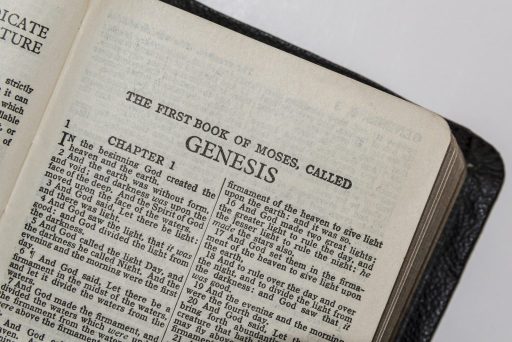
Several Genesis verses contain some issues that have bothered many people. For example, are we supposed to understand the ages of the people chronologically? If so, how did they live so long? Who was Cain afraid of, and where did those people come from? Where did Cain get his wife? Those are some of the difficult Genesis issues people have tried to resolve. 

The Journal of the American Scientific Affiliation is the product of scientists who believe in God and accept the Bible as His Word. They have advanced academic degrees, and their articles are very scholarly. Recent issues have carried some interesting discussions of difficult Genesis issues, including the account of Adam and Eve. The September issue contains an article by Dr. Roy Clouser. He contends that we have ignored the Jewish understanding of Genesis, causing credibility issues with the biblical account. Clouser maintains that the ages of biblical characters were not intended to be understood as chronological but symbolic of their character or accomplishments. For example, Methuselah living 969 years would indicate higher qualities than Adam’s 600 years. 

That is an interesting explanation. I am now 83 years old chronologically, and I cannot fathom living for 600 years. The physical weakness that comes from age seems to be built into humans as it is in the rest of the world. When Adam and Eve were in the Garden, they had access to the Tree of Life that would allow them to live forever. The traditional explanation that the human fall into sin brought physical death into the world for the first time has credibility issues with most people. 

Clouser makes an interesting comparison between Genesis 2:7, where God breathed into Adam the breath of life, and John 20:22, where Jesus breathed on His disciples. Genesis tells us that “God formed man of the dust of the ground,” clearly referring to man’s body. Then the verse says, “and man became a living soul.” Genesis 1:26-27 describes the man and woman as created in the image of God. That, of course, refers to the spiritual image because God is a Spirit and not a limited physical being. When humans sinned, God’s spirit departed from them. However, John 20:22 tells us that Jesus “breathed on them (His disciples) and said, ‘Receive the Holy Spirit.’” 

Other difficult Genesis issues include when Cain says, “Everyone who finds me will try to kill me” (Genesis 4:14). Who are those who would try to kill Cain, and where did they come from? Where did Cain get his wife? Cain also builds a city, and that requires large numbers of humans. My response has always been that Adam and Eve had many children in the Garden of Eden. Therefore, all of humanity rebelled against God and were forced out of the Garden and lost a relationship with God. Clouser presents a different interpretation that warrants more study. 

The fact is that the biblical account is accurate and deals with salvation through Jesus Christ. However, understanding how we got to where we are is very complex and will always leave some questions for further study. It is our understanding of the difficult Genesis issues that is in question–not the accuracy of the biblical record

— John N. Clayton © 2021

Cassowary – A Strange Bird

Cassowary – A Strange Bird

When we think of birds, we usually picture songbirds, chickens, pigeons, eagles, and others. However, we are also aware of less familiar birds such as penguins, ostriches, and kiwis. Imagine a bird that stands up to six feet (1.8 m) tall, weighs 130 pounds (59 kg), has spine-like quills in place of feathers, and has a four to five-inch (12.5 cm) claw on its inner toe that it can use to stab and even kill a dog or a human. This creature can run 30 miles (50 km) per hour and jump more than five feet (1.5 m) in the air. The name of this bird is the cassowary.

These birds, native to New Guinea, Indonesia, and Australia, can kick, stab, head butt, and peck. Cassowaries are a factor in the discussion of whether the dinosaurs were birds or reptiles. The wings of most modern birds are for flying, or in some cases, for swimming underwater. Instead of feathers, cassowary wings are tipped with large quills resembling porcupine quills without the barbs. Some dinosaur fossils give evidence of feathers, but we don’t know their function. However, cassowaries demonstrate that wing-like and feather-like structures can have other functions.

The cassowary can teach us many lessons. One is that taxonomy gives us only a limited view of various animals. Another is that birds have more than one role in ecological applications. Cassowaries play an essential role in the ecosystem where they live. They are omnivores, eating fruits as well as small animals. They lay eggs in a nest on the ground and incubate the eggs. The males are the primary caregivers during incubation, and they care for the young after the eggs hatch. We tend to view flightless birds as vulnerable creatures that live only where there are no predators to threaten them. Cassowaries show us that is not always true. They can defend themselves and live for 40 to 50 years.

The biblical view of birds includes only birds that could fly. The Hebrew word commonly used for “bird” in the Old Testament is “tsippor,” meaning a small bird, such as a sparrow. (For example, see Genesis 7:14 and 15:10, and Ezekiel 39:4.) The Hebrew word “oph” refers to a flying bird. (For example, see Genesis 40:17-19, 2 Samuel 21:10, Ecclesiastes 10:20, and Hosea 9:11). “Ayit” refers to a hawk or bird of prey. (See Isaiah 46:11 and Jeremiah 12:9.) In the New Testament, the Greek word “peteinon,” meaning flying or winged bird, is used in Matthew 8:20 and 13:32, Luke 9:58, Romans 1:23, and James 3:7.

The Cassowary does not fit any of those passages, considering that people in the world of both Moses and Jesus did not have contact with flightless birds. Instead, we can view the cassowary as a part of God’s creation to fill a very different kind of ecological niche. However, its role in creation’s design and the world today remains a subject of future study.

— John N. Clayton © 2021

Reference: World Wildlife magazine for the summer of 2021 page 6, Encyclopedia Britannica online 9/2/21/, and Wikipedia.

Racist Attitudes and the Facts

Racist Attitudes and the Facts

The history of modern civilization has been marred by human power struggles using racist attitudes to promote their agenda. European Enlightenment scholars decided that humans should be divided into discrete groups as some animal species are. They attached meaning to skin color using cultural stereotypes that included temperament, intelligence, and behavior. Slave owners used this concept to justify enslaving African people. Nazis in Germany sought to define a Germanic people based on racial exceptionalism.

Racist attitudes have even shown up in medicine. In 1793, a yellow fever epidemic struck Philadelphia. White physicians claimed that black people were immune to yellow fever even as it killed many blacks. In 2016, a study of 200 medical students at the University of Virginia found that half of them believed there were biological differences between blacks and whites. Those differences included the belief that black people have thicker skin and higher pain tolerance than whites. At the beginning of the COVID-19 pandemic, some reports said that black people couldn’t catch the virus, and a few months later, more articles came out saying that blacks were more susceptible to it.

The biblical discussion about race is entirely different from the power struggle that has gone on for a very long time. Genesis 3:20 tells us that Adam called his wife Eve “because she was the mother of all living.” That means that all races go back to Eve, and we are thus all related. In Acts 17:26, Paul told the intellectuals in Athens that God “has made of one blood all nations of men to dwell on the face of the earth…” These passages emphasize the oneness of all humans. 

In a National Geographic article, Angela Saini wrote that science has shown “that we are genetically more alike than any other primate species and that individual difference far outweighs any group difference.” Saini warns against the narrative that “searches the margins of our genomes for the tiny statistical differences between populations, consciously or unconsciously playing to those who seek to divide us in other ways.”

Racist attitudes are not justified by biology or the Bible. Racism is a cultural activity, and it opposes the Bible in loud and clear terms. Those who claim to be Christians and yet practice racial discrimination need to read their Bibles and not listen to Satan’s agents sowing hatred and division among the human family. 

— John N. Clayton © 2021

References: “The Story of Human Difference” by Angela Saini in National Geographic , September 2021, pages 15-17 and American Journal of Public Health

Mental Health and Faith

Mental Health and Faith

One of the challenges we face in 21st century America is the growing rate of mental illness cases. Every day the media informs us of a tragedy caused by someone who is mentally ill. Closer to home, many of us have had a loved one afflicted with some form of mental illness. Is there a connection between mental health and faith?

Mental illness has many causes. A small percentage of mental illnesses result from a medical condition. For example, my son’s schizophrenia resulted from a congenital condition. Because he was adopted, we don’t know all of the factors leading to his multiple illnesses, but his birth mother had German measles during pregnancy. Brain injuries and drug abuse can also result in mental illness.

A far more common cause of mental problems involves life experiences. Some of us were forced to witness the horror of war, and many others have suffered abuse. Those things have caused a variety of mental issues. We frequently hear atheists claim that religion causes mental illness by heaping guilt on people over something they have done in their lives. Indeed, some preachers have used guilt to motivate people to change behavior or convert to a doctrinal view.

The reality is that there is a connection between mental health and faith. Christianity is a guilt-removing belief system. The Christian message is designed to free people from guilt and promote a healthy and mentally stable lifestyle. The Sermon on the Mount in Matthew 5–7 gives guidelines to a healthy mental attitude. There you will find these keys to mental health: loving others, not exacting revenge or retaliating, caring for others (even your enemies), not being religious for show, and not being obsessed with material things.

We all fail in life, but the Christian system brings forgiveness. When Peter asked Christ how often he had to forgive, Christ’s answer indicated forgiveness should be infinite (Matthew 18:21). Carrying a grudge can cause enormous mental pain, which John compares to walking in darkness, but loving others brings us into the light (1 John 1:7-11). James gives insight into how we can endure hardships and help one another gain a positive perspective on life (James 5:10-16).

As Americans turn away from the teachings of Christ and rely on pop psychology and drugs to achieve sound mental health, the result has been the opposite. Pill popping and drug use have skyrocketed, and so has the number of people in desperate mental stress. Living the Christian life brings stability and fulfillment and the knowledge that there is a place of peace and love when this life is over. Mental health and faith in Christ go together.

— John N. Clayton ©2021

Interdependent Factors in Statistics

Interdependent Factors in Statistics and BMWs
BMW Z4 Cars

Yesterday, we considered the wise saying, “Figures don’t lie, but liars figure.” We said that one problem with statistical arguments is that they often don’t include all the variables. A second problem with statistical arguments is that they don’t ensure that all of their variables are independent. Therefore, we must consider the interdependent factors.

For a trivial example, let’s suppose I ask, “What are the odds that I will buy my grandson a BMW for his birthday?” The first question we should ask is, “Is he old enough to drive?” A second question might be, “Can he get insurance?” A third variable would be, “Do I have enough money to buy the car?” Finally, a fourth variable might be, “Would he be happy with a used BMW?”

Since I love my grandson, I might say that the odds of me buying a car for him are 100%. However, as we consider each of those variables (plus many more), the probability becomes less. Are these variables independent, or are they interdependent factors? If he is not old enough to drive, he is also not old enough to get insurance. The probability of him being able to drive and being able to get insurance are not independent because both depend on his age. His being happy with a used BMW is not independent of my having enough money to buy a new one.

If we look at the question of life on Mars, we might be inclined to say that the odds are very high that life does exist on that planet. It has a mass similar to Earth. Mars has an atmosphere, volcanic eruptions, and water. Mars is tilted on its axis, it has a magnetic field, and the length of a day is roughly 24 hours. Are all of these variables independent? The answer is no because if the planet has volcanic eruptions, it will have an atmosphere, and volcanic eruptions always involve some amount of water. Both the water and the atmosphere are interdependent factors that depend upon volcanic eruptions.

The tricky part of this subject for both believers and atheists is knowing what is dependent and what is independent. As our knowledge of a topic improves, we are likely to find more dependent factors. For example, we recently discussed the importance of hydroxyl radicals in cleaning Earth’s atmosphere of pollutants. What are the odds of hydroxyl radicals being in a planet’s atmosphere? What may appear to be a separate and independent variable is the presence of lightning. Science has known for a long time that lightning helps produce nitrates which are essential for plant growth. In June of 2021, scientists announced a recent discovery that lightning produces hydroxyl radicals. Any planet that has lightning will have hydroxyl radicals, so the presence of hydroxyl radicals is not independent but is dependent on lightning.

This discussion has practical value in today’s world. Yesterday we said that we would examine some other statistical issues involving God’s existence. Think about this. Considering the millions of interdependent factors that must be in place to allow us to exist, could they all have come together by chance? Consider it on various levels—the creation of a universe from nothing—the creation of a life-supporting planet—the creation of the first life from inert matter—the creation of advanced life. We could go on. But considering all of the interdependent factors at each level, is it more logical to assume they came together by mere chance or guided by an intelligent Designer?

— John N Clayton © 2021

The Story of Joseph in Egypt

The Story of Joseph in Egypt

Skeptics who challenge the Bible’s accuracy often point to the story of Joseph in Egypt recorded in Genesis 37–50. First, the Bible tells of Joseph being sold by his brothers to a passing caravan and then sold as a household slave to an Egyptian officer named Potiphar. Next, after being falsely accused by Potiphar’s wife, Joseph lands in prison, becoming a model prisoner. Finally, by interpreting Pharoah’s dream, he becomes second in command in Egypt. Then the famine Joseph predicted forces Joseph’s brothers to go to Egypt for food. Eventually, the whole family settles in Egypt in an area the Bible refers to as Goshen (Genesis 47). 

Living in Egypt continues for 400 years (Exodus 12:40). Eventually, a new pharaoh becomes unhappy about this foreign group residing in his land, perceives them as a threat, and enslaves them (Exodus 1:8-14). Then a leader named Moses helps the enslaved people escape, pursued as far as the Red Sea by the Egyptian army. Finally, after 40 years of wandering, they end up back in Canaan. 

Atheists and skeptics claim that the story of Joseph in Egypt can’t be accurate because there is no record of any of this outside of the biblical account. Therefore, they say, it must not be true. However, Biblical Archaeology Review magazine (Fall 2021, pages 40-47) carried an article by Rachel Hallote titled “Does Archaeology Confirm Joseph’s Time in Egypt?” It said, “Egyptian material is nearly identical with the short summary of the biblical account.” 

The problem seems to be that the Egyptian sources referred to the Canaanites as “Hyksos.” Secular writers often fail to recognize that the Hyksos were the descendants of Jacob and his son Joseph. The article concludes that “the stories of Joseph and his brothers are clearly rooted in the rise of the Hyksos in Egypt.” Thus the biblical story of Joseph in Egypt does not conflict with archaeological evidence.

— John N. Clayton © 2021

For more information: https://www.baslibrary.org/biblical-archaeology-review/47/3/5

You can learn more about our video series on archaeology and the Bible HERE