Doing What Jesus Told Us To

Doing What Jesus Told Us To - Food Banks

I sometimes get a heated letter, email, or phone call chastising me for advocating something that isn’t possible or safe. I can understand the concerns, and yet it is hard to miss the clear teaching of Matthew 25:35-40. How can we do we what Jesus told us to do? The fact is that it is safer and easier to do those things today than when Jesus spoke these words. The examples of the first century Church in Acts 2:44-47, of Dorcas in Acts 9:36-39, and of Lydia in Acts 16:13-15 give us clues as to how we can be doing what Jesus told us to do in Matthew 25.

HUNGERED AND YOU GAVE ME MEAT. Every major city in America has a food bank, operated by Christians, that needs volunteers and donations.

THIRSTY AND YOU GAVE ME DRINK. There are Christian groups like “Healing Hands” drilling wells and putting in water purification systems in areas without clean water. They need help and donations.

A STRANGER AND YOU TOOK ME IN. Churches near major hospitals such as Hands of Compassion near the Mayo Clinic provide housing and help strangers–and they need support.

NAKED AND YOU CLOTHED ME. Programs like “Coats for Kids” are operated by churches in nearly every major city in America. Finding and distributing coats to needy people is always a work that needs help.

SICK AND YOU VISITED ME. Visitation programs to hospitals are operated by groups of Christians and local congregations in every hospital in America. Hospital chaplains can integrate workers into visitation programs.

IN PRISON AND YOU CAME TO ME. There are prison ministries in virtually every prison in America and national correspondence programs like ours that offer programs free of charge to anyone who is incarcerated.

I get frustrated with the fact that my mailbox is stuffed every day with requests for help in works like these. Then I think about the fact that Christians do what most people in this world won’t do, and that is doing what Jesus told us to do in Matthew 25. If you can’t find any of these things close to where you live, we can help you find a national and/or local group where you can serve.

In the first century, Christians did most of what Jesus calls us to do on their own. Today we can support groups that others have created to serve. The next time someone asks you to get involved in a faith-based opportunity to serve others, don’t be irritated. Be thankful that Christ continues to call His followers to do good works.

— John N. Clayton © 2020

Growing Up in a Divided Society

Growing Up in a Divided Society

One part of my life’s history that I don’t talk about a lot is my experience with racial issues growing up in a divided society. As a child, I lived for several years in Alabama, where my father had his first college teaching job at Talladega State Teacher’s College. He and the school president were the only whites on the staff, and I was the only white kid in my school. All of my friends were black, and the people we knew in our daily lives were black. We never had a problem with anyone in that community.

When we left the campus area, we had problems. I remember when I had my tonsils removed. My mother had to take me to Birmingham to have it done. She told me later that when they brought me out of the operating room on a gurney, covered with blood, the doctor shoved the gurney at my mother and said, “Here nigger lover, you clean him up.”

We moved to McComb, Illinois, where my father got a job at Western Illinois University. When people learned that my father had taught at an all-black college and that I had attended an all-black school, we had all kinds of problems. The fact that I had spent grades 2, 3, and 4 in an all-black school meant to a lot of folks that I was inferior, and it was okay to beat me up. I tell you this to point out that now as a Christian and having had that experience, I can relate to the current struggles with prejudice and abuse in America.

Jesus dealt with similar issues throughout His life. John 4 tells us of His exchange with a Samaritan woman. Verse 9 says that the Jews avoided and rejected the Samaritans because they were of mixed race and had different religious beliefs. She was a woman, married five times, and living with a guy she wasn’t married to. Jesus addressed her needs and taught her. In Luke 8:26-39, Jesus showed compassion to a man who was severely mentally ill. The crucifixion of Christ happened because people had the same willful blindness that permeates our society today. The people who welcomed Him to Jerusalem in Matthew 21:7-11, crucified Him in Matthew 27:22-25.

The early Church faced massive persecution. In Acts 6:8-14, a man named Stephen was doing great things in the community. In Acts 7:54-60, the community stopped their ears and stoned him to death when he stated religious facts they didn’t want to hear. Christians are still being persecuted today. Racial prejudice still survives today. Children are still growing up in a divided society. We must replace hatred and division with love and service. That’s the only way our world can survive. If Christians don’t lead in this vital matter, who will?

— John N. Clayton 2020

How Christians Should Deal with Politics

How Christians Should Deal with Politics

I have seen many national elections, and I have seen some loud arguments among people who share the same religious or skeptical views. Many years ago, two of my atheist friends got into a fight over a political issue that put both of them in the emergency room. I have also seen religious people want to disfellowship someone for supporting a presidential candidate who favored abortion. Certainly, the current election has polarized our culture more than any other in recent years. With increasing frequency, my mailbox has received inquiries about, “How should a Christian vote?” The broader issue is how Christians should deal with politics.

Let me first of lay down some facts historically and biblically:

*Jesus and the scriptures give us no command to get involved in politics, and no condemnation if we do so.
*There is a need for political authority. See Judges 17:6 for the alternative.
*The scriptures tell us to obey political authority. Romans 13:1-7 and Titus 3:1 make that clear, even though the government of that time was corrupt, immoral, and violent, Christians used political authority for their well being. See Acts 23:23-35.
*Political leaders aren’t always evil or corrupt. See Luke 7:3-10. 23:50-53. John 3:1-10 and 19:39 and Acts 10:1 for examples.


We can see the answer to how Christians should deal with politics in Matthew 22:15-21, where Pharisees asked Jesus if it was lawful to pay taxes to the Roman government. The question was a trap. If He said “no,” He could be put in prison for defying Caesar. If He said “yes,” He would violate Jewish tradition and law. Jesus answered by giving us in a single sentence how Christians should deal with politics: “Render to Caesar the things that are Caesar’s and to God the things that are God’s.”

Like people today, the people who asked the question did not understand what Christianity is about. Later in the same chapter, they ask a question about who a man would be married to in heaven when he had more than one wife on Earth. Jesus responded by saying, “You don’t know the scriptures”!

The point of Christ’s teaching is that God is concerned with the spiritual, and politics is concerned with the physical. Ephesian 6:12 tells us that our struggle is not flesh and blood. Christians must be good citizens by obeying the law and honoring our leaders. We are not to bring politics into the Church, nor is the Church to engage in political work. If you want to be involved in politics, do so. Don’t demand the Church to endorse you or to constrain its members to vote for you. Church funds should not be used for political purposes. Read Matthew 25:31-46 to see what the Lord’s money should be used for.

I am an American, a veteran, and a believer in democracy. Those are physical things I support. More importantly, I am a Christian and am in a war with Satan and evil. Ephesians 6:12-18 defines my spiritual emphasis, and Ephesians 3:9-11 reminds me that this battle has been going on since before creation. I will vote and express myself in physical matters for America. However, I will spend most of my energy and time on the more important work of spreading the gospel and doing the work of Jesus Christ.

— John N. Clayton © 2020

Science and COVID-19

Science and COVID-19

There are many lessons to be learned from the COVID-19 pandemic. One of the most tragic of these lessons has been the vilification of science. Many politicians and preachers have acted as if science is something to be opposed and feared. Many of our national leaders view science as an enemy of the economic welfare of the United States. Some preachers have portrayed science as an attempt of Satan to shut down the Church and prevent Christians from meeting together. What is the truth about science and COVID-19?

The first problem here is a failure to understand what science is and how it works. Webster’s Dictionary defines science as “systematic knowledge.” Knowledge is simply an understanding of facts. God gave Israel into the hand of the Babylonian king Nebuchadnezzar. One of the first things Nebuchadnezzar did was to separate the best of the children who were “well-favored, and skillful in all wisdom and cunning in knowledge, and understanding science” and take them to Babylon (Daniel 1:3-4). This led to Daniel becoming a huge asset to Israel.

The Psalmist repeated over and over that scientific information builds faith.
Psalms 19:1 says, “The heavens declare the glory of God, and the sky shows His handiwork. Day unto day utters speech and night unto night shows knowledge.” Psalms 119:66, and 139:6 praise knowledge. Proverbs 1:22 and 1:29 talk about people who hate knowledge. Colossians 2:3 tells us that God has within Him all the treasures of wisdom and knowledge. Peter admonished Christians to escape corruption and add to their faith virtue and knowledge (2 Peter 1:5-6).

In 1 Timothy 6:20, Paul tells Timothy to “keep that which is committed to your trust, avoiding profane and vain babblings and oppositions of science falsely so-called.” There is a vast difference between knowledge and babblings or oppositions. Science deals with the facts of the COVID-19 virus. How we respond to what we know of the facts is up to each of us.

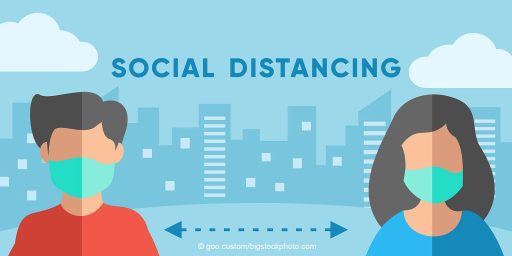
Science tells us to practice social distancing or wear a mask. The motivation behind rejecting those health practices are worldly pleasures and greed. Trying to test God by expecting Him to void the logical consequences of our actions is like handling snakes or drinking poison.

God never promised Christians immunity from all the problems in the world. If that were the case, people would become Christians to avoid problems, not because they love God. We need to use our God-given intelligence to make good decisions with the knowledge we have about science and COVID-19.

— John N. Clayton © 2020

Social Distancing in Animals

Social Distancing in Animals

It is interesting how difficult it seems to be for humans to practice social distancing to control disease. Scientific American published an article about social distancing in animals. Disease control is a basic need for all animals, but only humans create vaccines. So how do animals in the wild prevent the spread of disease?

Research on spiny lobsters shows that lobsters infected with a virus called Panulirus argus give off a smell in their urine that causes other lobsters to leave the area. Because of the economic value of lobster populations, much research has gone into understanding how this social distancing works.

A particular fungus spreads its spores by physical contact between ants. Other ants keep infected ants away from the colony and especially away from the queen and the nurse ants that take care of the brood to protect the ant population from the threat. Researchers have discovered social distancing in animals such as finches, guppies, mandrills, and mongooses. They all have procedures to isolate infected individuals and prevent the spread of disease.

Interestingly, God’s design for life includes social distancing in animals to stop viruses and fungi from spreading among their populations. Humans should not only be concerned about distancing from infected humans, but also from those animals that can spread diseases that affect humans. Trying to have animal pets that can carry diseases that threaten humans seems to be something we should all reconsider.

— John N. Clayton © 2020

Data from the August 2020 issue of Scientific American (page 37).

Suicide is the Other Pandemic

Suicide is the Other Pandemic

We hear all the talk about “flattening the curve” concerning the COVID-19 pandemic. There is another pandemic without a direct viral cause, and the curve of that pandemic keeps getting steeper. Suicide is the other pandemic.

Since 1999 the suicide rate in the United States has risen over 33%. Suicide is now the second leading cause of death in the U. S. among people ages 10 to 34. Males have a higher suicide rate than females, and both show a rate increase of over 2% a year. The Center for Disease Control tells us that among young people between the ages of 10 and 19, suicide attempts increased 8% every year between 2006 and 2015.

The experts are giving all kinds of explanations for why this is happening. Some blame the use of digital devices, with cyberbullying being a significant factor. Research shows that there is a one-to-one connection between unemployment and suicide rates, and the collapse of the economy in the COVID-19 pandemic has caused massive unemployment.

We would suggest that the growth of atheism and the rejection of God is a major factor of why suicide is the other pandemic. Christianity teaches that the body is the dwelling place of the Spirit (1 Corinthians 3:16). The Sermon on the Mount in Matthew 5-7 and the description of the judgment in Matthew 25:34-39 make it clear that Jesus expects his followers to use our lives in a productive way. In Philippians 1:21-26, Paul made it clear that he wanted to leave this life and go and be with Christ, but he knew God wanted him to help address the problems of the Church and humanity.

If I base my life’s decisions on being the most fit and realize that I have no hope of ever being the fittest, ending this life seems like the logical thing to do. Atheism and agnosticism offer no motivation to continue living. If I know I cannot find pleasure as I once did and the future looks bleak, why would I want to continue to live? Life has no ultimate purpose without God, and suicide is a way out.

Job’s wife told him to curse God and die (Job 2:9). If you do not have a purpose in life, that option can look very attractive. When you read Job 42:1-6, you see Job coming to a full understanding. He realized that he is part of something so grand and powerful that he can only vaguely understand it. We, too, may not fully understand what God is doing through our lives, but destroying ourselves so that God can’t use us is a huge mistake with catastrophic results. (See 1 Corinthians 3:11-23.)

— John N. Clayton © 2020

Data from Scientific American, August 2020, page 23.

Anemones and Clownfish Symbiosis

Anemones and Clownfish Symbiosis
Common Clownfish and Red Sea Anemone

There is an interesting relationship between anemones and clownfish. If you have had the joy of snorkeling in undeveloped areas, you may have had the unpleasant experience of bumping into one of some 800 species of anemones. Their tentacles contain toxin-filled capsules called nematocysts that fire stingers at anything that touches them. I can tell you from personal experience that it is extremely painful.

I finally learned to stay away from the anemones and just look at them. I saw that some fish died when they touched the tentacles. Interestingly, other fish, shrimp, and crabs lived among the tentacles and seemed unaffected by their stings. The very colorful clownfish lives right in the middle of the tentacles and appears to be immune to the anemone’s poison. Spider crabs and shrimp live at the base of the anemones. Crabs carry around baby anemones using them as defensive weapons. Even a baby anemone could deliver a nasty sting to my finger.

The clownfish seem to have the greatest skill for avoiding the anemone stings. When the clownfish is threatened, it will dive into the anemone tentacles for protection. The anemones eat algae remains that float in the water, and also small fish, sea urchins, shrimp, and some crabs. The clownfish benefit the anemones by removing parasites from them while the anemones provide the clownfish protection from predators.

So how do the clownfish avoid being stung by the anemones? They secrete a very thick mucus that does not trigger a response from the nematocysts. The clownfish can be all over the anemones and not get stung. Scientists are studying the mucus of the clownfish because it has potential uses for humans. The mucus is an anticoagulant and disrupts the gill function in sharks, making it an excellent shark repellent. Some researchers believe that the clownfish gets the mucus from the anemones, but other research studies show that the clownfish has a gene that produces the mucus. Research continues in the study of anemones and clownfish.

Science has a lot of data without a clear answer to how anemones and clownfish live in such a well-orchestrated symbiotic relationship. It would appear that the design of this symbiosis, like many others, is a product of God’s design and is not naturally acquired.

— John N. Clayton © 2020

Data from National Wildlife magazine April/May 2020 and their websites.

Phalaropes Spinning for Food

Phalaropes Spinning for Food
Red-necked Phalarope

Many times we see animal behavior that seems impossible to explain. We see an interesting example of that in wading shorebirds called phalaropes. These birds can get food that is too deep in the water for them to reach.

Instead of the typical methods used by shorebirds to capture their food, phalaropes take a different approach. They spin around and around in one place at the breakneck speed of one complete rotation a second. They kick seven to eight times on each spin and move their heads to where they can quickly snap up food. Researchers have found that these birds can detect prey, thrust and seize with their bills, transport and swallow the prey, and do it all in half-a-second.

Using high-speed photography, researchers found that the phalarope creates a vortex that is over three feet deep. The vortex acts as a miniature tornado bringing food up to where the bird can reach it. You could understand how one bird might learn this skill, but it seems to be genetically implanted as baby birds do the spinning even when they have had no contact with adult birds.

We see in phalaropes, as in most animals, that God has given them a genetically-based technique for acquiring food so they can survive.

For a video of the process, click HERE.

— John N. Clayton © 2020

Real Men and the Tough-Guy Image

Real Men and the Tough-Guy Image

“Real men don’t play it safe” so many males, including world leaders, don’t accept wearing a mask and social distancing. That is the basic idea of an article by Peter Glick in the August issue of Scientific American. He says that many male leaders are more concerned about projecting a tough-guy image than protecting the common good. He mentions Brazilain leader Jair Bolsonaro, U.K. leader Boris Johnson, and Donald Trump and Mike Pence. When Captain Brett Cozier of the aircraft carrier Theodore Roosevelt didn’t radiate the tough-guy image, he was relieved of his command. Meanwhile, female leaders in Germany and New Zealand have had better success in the pandemic than their male counterparts.

This is one more example of how “survival of the fittest” produces competition, promotion of self, and struggles for dominance rather than compassion, empathy, and promoting the common good. It is also why women appear to tend to be more capable promoters of Christianity. As women start competing with males, they tend to demonstrate a great many of the same weaknesses.

Any weakling can turn their back on the needs of the “weak and unfit.” Our experience as the parents of a multiply-handicapped child is dominated by compassionate women who had great empathy and a servant mentality. The number of males who were able to give of themselves to promote disabled adults was pathetically small. As society has rejected the teachings of Christ and embraced a value system based on evolutionary theory, our cliches show our values: “show no weakness,” “I can fix it,” “dog eat dog,” “watch your back.”

It takes incredible strength to be a committed, active Christian. When you read Matthew 25:34-40, you see Jesus commending people not because they were the strongest or the most attractive or successful. He commended them for doing things that an evolutionist would reject, such as giving food and drink rather than using it as a control device. Christ commends them for taking in a stranger, visiting the sick, and clothing the naked. The whole notion of turning the other cheek, going the second mile, and loving your enemies (Matthew 5:38-48) opposes “survival of the fittest” mentality. Are we strong enough to be Christians, or are we trying to earn the title of “real men?”

— John N. Clayton © 2020

The article “Masks and Emasculation” is on page 10 of the August 2020 issue of Scientific American or you can read it online HERE.

Deforestation and Disease Pandemics

Deforestation and Disease Pandemics
Burning a Rainforest to Plant a Palm Oil Plantation

One of the interesting aspects of the story of Adam and Eve is the environment in which God placed them. Genesis 2:8 tells us that God planted a garden, and verse 9 tells us that He planted every tree that was pleasant and good for food. The Bible doesn’t say how long God took to plant the garden and what was involved in the garden’s growth. Verse 15 tells us that “God took the man and put him into the garden of Eden to dress it and to keep it.” After establishing the man’s environment, the Genesis account turns to man’s spiritual nature. But the planted garden with every tree is our focus here as we think about deforestation and disease.

The Bible describes the first humans as what anthropologists call gatherers. Agriculture was a long way off. The eating of animals isn’t even suggested until chapter 4 when Abel brings “the firstlings of his flock” as an offering to God. An article in Scientific American (June 2020, page 8) points out how modern agricultural methods have led to the three major highly infectious viruses since 2002 – SARS, EBOLA, and COVID-19.

Slashing and burning to create land for crops, such as palm oil, reduces biodiversity and puts humans in contact with wildlife that carry microbes able to kill us. Species that survive the clearing are more likely to host illnesses that can be transferred to humans. In addition to the three main viruses of our time, the Scientific American article mentions some other diseases have come from rain forest inhabitants – Zika, Nipah, malaria, cholera, and HIV.

Humans have brought on most of our major disease issues by allowing greed and “survival of the fittest” mentality to govern our decisions about how we use the environment. We waste between 30 and 40% of the food we produce. Poor agricultural techniques and mismanagement of water prevent efficient use of what God has given us. Deforestation and disease go together. Now we are contaminating our atmosphere and filling our lakes, rivers, and oceans with waste.

The title of the Scientific American article is “To Stop Pandemics, Stop Deforestation.” God gave us the “garden” and the tools to manage it. We can’t continue to mismanage it and not see more consequences such as pandemics, global warming, and diseases produced by our failure to do what God called us to do in the beginning.

— John N. Clayton © 2020