Plastic-Eating Worms

Food for Plastic-Eating Worms
One of the confusing points about evolution for many Christians is not understanding that there is a difference between the fact of evolution and naturalistic theories of evolution. Evolutionary adaptations have given us plastic-eating worms.

Attempting to say that evolution eliminates God from the picture of creation is an incredibly ignorant statement, and yet we see it in both atheist and Christian papers. The word “evolution” means “unfolding change.” The fact that God engineered life in such a way that living things can change is one of the most incredible examples of design.

Darwin’s work in the Galapagos Islands showing that finches could change physically to meet the local food supply does not contradict the Bible in any way. When we visited Darwin Station in the Galapagos and talked with the workers, they were dumbfounded to hear that anyone thought there was a biblical problem with the work they were doing there.

The August 2017 issue of Scientific American (page 21), carried an article about the larvae of the greater wax moth that has mutated so that it can consume polyethylene plastic. Humans produce some 300 million metric tons of plastic every year, and this material is clogging landfills and showing up in lakes and streams. To find a way to biodegrade this material would be a huge ecological breakthrough, and it is possible because of the design of the genetics of the wax moth larvae. Beeswax is the main food of the larvae, but the mutation allows them to degrade polyethylene as well.

The scientists involved are studying the process to discover the enzyme that the plastic-eating worms use to break down the polyethylene. God apparently built a solution to the biggest waste problem we face today by the design of the genome of the wax worm.

Current Biology journal originally published news of this discovery on August 7, 2017.
–John N. Clayton © 2017

Tyrannosaurus Rex, the Vulture

Tyrannosaurus Rex
We tend to view Tyrannosaurus rex as a 20-foot tall flesh eater who ran down its prey. Some have called this dinosaur “the most efficient carnivore who ever lived.” Science fiction movies like Jurassic Park have probably been the main source of this image, but the fact is that T. rex was nowhere near that fast.

Past studies of T. rex suggested that its huge mass–in the vicinity of nine tons–prevented it from running down much of anything. The muscle strength needed to accelerate that mass is simply not available to any form of life. Now simulations of acceleration and bone strength have verified that understanding. A speed of about 12 mph would have been the top limit for T. Rex and for only a short distance. That means a human could easily outrun a T. rex.

Tyrannosaurus rex was probably more of a scavenger than a hunter. There were other slow-moving dinosaurs such as Edmontosaurus, Triceratops, and Ankylosaurus that T. rex might have been able to catch. It is more likely that the T. rex population were the vultures of their day, not the lions of their day.

God created dinosaurs for a purpose, and every year we understand more about how they helped sustain the ecosystem that produced many of the resources we need. Every little boy seems to be fascinated with the media presentations of these creatures, but they really were not that glamorous.
–John N. Clayton © 2017

Deception in Politics, Religion, and Anglerfish

Deception in Politics, Religion, and Anglerfish
Lying seems to be a heavily used skill in today’s political climate. The fact that there is so much deception in politics is interesting to me because as an atheist I viewed deception as a survival skill. When I was a child, my mother took me to narrated movie shows on nature. These were 16 mm movies filmed by photographers usually associated with The Audubon Society or The National Geographic Society. The person who did the filming usually was the narrator, and that added color and personality to what we saw on the screen.

My mother usually had an object lesson for me at the end of those films and deception was a major theme. My favorite film was an underwater movie about reef fish. The scene I liked most involved an ugly fish known as the anglerfish. This fish would lie on the bottom and dangle a piece of flesh that was worm-shaped in front of its mouth on a rod attached to its head. The fish would wiggle the lure to attract reef fish. When a fish came close to investigate, the anglerfish would suddenly lurch forward and swallow the fish whole.

My mother seized on the moment to tell me that I needed to learn a lesson about life from the anglerfish. That lesson in her atheist perspective was that life is hard and to survive we must to learn to deceive and not be deceived. Later in my efforts as an atheist, I would maintain that deception is simply survival of the fittest. The fit survive by deceiving and exploiting the unfit.

I always had good results using this to support my atheist arguments. When I tried to justify stealing money from my mother, it was less effective. I protested by referring the anglerfish, but she screamed at me, “You’re not a fish!!”

Now looking back at that from a Christian apologetic position I have to say “Bingo!!” But from her atheistic evolutionary perspective, I AM no more than a fish. When we have so much deception in politics, that is an indication of the perspective of our elected officials.
–John N. Clayton © 2017

Super Night-Vision in Frogs

Super Night-Vision in Frogs
Almut Kelber is a sensory biologist at Lund University in Sweden. For many years Dr. Kelber has been studying the super night-vision in frogs that allows them to hunt and move about in extremely low light levels.

In the August/September issue of National Wildlife (page 10) the group that Dr. Kelber leads reports that amphibians have unique rods or photoreceptor cells in their retinas that are not found in any other vertebrates. These receptors allow frogs not only to see in the dark but to see colors in extreme darkness. Humans can’t distinguish colors in low light, but frogs can see colors in light levels where human eyes would not see anything at all. Dr. Kelber did not expect to find that “these animals can see color in extreme darkness, down to the absolute threshold of the visual system.”

Over and over we see specific equipment built into living things that allows them to survive in their environment, defend themselves against predators, and find unique access to food. You can believe that this is a simple trial and error situation, where having the equipment promotes survival and not having the equipment is lethal. Or you can believe that an intelligence designed and engineered these structures to allow our planet to be a unique oasis of life.

Since we find this super night-vision in frogs everywhere in the world, it is difficult to believe this is a product of isolated chance. “We can know there is a God through the things He has made” Romans 1:18-22.
–John N. Clayton © 2017

Scientists and God: A Different View

Scientists and God
J. B. S. Haldane in 1914

In each issue of our printed publication, we have a feature called Scientists and God, in which we quote from a leading scientist who is also a believer in God. Today I would like to do something a little different. I want to quote the words of a leading scientist who was not a believer.

J. B. S. Haldane (1892–1964) was a British geneticist and evolutionary biologist. He was also an outspoken atheist and a Marxist. Because of the political controversy caused by his Marxist ideology, he left England in 1956 and spent the remainder of his life in India.

Haldane was a brilliant man who made contributions in the areas of genetics, evolutionary biology, and mathematics. In many ways, he was ahead of his time. He proposed the central ideas of in vitro fertilization. He was the first to suggest human cloning. In fact, he coined the use of the term “clone” for that purpose. He also helped to create the science of population genetics.

Haldane proposed correctly that sickle-cell disease gives immunity to malaria. He prepared gene maps for color-blindness and hemophilia. Nobel Prize winning biologist Peter Medawar called Haldane “the cleverest man I ever knew.”

In 1929, Haldane introduced the “Primordial Soup Theory,” which said that life began on the early Earth in a chemical soup where the elements of life came together. That theory became the leading concept of abiogenesis–the idea of life coming from non-living matter by a natural process. Haldane’s theory led to the famous Miller-Urey experiment in 1952. In that experiment, Stanley Miller created a sealed container with the chemicals thought to have been part of the early atmosphere of Earth. He subjected the chemicals to an electric spark and collected some amino acids which are the building blocks of proteins. The news media went wild over “creating life in the laboratory,” but that was an example of media exaggeration–or as it would be called today “fake news.”

Incidentally, science has since shown that the Miller-Urey experiment did not emulate the conditions or chemicals of the early Earth and therefore is not a valid demonstration of the first step in abiogenesis. However, it is still shown to students in school textbooks because science has not produced anything better, and it is easy to understand. Today’s attempts at abiogenesis are far more complex, proving that it takes great intelligence and carefully controlled lab conditions to produce even the basic building blocks of life. In other words, it takes intelligence to create life, which has been our message for many years.

Haldane wrote numerous books presenting his ideas and defending Darwinism. In 1949 he debated British ornithologist Douglas Dewar on the topic “Is Evolution a Myth?” In that debate, Haldane said that evolution would not be capable of producing “various mechanisms, such as the wheel and magnet, which would be useless till fairly perfect.” In other words, if those mechanisms could be found in living organisms it would be an indication that evolution did not create those organisms.

Since that debate, we have found magnets in anaerobic bacteria which are considered to be the most “primitive” forms of life. The sightless, single-celled magnetotactic bacteria consume iron and produce magnets which they use to guide them to anaerobic areas that are safe for them to live. The magnets they produce are better for some scientific purposes than what humans can produce in the laboratory. Turtles, birds, and other more advanced animals also use magnets for navigation. Wheels can also be found in living organisms. As Janine M. Benyus (another Darwinist) wrote in her book titled Biomimicry, “Even the wheel, which we always took to be a uniquely human creation, has been found in the tiny rotary motor that propels the flagellum of the world’s most ancient bacteria.”

So wheels and magnets are found in the most “primitive” and “ancient” of single-celled bacteria. If that 1949 debate were taking place today, I doubt if J. B. S. Haldane would say that those mechanisms could disprove evolution. On the subject of Scientists and God, there are many views. Our view is that those mechanisms found in bacteria indicate an intelligent Creator who understood magnets and wheels long before humans did.
–Roland Earnst © 2017

Human Evolution Theories More Confounded

Human Evolution Theories More Confounded
For many years the papers have reported on anthropologists finding the remains of human ancestors in Ethiopia, eastern Africa. In the past several weeks there have been headlines saying that “the oldest fossil of Homo sapiens” has been found in Morocco which is in northeast Africa. It seems that each new find makes human evolution theories more confounded.

Anthropologists working in Jebel Irhoud, Morocco, found fossils they claim are much older than those found in east Africa. The specimens have a lower jaw which matches Homo sapiens but the brain cases are long and low which is more indicative of apes or monkeys. They also found 14 stone artifacts which they associated with those fossils. The original report said that the tools were found with the fossils. Later reports indicate the tools were found in the strata above the fossils indicating they might not have been produced by those individuals.

Scientific theories about how humans came into existence are always changing as new data becomes available. The classic theoretical model of human evolution in recent years has maintained that humans arose in east Africa and migrated elsewhere. That is apparently not the case, but this new find will be debated and discussed by the experts for many years.

The Bible does not address the evolution of apes or monkeys. We are simply told that animals reproduced after their kind. There is no indication of how many kinds there were, or how much their genetic makeup varied as the years went by. The Bible says that God created man and woman in His own image. That spiritual quality of humans is the thrust of the biblical account. Modern human’s origin in the Fertile Crescent area of what is now Iraq is not questioned by very many people. That is also what the Bible tells us. Human migration throughout the world and the racial variations that developed to help people adapt to different climates is without a doubt.

The fact that apes and monkeys evolved and adapted to the varied climate of Africa is interesting and not surprising. The assumption that their evolution jumped to produce modern humans with all of all of the human characteristics and spiritual capabilities is a leap of faith. New data will keep developing new ideas and theories, but humans as a special creation of God will not be changed. The discovery of the changes in creatures that in some cases looked physically like us makes human evolution theories more confounded.
–John N. Clayton © 2017
Reference: Science News, July 8, 22, 2017, page 6 and Houston Chronicle, June 8, 2017, page A18.

Human Evolution “The Road to Homo Sapiens”

Human Evolution “The Road to Homo Sapiens”

Around 1970, Time-Life Books published a mural of human evolution, “The Road to Homo Sapiens.” It became a monstrous success. It was a foldout in a book titled Early Man. It was also laminated and sent to teachers in public schools. This mural became the basis of several movies and even cartoons. What most people don’t realize is that it was quite inaccurate. The artists who made the drawing created the impression that it was a chronological sequence of human history. Actually, the dates were misrepresented, and the illustrations were pretty much fictional. In spite of that fact, much of the American public accepted “pliopithecus-to-modern-man” as a proven fact.

Half-a-century later, the picture is much more complicated and highly contested. Recently in Europe, scientists found older fossils of what were considered to be the earliest ancestors of modern humans. Others found fossils of a group of small-brained individuals apparently ritualistically buried in a cave complex in southern Africa. This find violated the theory that there is a relationship between brain size and human-like activities. Discovered in Indonesia is a very small hominid that supports the view that there is no relationship between brain size and humanism. Names like Homo floresiensis or Hobbits, and Homo naledi or Naledi, and Graecopithecus fill the literature today.

Debates rage among the leading anthropologists about whether brains became larger as Homo species evolved, or whether brain size came first and increased physical size came later, or whether brain size has nothing to do with evolution at all. Interestingly, some of the great geniuses of the past 100 years had very small brains.

The primary source of problems here is the failure to have a good definition of, “What is a human?” The biblical account defines humans as those beings created in the image of God. That does not refer to brain size or any physical characteristic. In reality, we have no idea what Adam looked like, how big his brain was, or any other physical characteristic.

The Bible tells us that “God formed the man of the dust of the ground, and breathed into his nostrils the breath of life; and the man became a living being” (Genesis 2:7). The Hebrew word yatsar is translated “formed.” It is a term used to refer to someone shaping pottery from clay. It’s different from the Hebrew word bara, which is used in Genesis 1:27 to indicate how humans were created in God’s image. Bara is a word used only in reference to what God can do, and that is what makes us unique. You can form a man out of plastic and put clothes on him and put him in a department store window. The body may resemble a man, but it does not have the breath of life, and it does not have a soul.

The fossil record shows us that many creatures in the past may have had some resemblance to humans. The same could be said today. You can visit a zoo and see gorillas, chimpanzees, orangutans, baboons, spider monkeys, Japanese snow monkeys, and others. The fact that there are some common features does not mean we are related.

The anthropological definition of humans deals only with physical characteristics. From the standpoint of human evolution, the road to homo sapiens is very bumpy indeed. The biblical definition of beings created in the image of God gives humans a special identification and a unique role in the world. It’s a role that has eternal significance and should also help us function in a constructive way in the affairs of this life. Humans can act like animals, but no animal can be human. Only humans are uniquely created in God’s image, now and for eternity.

–John N. Clayton © 2017

References: Science News June 10, 2017, page 6, The Week, June 23, 2017, page 20, Science News June 24, 2017, page 9.

Skeptic Challenges Answered

Skeptic Challenges
DOES GOD EXIST? maintains a Facebook page with daily postings. We often get skeptic challenges and questions from those who are seeking for answers. We want to share the following conversation from Facebook. The article we posted was about the design of kidneys. The article ended like this:
…Science has not created a perfect kidney machine to replace the Original Equipment Manufacturer’s model in spite of years of research and the work of our brightest medical and engineering minds. We think this is a design that’s more than dandy–it’s magnificent.

SKEPTIC 1- creation of god ??? please stop kidding yourself ..

DGE?- Does the idea that there might be a Creator disturb you?

SKEPTIC 1- the idea there might be a creator doesn’t disturb me at all .. we are probably the creation of some alien form. What is disturbing me is the amount of lies religions are built on … you don’t actually think god created us do you? …and if you do, tell me your version of how it possibly happened

DGE?- You seem to believe that we were created by some “alien form.” What evidence do you have of that? What are the “lies religions are built on?” I don’t have my own personal version of how God created us. It’s in the Bible.

SKEPTIC 1- Why would i read the biggest lie ever written ??? Imo you are the one with a lot to learn if you believe all that (….)

DGE?- How can you say the Bible is “the biggest lie ever written” when you have never read it. Who told you what to believe?

SKEPTIC 1- I don’t believe we have been created by an alien species but I think that this theory is far more plausible than a man made god created to control people … He didn’t give us the ability to learn .. Evolution did … Science is proving everyday that god doesn’t exist yet we still have people who believes these lies … You’re free to believe in what ever suits you.

DGE?- Science is not proving that God doesn’t exist. It’s really difficult to prove that anything DOESN’T exist. Just because you have never empirically verified something does not mean that it doesn’t exist. We can’t see, touch, taste, smell, or hear God directly, but that does not mean that God doesn’t exist. You could say the same things about love, but you can see the evidence of love in people’s lives and in the things that it causes. So also you can see the evidence of God in people’s lives and in the things he has created.

BELIEVER 1- Really it takes more faith to believe this all just happened than to believe a Great God designed us! Nothing comes from nothing!!!

SKEPTIC 2- some supernatural sky daddy made everything is a lot more fantastic than the Big Bang and evolution which is absolute certain. Extraordinary claims require extraordinary evidence

DGE?- If your concept of the God you don’t believe in is “some supernatural sky daddy” then I have to agree with you. I don’t believe in that kind of God either. The Big Bang is evidence of a beginning. The Bible has said that there was a beginning ever since Genesis 1:1. From Aristotle to the 20th century (Over 2000 years) science said that the universe was eternal. Scientists had to reluctantly accept the fact that there was a beginning when the evidence became overwhelming in 1965 with the discovery of cosmic microwave background radiation. Scientists finally had to recognize that the Bible was right–there was a beginning. By the way, “Big Bang” was a derogatory name coined by a scientist (Fred Hoyle) who was critical of the idea of a beginning of the universe. You say, “Extraordinary claims require extraordinary evidence.” To claim that the universe just came into being out of nothing with no Creator and that non-living matter turned into complex life without any intelligent guidance are extraordinary claims. Where is your extraordinary evidence?

SKEPTIC 2- 1) The universe *as we know it* had a beginning. It could have existed in another state. We just don’t know. 2) I simply don’t believe the claim that the universe is a “creation” by a “creator.” If a creator is claimed, that creator must be proven. That last bit is shifting the burden of proof. It equates to “prove there is no god.” It is intellectually dishonest to shift the burden of proof to the negative. The positive claim bears it.

DGE?- You say that 1) the universe could have existed in another state before the Big Bang. Where do you suppose that imaginary universe would have come from? Don’t try to suggest that the universe is cyclical. The present universe is not going to collapse on itself and start over with another Big Bang because science shows that the expansion of the universe is accelerating. It will never collapse and re-bang. Secondly, you say that 2) there is no creator because you don’t believe in a creator. I could say that there is a Creator because I do believe in a Creator. That doesn’t prove anything.

SKEPTIC 2- Also, -12 + 12 = 0. The total net energy of the universe is 0. Therefore, no creator is necessary.

DGE?- You have been reading too much of Lawrence Krauss and A Universe from Nothing. If you define nothing as an equal amount of positive and negative energy, you are not talking about nothing. You are talking about something. How about this equation, 0 + 0 = 0.

SKEPTIC 2- Evolution is a cornerstone of modern science. It is not a controversial subject, the evidence is overwhelming and from many different fields. To deny evolution is like saying the sky is orange or the earth is flat. People will just think your retarded.

DGE?- Evidence for limited evolution, especially within species, is obvious. Evidence for one kind of animal evolving into a completely different animal is sketchy to non-existent. New kinds of animals appear in the geologic record suddenly, by geologic times. There is no gradual unfolding as Darwin predicted. Consider the Cambrian Explosion.

BELIEVER 2- Only a Master Engineer such as God could have designed this handiwork. The Bible says, “I’m fearful and wonderfully made”! Modern Science can’t come up with a machine like the kidneys!

SKEPTIC 2- Science has and does… It’s called a kidney dialysis machine

DGE?- I know people who are on dialysis machines. Those machines are nothing like real kidneys. The don’t work on their own, and they are very large. Humans have never invented a device to do what the kidney does without attention, and that fits within the human body.

BELIEVER 3- The fact that you people are smart enough to have this discussion proves to me that there is a creator.

(This conversation was edited to correct grammatical and spelling errors, to clarify, and for brevity. You will find our daily Facebook postings at www.facebook.com/evidence4god.)
–Roland Earnst © 2017

Underwater Bees

Seagrass and Green Sea Turtle

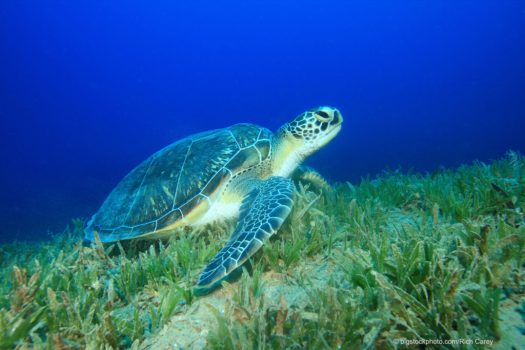
Those of us who live many miles from the ocean may not think about what goes on under the water. Similar to the land, there is an enormous diversity of plants in the sea. Just like land plants, ocean plants have flowers and pollinate and reproduce. Seagrass grows on the floor of the ocean and provides a habitat for sea turtles, manatees, and many other marine animals. There are some 60 species of seagrass, and those grasses bloom and release pollen. Like land plants, seagrasses need something like the bees that help pollinate land plants. So are there underwater bees?

Researchers at the National Autonomous University of Mexico have reported that hundreds of crustaceans and other small insect-like animals visit plants and bring pollen with them. These invertebrates are the “underwater bees.” They allow ocean vegetation to flourish, along with ocean currents.

As scientists study ways in which carbon can be locked up to avoid high concentrations in our atmosphere, they find that the ocean is a major factor in avoiding the runaway greenhouse heating of the earth. Life in the oceans is essential to life on land.

Here is another design feature of this planet that is critical to the long-term existence of life on Earth. In the 1950s, scientists thought that there were maybe five or six factors that would be critical to the existence of life. The famous Drake Equation of how many planets could have life on them only considered five factors in its original format. Now we know there are a huge number of things that have to be “right” to allow life to exist.

Every time we find a new variable, the odds against life occurring by chance on planet Earth become greater. God’s wisdom and design can be seen everywhere around us. Truly, “the heavens declare the glory of God and the firmament shows His handiwork” (Psalms 19:1).

–John N. Clayton © 2017

Reference: National Wildlife, June/July 2017, page 8.

Neanderthals in America?

What Neanderthals might have looked like.

There is a tendency for the media to be “splitters” instead of “lumpers” when it comes to human history. Splitters are people, in and out of the academic community, who want to put a new label on everything they find in the fossil record. Every new find is given a new name and assumed to be a new species. The result is that people believe there have been many species of humans. In the past, splitters justified slavery by maintaining that some races were actually inferior species and could be used by more fit (more advanced) species of humans. Lumpers are those who maintain that all of the variations are simply racial variations and that there is only one human species.

The Bible is clear that God looks at all humans as having equal value (Galatians 3:28). The advent of Christianity ended the barriers between humans even though greed and selfishness continue to plague the planet. The splitter mentality attempts to classify the Neanderthals as a different species of humans, even though evidence suggests this is not scientifically correct. Scientists studying the human genome have found genes in all of us that seem to be related to the Neanderthals. On April 27, 2017, the journal Nature published a report of a study of some mastodon bones found in the San Diego are two decades ago. The conclusion of a team of scientists was that marks on the bones indicate they were split open to get at the marrow. They suggest that the bone fractures and potential hammer stones found with them were the work of possible Neanderthals. Previous archaeological studies suggest that humans arrived in the Americas some 15,000 years ago. Dating of the mastodon bones is close to 130,000 years ago. Many other scientists question this new report.

Regardless of who is right, evidence shows that as humans spread throughout the world, racial variations developed. How different we can be genetically and still be one species seems to be changing with the lumpers carrying the day. The future will tell us more about some of our ancestors between us and Adam. The fact that we are all one seems to be unquestionable. For more on this see USA Today, April 27, 2017, page B1.
–John N. Clayton © 2017