
 One of the major misunderstandings of many creationists and naturalists alike is the belief that, given enough time, anything can happen. Those who believe in naturalism deny that God had anything to do with creation. They promote the idea that evolution by natural selection can explain everything as long as there is adequate time for it to act. Time as creative agent does not work for many reasons.
We can all agree on what will happen if you have two animals in identical environments and one of them can run very fast and the other one cannot. When a predator comes to eat them, the one who cannot run fast is more likely to get eaten. This process cannot explain how a platypus could be produced from animals that have existed in Australia now or in the past. Atheists would maintain that given enough time such a change would have happened naturally, excluding God’s role in the production of every form of life on the planet. Time as creative agent cannot replace the role of God the creator.
Some creationists seem to agree. They assume that the only rebuttal to the atheist belief is to maintain that the Earth is only a few thousand years old. They argue that such a change couldn’t happen in that short of a time. The reality is that natural selection cannot explain the creation, no matter how much time has been available for life to evolve.
There are a large number of reasons why natural selection and time as creative agent do not explain what we see in the creation. Here are just three simple ones:
1-Natural selection only deals with what has already been created.
Any theoretical explanation of how a living thing has come into existence starts by assuming the existence of an ancestral form of life. Not only is it assumed that the life-form existed, but its properties are also assumed. To explain why the male platypus has a poisonous spur on its back leg, one has to assume that it evolved from an animal that had a spur which served some other purpose. One must also assume that the ancestor used venom in some way. To explain the “radar” unit in the platypus’s nose, one has to assume that there was some kind of appendage that housed the nerve cells. Then one must assume that nerve endings with a frequency equivalent to the electromagnetic signals of the platypus’ prey were present in some primitive form.
Those oversimplified proposals are just the start. The baby platypus has to lick the milk off the mother’s stomach because she has no nipples. One can say that the nipples never evolved from the ancient ancestor, but the skin has to be porous enough for the milk to come through. The mammary glands also have to be in the right place, and the system has to be selective enough that milk can get out, but toxins cannot get in. With a good imagination, you can propose ways each of these things could happen. However, they would all have to happen simultaneously or they would be of no use and could, in fact, be life-threatening for the animal.
2-Natural selection does not propose the formation of organs with unique chemical properties, nor does it explain the chemicals themselves.
We have discussed the bombardier beetle, where a lethal combination of chemicals produces a spray that protects the beetle from predation. This is one of many specialized organs in the natural world that demands an organ that has no other function than the one the beetle uses. For natural selection to work, a previous organism would have to exist with a different a chemical having a different purpose from which this animal could evolve.
3-Natural selection ignores catastrophic extinctions. The more we study the geological record of the Earth, the more we see that massive changes have happened in the past that put an end to biological processes. Asteroid collisions, massive volcanic eruptions, massive flooding, global cooling which resulted in the freezing of all bodies of water, and solar eruptions are all well documented. These changes have been so violent that they terminated most life-forms and their development. Natural selection demands a uniformitarian past for traits to continue unabated and ultimately be incorporated into the genome of a new species.
Those are just three fundamental reasons why time as creative agent would not work. Those are only three hurdles that evolution by natural selection would have to cross to create all of the living things on Earth. Tomorrow we will look at three more.
— John N. Clayton © 2019
 Recent studies of the Cuvier’s beaked whale, also known as the goose-beaked whale, have established that it is the world’s deepest diving mammal.
 I have just gone through one of the most unpleasant physical experiences of life – not being able to breathe. Most of us have had the breath knocked out of us when we got hit in the diaphragm and temporarily were left gasping for air. Imagine that feeling going on for hours, or even days. I am writing this while I am battling pneumonia, and fluid in my lungs has left me struggling to maintain my normal activities.
 One of our gardener friends sent us these interesting facts about plant design:
 A friend of mine likes to play with numbers. Calculations which speak of the wonder of the creation are of particular interest. My friend pointed out something that I had never really thought about. As I write this, it is raining, and we are supposed to get an inch (2.54 cm) of rain. How much does rain weigh?
 There is a growing belief in our world today that there are situations in which euthanasia should be used to eliminate people who have a severe handicap. We are not talking “pull the plug” cases, but handicaps due to injuries or birth defects. As the father of a child who was born blind, mentally challenged, with cerebral palsy, a form of muscular dystrophy and schizophrenia, I have a personal interest in this issue. Handicaps do not warrant death.
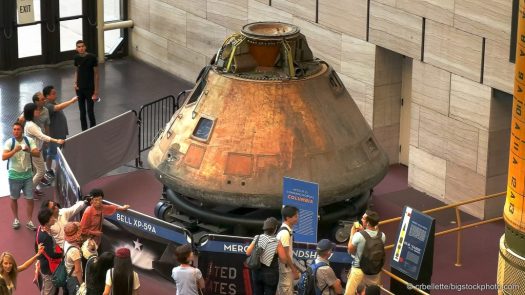 Every once in awhile, I get to sit back and think about what I have witnessed in my life’s journey. A reminder of one of the highlights of that journey is the 50th anniversary of Apollo 11.
 One of the most destructive teachings of denominational creationists is teaching that the Bible says the Earth is a very young planet. That is a human denominational tradition that has no biblical basis. The Bible gives no age of the Earth.
 There are many “pop-science” articles showing up in the media, suggesting that