Alien Minerals and Alien Life

Alien Minerals and Alien Life

Andrew Locock at the University of Alberta discovered two new minerals in a fragment of the El Ali meteorite that landed in Somalia. These minerals had never been found naturally on Earth, although scientists had synthesized them in a lab. Chris Herd, an Earth and Atmospheric Sciences professor and curator of the University of Alberta’s meteorite collection, named the two alien minerals “Elaliite” and “Elkinstantonite.”

The tabloids try to use this find to suggest that alien worlds exist that are radically different from Earth. The fact is that these minerals contain the common elements iron, potassium, and oxygen. Like many other “alien minerals” such as Brianite, Xifengite, and Heamanite, scientists have synthesized them. Inorganic materials can form new chemical configurations when they are subjected to temperatures and pressures not seen on Earth’s surface. All of these minerals with unfamiliar names are the product of conditions not present on the surface of our planet.

There are chemical restraints on what elements can sustain life. Biologists tell us that life is “that form that can move, breathe. respond to outside stimuli, and reproduce.” The elements that make those functions possible are carbon, hydrogen, oxygen, and nitrogen. For example, living things made of iron are not chemically possible, yet iron is the dominant element in meteorites. Oxygen is the one oxidizing element that allows respiration without adverse chemical reactions that would prevent life from surviving. For that reason, life forms breathing chlorine or bromine are not possible.

At the same time, alien minerals in meteorites do not mean that alien life is impossible. On the contrary, if there is life in space, it will be made of the same elements that we are. It may not look like us or live as we do, but we will not have any trouble identifying it as life.

Every time this issue comes up, it reminds me of my experience on a radio show. I was in Washington, D.C., doing a call-in talk show with Larry King (before he became famous) and a local atheist. We had a lively discussion about science and faith with some references to alien life. A caller said to the atheist, “What would you do if a spaceship landed on the White House Lawn and a little green man jumped out with a Bible in his hand and said, ‘Has Jesus been here yet?’” Before I could point out some problems with that proposal, my atheist opponent looked at me, smiled, and said, “Punt.” Larry King responded by going to a commercial.

— John N. Clayton © 2022

The Death of the Dead Sea

The Death of the Dead Sea
The Dead Sea

One of the most interesting places on Earth is the Dead Sea. This body of water between Israel and Jordan is located 1400 feet below sea level at its surface. The lake is 978 feet deep and is fed by the Jordan River. The water is so salty that a person entering the lake floats so that most of their body is above the lake’s surface. The minerals that make the lake salty are essential and have been mined for centuries by simply evaporating the water. Health spas have sprung up around the lake, bringing in a busy tourist trade. However, we may be approaching the death of the Dead Sea.

The geology that has produced the lake is another interesting feature. The Jordan Rift Valley is a long depression between two geologic faults, known as a graben. Grabens are common on Earth, but this one is unusually deep.

One reason for the potential death of the Dead Sea is that in recent years it has been evaporating much more rapidly than ever before due to climate change. As a result, in some years, the lake’s surface has fallen four feet. As the lake level drops, numerous sinkholes have formed where the exposed ground that used to be at the bottom of the lake dries and collapses. As a result, an area that contained roads and beaches is now dotted with sinkholes making it too dangerous for travel.

However, the death of the Dead Sea has multiple causes. The Jordan River is essentially not flowing into the lake as people have diverted its water for drinking and irrigation. People also use evaporation ponds to recover minerals, accelerating the water loss. Between human over-use and climate change, the Dead Sea is rapidly becoming inhospitable to any human use or travel.

Concerned parties have proposed ways to stop water loss, but they require cooperation that is difficult to achieve. This is one more case where the human responsibility to care for what God has given us remains unmet. Trying to deny the problem exists is difficult when the evidence is overpowering. Human greed and exploitation, plus climate changes, may lead to the death of the Dead Sea.

–John N. Clayton © 2022

Reference: NPR for 12/11/22 by Ofir Berman and Daniel Estrin

How Fast Are You Moving?

How Fast Are You Moving?

If I asked, “How fast are you moving?” you might reply that you are sitting still. However, don’t forget that you are sitting on a planet that is spinning on its axis. A fixed observer in space would say that you are moving with the planet’s rotation at up to 1000 miles per hour if you are close to the equator. At the same time, Earth is revolving around the Sun at roughly 66,000 miles per hour. The Sun is one of 100 billion stars rotating around a black hole at the core of the Milky Way galaxy at approximately 400,000 miles per hour. Meanwhile, the galaxy is moving through space at around 2,200,000 miles per hour. So, how fast are you moving when viewed from a fixed point in space?

The amazing thing about the creation is that each of these numbers is critical for our survival. The spin of the Earth on its axis distributes heat in a way that we are not frozen or burned up. The revolution around the Sun keeps us from being drawn into the Sun or slung into outer space and frozen. The movement of the Sun around the galactic core prevents the black hole at the center of our galaxy from sucking in the entire solar system and destroying it. The galaxy’s movement through space prevents it from being absorbed by another galaxy. The speeds are critically fine-tuned because there is no tolerance for error.

As astronomers look at other solar systems and galaxies, they see the speeds that allow us to exist are not that common in space. The simple statement of Psalms 19 that “the heavens declare the glory of God, and the sky above shows His handiwork” reminds us that we are not the product of an accident. The more we learn about the cosmos, the more obvious it becomes that our existence is a product of intelligent design.

The psalmist also reminds us of the astonishing fact that the Creator cares about us. “When I consider your heavens, the work of your fingers, the moon and stars which you have ordained, what is man, that you are mindful of him …” (Psalms 8:3-4). So how fast are you moving right now? Fast enough to exist and to know that there is a reason for that existence. Read Job 1 and 2 and Ephesians 3:9-11 and 6:12 to learn more about that reason.

— John N. Clayton © 2022

Reading the Rocks in Wisconsin Dells

Reading the Rocks in Wisconsin Dells

We have just enjoyed a return visit to the Wisconsin Dells. I say a “return visit” because, in the army, I was stationed at Camp McCoy near Sparta, Wisconsin. The closest place to go for an escape from military rigor was the Dells. Later, when I was in a National Science Foundation teacher training seminar, we spent a day at the Dells learning about the area’s geological history. I have been to the Dells nearly a dozen times and watched it change from a primitive camping area to a tourist water wonderland. As a geologist, I enjoy reading the rocks in Wisconsin Dells.

The Dells area is geologically interesting because the glaciers did something unusual there. For reasons still debated by geologists, glaciers that covered all of Wisconsin went around the Dells area. That left a very different geology compared to the rest of the state. Where we live in Michigan, glaciers dominated the whole state. Our house sits on a glacial moraine where glaciers dumped sand and gravel as they moved south.

In our gravel pits, we find rocks that came from hundreds of miles north of us. When I took my earth science students on field trips to area gravel pits, they found pieces of copper from the upper peninsula and Jasper conglomerate from southern Ontario. There is no exposed bedrock in southern Michigan, only sand, gravel, and clay left by the glaciers. Hundreds of pothole lakes and ponds cover the area, making it home to a variety of wildlife not abundant in Wisconsin. Farming in our area involves fruits and berries that are rare in Wisconsin.

Reading the rocks in Wisconsin Dells tells us a whole different story with exposed sedimentary bedrock and very little sand and gravel. The area’s rivers are very different, with large pillars and buttes that were spared by the glacial ice, and very few ponds. The whole ecological area of the Dells differs from the surrounding part of the state, and the varied ecology provides different natural resources. For example, the grasses that grow in a place like the Dells provide grains not as easily grown in glaciated areas.

Reading the rocks in Wisconsin Dells tells us that God has provided radically different ecological systems for our benefit. If all areas of the planet were the same, that would limit the available resources. The wisdom of having multiple agents to prepare different soils, different amounts of water, and different mixing of minerals reminds us of the message of Proverbs 8:22-31. That passage personifies Wisdom as being there when God created all these things. Learning to read Earth’s geological history shows us the methods God used to prepare this planet for human habitation. How blessed we are to travel and see places like Wisconsin Dells and learn of God’s wisdom, love, power, and patience in all He does.

— John N. Clayton © 2022

Observing Fibonacci Day

Observing Fibonacci Day

Humans look for ways to celebrate certain days. We laugh at Groundhog Day and use Valentine’s Day for special human relationships. Some days have extensive significance, such as Thanksgiving, Christmas, or Veteran’s Day. We are now observing Fibonacci Day on November 23. Fibonacci Day is an unusual celebration of a remarkable mathematical sequence.

Fibonacci was an Italian mathematician who noticed in the year 1202 some interesting oddities about a particular sequence of numbers: 1,2,3,5,8,13,21,34,55, 89,144, 233. Notice that when you add any two sequential numbers, you get the next number. For example 5 + 8 = 13; 8 + 13 = 21; etc. If you divide two sequential numbers, you get .618034, which some mathematicians have called the “golden mean.”

Applying this Fibonacci sequence to architecture, you get a practical application. A rectangle using any two sequential numbers is aesthetically pleasing to human eyes. If you cut a square off any of these rectangles, you get another rectangle with the Fibonacci sequence. If you connect the corners of the squares in a series of Fibonacci rectangles, you get a spiral (see sketch).

An amazing thing about this is that there are an unlimited number of examples of Fibonacci spirals in the natural world. A small sampling includes:
*The spiral arms of galaxies curl in a Fibonacci spiral.
*The curl of a wave in the ocean fits the Fibonacci spiral.
*The snail shells curl in a Fibonacci curve.
*Elephant tusks curve in a Fibonacci spiral.
*The roots of human teeth curve in a Fibonacci spiral.
*Spider webs fit the Fibonacci spiral
*Keys on the piano are 5 black and 8 white, 13 in all, fitting the ratio.

*Musical chords producing pleasing sounds have the Fibonacci ratio.
*Bacteria growth curves fit the Fibonacci ratio.

There is no natural or evolutionary reason for the Fibonacci sequence. Notice it isn’t just in one discipline but in widely separated areas of study.

The Fibonacci Association publishes a magazine called the Fibonacci Quarterly, and people have written several books about the Fibonacci ratio. If you are observing Fibonacci Day, realize that this demonstrates God’s design in the creation. Chance does not produce a pattern across multiple disciplines like this.

— John N. Clayton © 2022

For more on this, go to DoesGodExist.tv and watch program number 5.

Beavers Can Help Reduce a Climate Change Problem

Beavers Can Help Reduce a Climate Change Problem - Beaver Dam
Beaver Dam

People here in Michigan consider beavers a nuisance because they cut down trees and flood farmlands. Unfortunately, beavers cut down some beautiful shade trees on our property. However, beavers can help reduce a climate change problem.

A significant problem associated with the changing climate is the loss of water. Many reservoirs in the western United States are at extremely low levels, and some have completely dried up. Precipitation amounts have dropped while humans mismanage natural water storage.

Meanwhile, people have hunted and trapped beavers due to high prices for pelts and the flooding of farmland and private homes by the dams they built. The result is that water now floods downstream areas. Beavers reduce that problem by creating ponds that hold the water, so it runs off much more slowly. Besides reducing flooding, this also helps to minimize droughts. Studies funded by the National Science Foundation show that by live trapping and moving them upstream, beavers can help reduce a climate change problem.

God has provided ways to make climate change less damaging. For example, storing water in snow and glaciers helps mitigate the problem of water distribution. Additionally, beavers can reduce the problem by building dams that hold water back, providing relief from weather extremes.

God has given us the responsibility of managing what He has created. However, by creating pollution and mismanaging natural resources such as beavers, we have created problems we can no longer ignore. We can all participate in caring for the creation, and pleading ignorance won’t stop the damage.

— John N. Clayton © 2022

Blood Moon and Shooting Stars

Blood Moon and Shooting Stars

On the morning of November 8, you will have a chance to see a total lunar eclipse, also known as a “blood moon.” At the same, you may also see a display of “shooting stars.”

A full moon occurs every 29.5 days as our planet comes between the Moon and the Sun. A couple of times per year, the alignment is precise enough that some part of Earth’s shadow falls on the Moon. If the outer area of the shadow crosses the Moon, we see a slight darkening of the Moon’s light. If the full shadow covers only a portion of the Moon, we see a partial eclipse looking as if someone has taken a bite out of the Moon. However, we will see the more dramatic total lunar eclipse this time.

When the eclipse reaches totality, the Moon will take on an orange or reddish glow. That is why people call it a “blood moon.” That color is because the small amount of sunlight reaching the Moon’s surface is the glow of sunrise and sunset all around the world. Our atmosphere bends and filters the light, blocking the blue light and focusing the lower-frequency reds and yellows on the Moon. We see that reflected back to us, this time for about 85 minutes.

You can enjoy a double treat if the sky is clear and the weather is not too cold. This is also the time for the annual Taurid meteor shower. The annual Taurid “shooting stars” are actually fragments of the comet Encke which burn up from the friction of Earth’s atmosphere. They are primarily tiny sand-grain-size pieces of rock that appear as streaks of light. However, some may be a little larger, looking like fireballs. The Taurids generally move more slowly and are often larger than the meteorites of other annual meteor showers. But, they may be fewer and farther between, with perhaps five to fifteen per hour visible in very dark skies.

The problem this year is that the peak of the Taurids is during the full Moon. The bright Moon always makes it difficult to see the much dimmer meteor showers. However, the 85 minutes of the total lunar eclipse creates an ideal window to look for the meteorites. So you can enjoy the “blood moon” and the “shooting stars” at the same time.

So, how and when can you see them? The total eclipse phase will begin on the morning of November 8 at 5:17 a.m. and end at 6:42 a.m. Eastern Standard Time. The partial eclipse will start and end about half an hour before and after those times. The faint penumbral phase will begin and end about an hour before and after the partial eclipse times. To see the Taurids, plan on being where you can see a clear view of the whole sky during the total eclipse phase. If you miss this total lunar eclipse, the next one will not occur until March 14, 2025.

Romans 1:20 tells us that we can know there is a God by observing the things He has made. What do the lunar eclipse and the Taurid meteor shower tell us about God? They are not omens of world events. They tell us that the creation is not chaotic but predictable. We live in a solar “system” in which we can accurately predict the movement of planets and moons and calculate what is going to happen and when–even to the exact minute. God has given us an orderly universe that we can study to learn about His power and wisdom. He has also given us His written word, which we can study to learn about His love and find the instructions for how to enjoy the gifts He wants to give us.

— Roland Earnst © 2022

References: TimeandDate.com on their website or YouTube channel and NASA HERE, HERE, and HERE

Numbers, Chance, and Design

Numbers Chance and Design

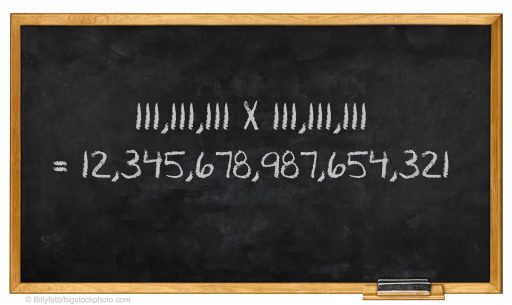
It’s an interesting case of numbers, chance, and design. We often get letters and emails from atheists who want to argue about the things we post. Interestingly, they usually do the opposite of what the writer expects. For example, we recently received a challenge to our argument for God based on the design we see throughout the cosmos. Our atheist friend claimed that numbers are a matter of chance, and therefore they refute any suggestion of design.

In reality, the opposite is true. I was familiar with the example my atheist friend gave. It involves the fact that multiplying 111,111,111 by itself gives a sequence that my atheist friend says “might look like design but clearly isn’t.” You can do this yourself. Multiply 111,111,111 by 111,111,111 and see what you get. If you do it correctly, the answer 12,345,678,987,654,321. Try it and see. Is this a product of chance or a product of design?

This works in a numerical system based on 10, which we use in the western world. However, we are in the midst of switching to a binary system because our computers work on 1 and 0 (or + and -), and much of our world today runs on computers. When mathematicians developed these systems, they had to choose a numerical sequence that worked well for the time and the culture in which they functioned. Since we have ten fingers, base ten was a good choice. I had a math professor who told us that if the early scholars had been barefooted, we would have been using a base twenty system.

What does that tell us about numbers, chance, and design?
The point is that the reason 111,111,111 times 111,111,111 gives the pattern that it does is because intelligence designed the system. Intelligent minds made the choices that produced the number pattern. This is an argument for the validity of design in the creation, and design demands a Designer.

— John N. Clayton © 2022

The Grand Canyon of Pennsylvania

The Grand Canyon of Pennsylvania

When you hear the name “Grand Canyon,” you usually think of Arizona. I have been to the bottom of the Arizona canyon and taken several boat trips down the Colorado River. As a result, I have nothing but good memories of that majestic canyon. Recently I had a chance to visit Pine Creek Gorge, also known as the Grand Canyon of Pennsylvania.

As a person trained in geology and an admirer of Earth’s beauty and history, I was amazed at how much I could see in this canyon. It’s 1000 feet deep and stretches for 47 miles through northern Pennsylvania. Because it is an erosional formation, it mainly consists of sedimentary rocks. Glaciers went through that flat area and created a lake. Eventually, the natural dam holding back the lake eroded, and the water escaped, gradually forming the canyon. As a result, glacial erratics made of all kinds of rocks, some as big as a house, are scattered all around the area.

The rocks that make up the Allegheny Plateau tell a history of change. Limestone layers form when water is still, and minerals can come together to produce the rock. A flood never produces limestone, and many of the limestone rocks contain marine fossils. Rapidly moving water produces gravel which becomes a rock known as conglomerate. Shale is mud turned into rock, and sandstone can be a beach deposit left by moving water or blown by the wind. None of the sandstone in the Grand Canyon of Pennsylvania is wind-blown.

The 1000-foot canyon has all of these rock types in various layers. It is evident that at times an ocean covered this area, and other times glaciers deposited boulders, cobbles, and gravel. In addition, the existence of a lake laid down some layers, and occasional coal seams tell us of ancient swamp conditions. Therefore, it is not surprising that the first oil well was produced near this area.

What do places like the Grand Canyon of Pennsylvania tell us about God? God is not a magician and does not try to deceive us. Understanding how God made the land on which we live is a testimony to His wisdom and power and the fact that time is not an issue for God. The flood of Noah cannot explain the Grand Canyon of Arizona or the Grand Canyon of Pennsylvania. We can see clear evidence of a gradual process and claiming that God miraculously zapped all of this into existence without a process over time puts God in the role of being a deliberate deceiver. Because most of these rocks are not flood deposits, neither a flood nor intentional deception is an acceptable explanation for these beautiful canyons. Science and faith are friends, and the scientific evidence of how canyons like this were formed gives evidence of the patience, design, and purposes of God.

— John N. Clayton © 2022

God Created Two Books

God Created Two Books

How have you arrived at the belief system that governs your life? God created two books we are called to use as the basis for our lives, morals, and religious practice. Since these two books have one author, they must be complimentary and cannot conflict. It is strange that many people read one book and refuse to look at the other. That is true of both atheists and religionists.

One of the books is the Bible, and it calls us to use it as a guide for life. Second Timothy 3:16-17 states it very clearly: “All scripture is given by inspiration of God, and is profitable for teaching, for training, for guiding and for moral discipline so that the man of God may be complete and adequately equipped for all good work.” Atheists reject this book because it involves denying one of a few physical pleasures and gives a purpose in living other than survival. Living selfishly has its rewards, and that is attractive.

God created two books, and the second book is the creation itself. The Bible is full of admonitions to use the things God has created as a means of knowing truth and learning how to live a productive and rewarding life. The Old Testament calls us to use what we see in the world around us as a guide to life. The entire book of Job carries that message. Numerous Psalms call us to see God’s wisdom and design and shape our beliefs in them. (See Psalms 8:3-9; 19:1; 53:1-4; 139:14-16.) Proverbs is full of admonitions to learn from the creation. (See Proverbs 6:6; 8:1-7 and 22-36.)

In the Sermon on the Mount, Jesus used the created world as the basis of much of His teaching. (See Matthew 6:26-30; 7:16-20.) Romans 1:18 – 23 says of humans, “That which can be known of God lies plain before their eyes for God himself has made it clear to them. For those things of God which the eye can not see, ever since the creation of the world, are clearly perceived through the things that are made, and are clear to the eye of reason, even his eternal power and divine character so that men have no excuse.”

So God created two books, and it is clear why atheists do not wish to read and apply the Bible to guide their moral and spiritual lives. It is hard to understand why people who claim to believe in God refuse to look at the creation as a source of instruction and guidance. Some are too lazy to read the Bible and study its message, and others are too lazy to read the creation and learn its message. We need to read and study both books so that we can do what 1 Peter 3:15 tells us: “Revere Christ as Lord in your hearts and always be ready with your defense whenever you are called to account for the hope that is in you, yet argue gently and cautiously with meekness and respect.”

— John N. Clayton © 2022